
 E-Paper



Supreme Court reserves judgment on interim stay of Waqf Act
The Centre, via Solicitor General Tushar Mehta, told the court that since 1923, only Muslims were legally allowed to dedicate property as waqf.

 Prefer HTon Google


The Supreme Court on Thursday reserved orders on the aspect of staying the Waqf Amendment Act 2025, observing that the requirement of keeping an inventory of Waqf properties, including Waqf by user, has been the norm for over 100 years since the first enactment on such properties was introduced in 1923.
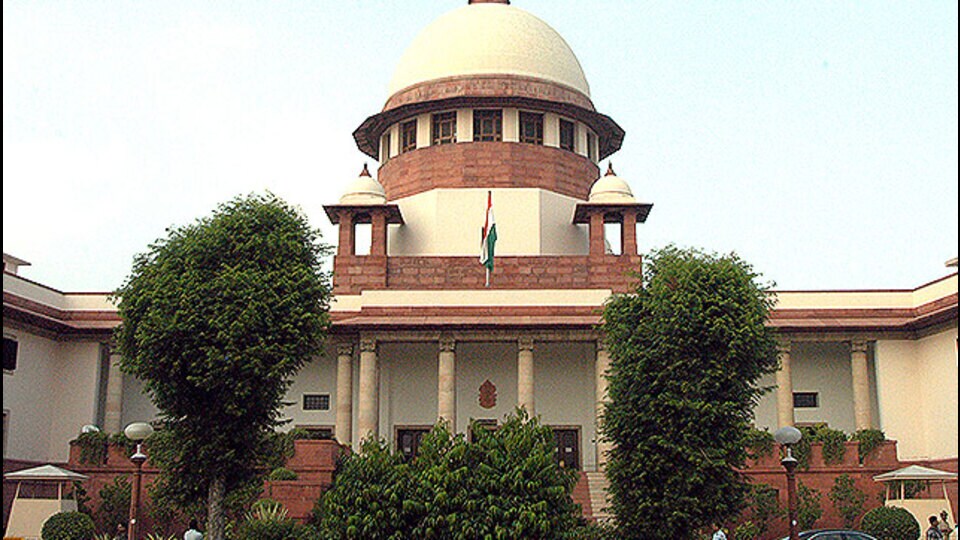
Closing arguments after a marathon hearing of three days, the bench headed by Chief Justice of India (CJI) Bhushan R Gavai and justice AG Masih observed, “We have seen the law since the Mussalman Waqf Act of 1923. Technically, the 1923 law did not have a provision for registration but information about the waqf had to be provided. From the Waqf Act, 1954 registration was required. There was a report of 1976 which revealed why registration was necessary. From 1923 till 2025, for over 100 years, the scheme of various enactments had emphasised on registration.”
The court was responding to arguments made by senior advocate Kapil Sibal appearing for one of the petitioners challenging the 2025 Act who argued that it was wrong to put the onus of registration on the custodian of waqf properties as beginning 1954, the law required states to survey and identify waqf properties. Registration was a crucial aspect stressed by Centre as only those waqf by user properties which are registered and not disputed to be on government land, would receive protection under the 2025 Act.
Sibal said, “It is the failure of the state to carry out their job from 1954 to 2025 and due to their failure, a community is being punished,” pointing out that the state cannot take advantage of its own wrong and by legislative fiat, extinguish Muslim property.
He urged the court to consider it from the aspect of a community’s right to administer property under Article 26 of the Constitution as he highlighted other aspects of the 2025 law, such as dedication of waqf by a person who is a practicing Muslim for past five years, something that was not a requirement for any other religion.
The Centre represented by Solicitor General Tushar Mehta, in his concluding arguments, told the court that the law since 1923 always required only Muslims to dedicate their property to Allah as waqf. The 2013 amendment permitted “any person” to dedicate Waqf. “How can Waqf which is an Islamic concept be available for non-Islamic persons,” Mehta said.
On Wednesday, the Centre had submitted that waqf being an act of charity is not an essential or core feature of Islam as doing charity is part of every religion. Senior advocate Rajiv Dhavan appearing for another petitioner opposing the law told the court that charity is one among the five fundamental pillars of Islam and zakat (charity) in Islam is a dedication made to Allah for favour in after life.
He further illustrated how the Act discriminates Muslims by referring to the provision that prohibits creation of waqf on land belonging to scheduled tribes under section 3E. Mehta told the court that the purpose behind enacting section 3E was to protect the scheduled tribes who are a vulnerable section of the population. He pointed out from the report of the joint parliamentary committee (JPC) that sought to preserve the cultural identities of tribals without and preventing creating of waqf on their land under Islam.
The bench disagreed with Mehta pointing out, “What is the nexus of not allowing waqf on tribal land. The purpose of the law is that land should not be grabbed based on their social and economic backwardness. Islam is Islam. Cultural traditions may differ, but religion is the same. If a waqf is sought to be created by fraud or deception, that will otherwise also go.”
Mehta said that the classification is not based on religion as it is always open for Muslims to create a trust and carry out charity activities.
The petitions, filed under Article 32 of the Constitution, challenge the law on multiple grounds, alleging that it undermines the fundamental rights of Muslims and erodes age-old waqf traditions.
The Centre has defended the amendments as necessary to curb corruption, enhance transparency and ensure better regulatory oversight.


