
 E-Paper



Army releases new visuals showing Pangong Tso disengagement in top gear
The PLA is retreating to its base, east of Finger 8 on the north bank of Pangong Tso, while the Indian Army is moving back to its permanent position near Finger 3.

 Prefer HTon Google


Fresh visuals released by the Indian Army on Tuesday showed that disengagement in eastern Ladakh’s Pangong Tso sector is in top gear, with the Chinese People’s Liberation Army (PLA) soldiers dismantling their bunkers, tented camps and pillboxes, and retreating from barren heights on both banks of the lake to vehicles waiting at the nearest road-heads to carry them back to their bases.
This forms part of the February 10 agreement on disengagement between India and China that makes it binding on the two sides to remove structures they constructed on the mountains after April 2020 when border tensions began.
The new visuals showed PLA using earth-moving machinery to level structures built by it to support forward-deployed troops on heights. Disengagement between rival soldiers deployed on heights on the north and south banks of Pangong Tso began on February 10, and will be completed by the weekend, as previously reported by Hindustan Times.
The images also captured what the areas looked like before and after the disengagement. One of the several images released showed a group of Chinese soldiers in battle fatigues lugging a portable generator from a bunker.
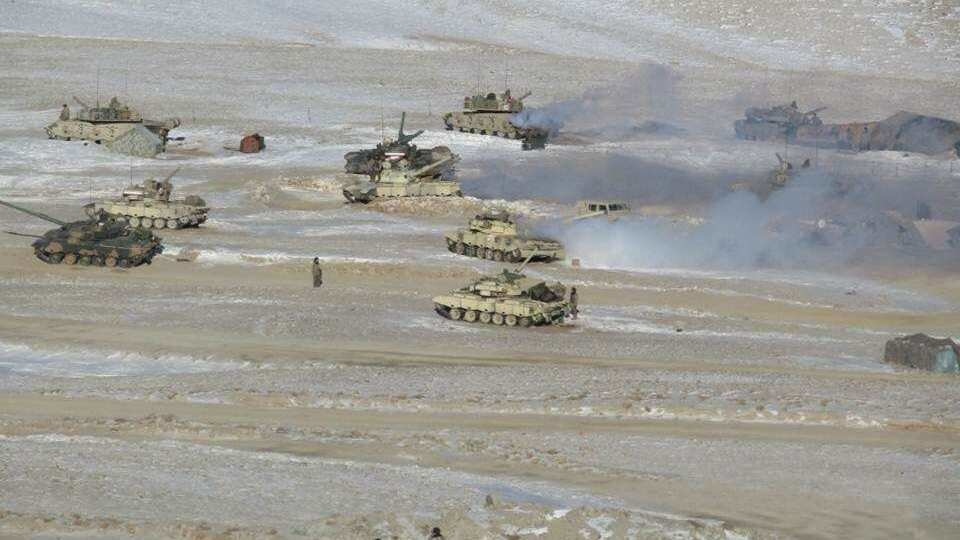
Armoured and artillery elements of both armies retreated to their respective positions from heights on the south bank last week. The Army released some new images of rival tanks disengaging from heights on the south bank.
The pictures give an idea of the scale and extent of the deployment, build-up and heavy equipment like tanks that were employed in the standoff, said former Northern Army commander Lieutenant General DS Hooda (retd).
“I have maintained that the start of the disengagement process is a positive step as it separates the two forces from an eyeball-to-eyeball situation that could trigger some local incident. We have a long way to go but at least the first step has been taken,” Hooda added.
Also read: Karnataka imposes restrictions on travel from Kerala amid Covid spike in B'luru
The last three days saw the PLA remove a jetty near Finger 5 on the north bank of Pangong Tso, take down structures at a make-shift helipad and dismantle scores of observations towers, bunkers and shelters.
“Both sides have pulled back a large number of their troops deployed on heights on the two banks. Some concrete structures are being dismantled. Disengagement is progressing smoothly and will be over in the next three to four days,” officials familiar with the developments said.
Senior commanders of the two armies are likely to meet next week to discuss disengagement at other friction points in eastern Ladakh.
Smooth disengagement in the Pangong Tso area augurs well for subsequent disengagement at other friction points, Lieutenant General Vinod Bhatia (retd), a former director-general of military operations, said last week.
The disengagement will be phased, coordinated and verified at all friction points, and could be a time-consuming process. “As long as disengagement is successful, time is not of the essence,” Bhatia had said then.
The PLA is retreating to its base, east of Finger 8 on the north bank of Pangong Tso, while the Indian Army is moving back to its permanent position near Finger 3. Neither side will patrol the contested areas in between until an agreement is reached through future talks.
Outstanding problems with the PLA at Depsang, Hot Springs and Gogra - friction points on the contested border - will be tackled after full disengagement in the Pangong Tso area.
The outstanding issues relating to the deployment and patrolling at the three friction points will be taken up within 48 hours of the pullback of troops in the Pangong Tso area.


