At HT Leadership Summit, Piyush Goyal explains why India didn't sign RCEP
In November 2019 the Modi government cited 'core concerns' and walked out of talks over buying into the RCEP - talks that began under the Congress-led United Progressive Alliance.
Union commerce minister Piyush Goyal on Saturday offered an insight into why India opted out of the China-led Regional Comprehensive Economic Partnership (RCEP), saying it was due to concerns expressed by stakeholders within the MSME (medium, small and micro enterprises) and dairy sectors.
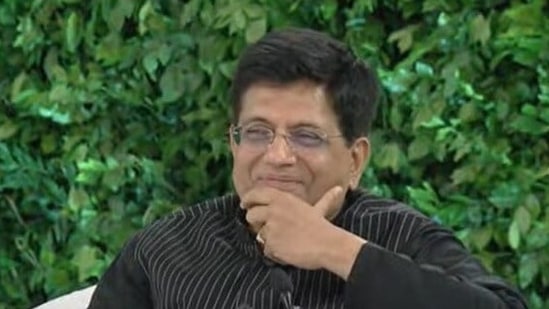
Union minister Piyush Goyal at the HT Leadership Summit
{{^htLoading}} {{/htLoading}}
"Modi government does not sign FTAs for the sake of doing so... if there is an arrangement it will be made after extensive consultations with all stakeholders that will establish prospective benefits for us and the other nation."
"Why did we leave RCEP? There were 15 countries (not including India) in the agreement, of which 10 were ASEAN nations, with whom India already has trade deals. India also has deals with Japan and Korea…"
"New Zealand is a small trade partner... We have signed an agreement with Australia... we saw that effectively RCEP is India-China FTA," he explained.
In November 2019 India cited 'core concerns' and walked out of talks over buying into the RCEP - talks that began under the Congress-led UPA in 2012.
{{/usCountry}}
{{#usCountry}}
In November 2019 India cited 'core concerns' and walked out of talks over buying into the RCEP - talks that began under the Congress-led UPA in 2012.
{{/usCountry}}
In 2020 foreign minister S Jaishankar said India did not join the RCEP because it would have had 'negative consequences'. "… not in our interest to enter this agreement as it would have fairly immediate negative consequences for our own economy," he said while talking about trade deals with the European Union.
Goyal today took a swipe at the Congress, saying, "Under previous governments, India signed unfair trade deals. Don't know if the decision was taken by someone at highest levels within the government or outside it."
{{^htLoading}} {{/htLoading}}
He also stressed on the strength of the Modi government in quitting RCEP talks, "... till today, apart from one or two economists who keep writing in editorials and op-eds, no industrialist has come to me and said 'you made a mistake'."
"When I did stakeholder consultations... particularly with MSMEs and dairy industry... they were paranoid that if we signed RCEP it would be the end of their business," he said.
Follow the latest breaking news, major developments and agenda-setting stories from India and around the world with the newsdesk at Hindustan Times. Operating round the clock, the desk brings together experienced editors, reporters and correspondents to deliver fast, accurate and contextual reporting across subjects that influence public policy, governance, business, society and international affairs. The HT News Desk covers politics, elections, government policies, the economy, business and markets, science and technology, the environment, law and order, infrastructure, education, climate issues and geopolitics, while closely tracking developments across states, institutions and global capitals. The team also leads coverage of major breaking news events, policy announcements, court proceedings, natural disasters, public emergencies and significant international developments. Reports published by the newsdesk are based on information gathered from reporters on the ground, official statements, government agencies, court records, regulatory filings, recognised institutions and other authoritative sources. Stories undergo editorial scrutiny and verification processes to ensure accuracy, fairness and relevance, and are updated as events evolve and additional information becomes available. Whether covering a key political decision in New Delhi, an economic policy shift affecting millions, a landmark court ruling or a major global event, the HT News Desk aims to provide readers with reliable, fact-based journalism that delivers not only the latest developments but also the context and analysis needed to understand their wider implications.
Get Latest News, breaking headlines, and top India News, and today real-time updates from across the nation. Stay informed on politics, government policies, crime, Today Weather, and major developments on Hindustan Times
Get Latest News, breaking headlines, and top India News, and today real-time updates from across the nation. Stay informed on politics, government policies, crime, Today Weather, and major developments on Hindustan Times