National Security Advisor Ajit Doval held talks with Chinese Foreign Minister and State Councilor Wang Yi over video call on Sunday, right before soldiers of the People’s Liberation Army were reported to have taken the early steps to move back from the standoff points in the Galwan area and near Pangong Tso, people familiar with the development told Hindustan Times on Monday.
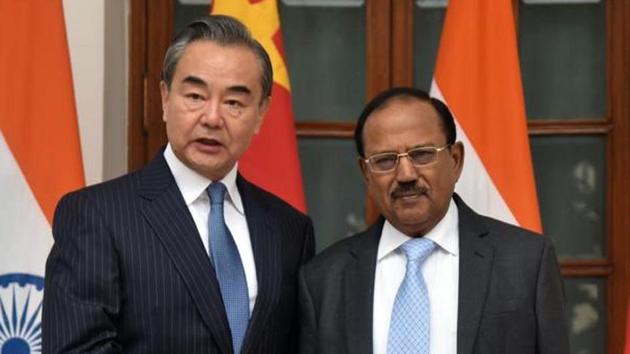
NSA Ajit Doval and the Chinese foreign minister Wang’s conversation is learnt to have focused on “full and enduring restoration of peace and tranquillity” along the Line of Actual Control. The two sides also spoke about working together to avoid such incidents in future, a top government official said.
Also Read: China pulls back troops in Galwan Valley by at least a km: Official
An external affairs ministry statement issued later said NSA Doval and minister Wang - two Special Representatives on the boundary issue - had “a frank and in-depth exchange of views on the recent developments in the Western Sector of the India-China border areas.”
“They agreed that it was necessary to ensure at the earliest complete disengagement of the troops along the LAC and de-escalation from India-China border areas for full restoration of peace and tranquillity. In this regard they further agreed that both sides should complete the ongoing disengagement process along the LAC expeditiously,” an external affairs ministry statement issued later said.
{{/usCountry}}“They agreed that it was necessary to ensure at the earliest complete disengagement of the troops along the LAC and de-escalation from India-China border areas for full restoration of peace and tranquillity. In this regard they further agreed that both sides should complete the ongoing disengagement process along the LAC expeditiously,” an external affairs ministry statement issued later said.
{{/usCountry}}The first impact of the ice-breaker meeting started becoming visible soon after. Officials said the PLA appeared to have moved about a kilometre from the standoff point in Galwan where soldiers of the two armies had clashed on June 15, leading to casualties on both sides. The violent scrap had led to a sharp slide in relations between the two countries, provoking New Delhi to ban Chinese mobile applications and keep out China-linked firms from future contracts across sectors.
In their conversation, Doval and Wang agreed that both sides should take guidance from the consensus of the leaders that maintenance of peace and tranquillity in the India-China border areas “was essential for the further development of our bilateral relations and that two sides should not allow differences to become disputes.”
The two sides should also ensure a phased and stepwise de-escalation in the India-China border areas. They reaffirmed that both sides should strictly respect and observe the line of actual control and should not take any unilateral action to alter the status quo and work together to avoid any incident in the future that could disturb peace and tranquillity in border areas.