
Private hospitals were divided over accepting Rs 1,000 and Rs 500 banknotes in payment from patients on Wednesday, the first day after the government’s surprise decision to scrap high-value currencies.
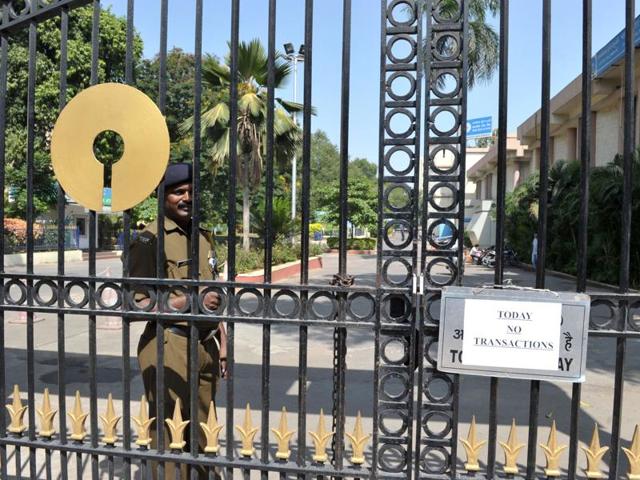
In his speech announcing the decision on Tuesday evening, Prime Minister Narendra Modi said 500 and 1,000 rupee notes would continue to be accepted at government hospitals, their pharmacies (with prescription) and to buy air, rail and bus tickets till November 11.
But, patients and their families offered the notes in private hospitals too.
The industry body Healthcare Federation of India (Nathealth) was planning to write to the government to seek clarity, sources said.
Though senior executives could not be reached for comments, a Nathhealth member said many of them had been exchanging emails and messages over the “prevailing confusion”.
Nathealth counts among its members the country’s leading private healthcare providers such as Apollo Hospitals, Columbia Asia, Manipal Health, Fortis Healthcare, Dr Lal Path Lab and Max Healthcare.
The Manipal group was accepting cash, for now, but with an identify proof. “Banks are closed today. (So) we are accepting money with ID proof and signature and will deposit (cash) with bank tomorrow. If bank rejects then the patients have to come back and pay,” said Ranjan R Pai, managing director & chief executive of Manipal Education and Medical Group.
{{/usCountry}}The Manipal group was accepting cash, for now, but with an identify proof. “Banks are closed today. (So) we are accepting money with ID proof and signature and will deposit (cash) with bank tomorrow. If bank rejects then the patients have to come back and pay,” said Ranjan R Pai, managing director & chief executive of Manipal Education and Medical Group.
{{/usCountry}}A spokesperson for Chennai-based Apollo Hospitals said they were not accepting the larger notes. Apollo has 65 hospitals across the country.
Modi said the decision to withdraw the high-value banknotes was aimed at stamping out corruption and draining illicit cash from the economy. It was also aimed at choking the flow of fake currency notes that were bankrolling militant strikes.
ABOUT THE AUTHOR
Follow the latest breaking news, major developments and agenda-setting stories from India and around the world with the newsdesk at Hindustan Times. Operating round the clock, the desk brings together experienced editors, reporters and correspondents to deliver fast, accurate and contextual reporting across subjects that influence public policy, governance, business, society and international affairs. The HT News Desk covers politics, elections, government policies, the economy, business and markets, science and technology, the environment, law and order, infrastructure, education, climate issues and geopolitics, while closely tracking developments across states, institutions and global capitals. The team also leads coverage of major breaking news events, policy announcements, court proceedings, natural disasters, public emergencies and significant international developments. Reports published by the newsdesk are based on information gathered from reporters on the ground, official statements, government agencies, court records, regulatory filings, recognised institutions and other authoritative sources. Stories undergo editorial scrutiny and verification processes to ensure accuracy, fairness and relevance, and are updated as events evolve and additional information becomes available. Whether covering a key political decision in New Delhi, an economic policy shift affecting millions, a landmark court ruling or a major global event, the HT News Desk aims to provide readers with reliable, fact-based journalism that delivers not only the latest developments but also the context and analysis needed to understand their wider implications.