
 E-Paper



RSS chief for Bharat Ratna to Savarkar; also speaks on turning 75, retirement
Bhagwat also spoke about age among other subjects: “I have completed 75 years and informed the RSS, but the organisation asked me to continue working.”

 Prefer HTon Google


Giving fuel to a call for the Bharat Ratna, India's highest civilian honour, to Hindutva rightwing ideologue VD Savarakar, Mohan Bhagwat, chief of the ruling BJP's ideological parent body RSS, has said it would actually raise the prestige of the award.
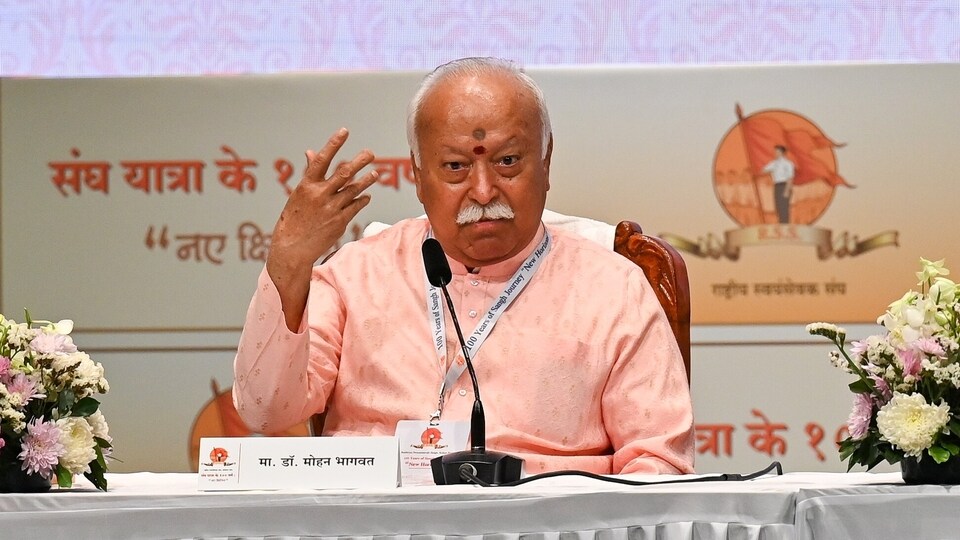
“Bharat Ratna's prestige will increase if award given to Veer Savarkar,” Bhagwat said in Mumbai on Sunday, referring to Savarkar with the honorific meaning “brave”, as per news agency PTI.
There have been demands for the top award to Savarkar, whom the Congress terms a “traitor” over his mercy petitions to the British when he was incarcerated during the freedom struggle.
Bhagwat on turning 75, retirement
Bhagwat was also asked about his age, during an interactive session with attendees at a programme to mark the Rashtriya Swayamsevak Sangh's (RSS) centenary.
Bhagwat turned 75 last September, as did Prime Minister Narendra Modi — a point that's been picked up by the Opposition parties since the BJP has had an informal retirement age of 75.
"Generally, it is said that after turning 75, one should work without holding any post," Bhagwat said, “I have completed 75 years and informed the RSS, but the organisation asked me to continue working. Whenever the RSS asks me to step down, I will do so, but retirement from work will never happen.”
“There is no election to the post of RSS chief. Regional and divisional heads appoint the chief,” he noted.
In a lighter vein, Bhagwat said the organisation "extracts work till the last drop of blood from its volunteer", and maintained that there had not yet been a situation in the RSS's history where someone “had to be retired”.
‘Excessive campaigning leads to arrogance’
Bhagwat said the Sangh's work is about inculcating "sanskar" (values) and not about campaigning.
"Excessive campaigning leads to publicity and then arrogance. One needs to protect oneself from it. Publicity should be like rainfall, adequate in timing and quantity," he said, adding that the RSS was now carrying out outreach initiatives.
Bhagwat further said that English would never be the medium of communication in RSS functioning, as it was not an Indian language. "We want to work with Indians. Wherever English is necessary, we use it. We are not averse to it," he said.
He said people should be able to speak English in such a manner that native English speakers would be willing to listen.
"We should master English, but that does not mean we forget our mother tongue," Bhagwat said.
Recalling a similar interaction in Bengaluru, he said representatives from several southern states could not understand Hindi and he had responded to their queries in English.
He added that while interacting with the Indian diaspora abroad, communication was done either in Hindi or the mother tongue, depending on whether they were from English-speaking or non-English-speaking countries.


