Birth registration in India has increased from 41% in 2005-2006 to 80% in 2015-2016, according to a new Unicef report that said one in four of the world’s children remains invisible despite significant global progress driven by India, Bangladesh and Nepal.
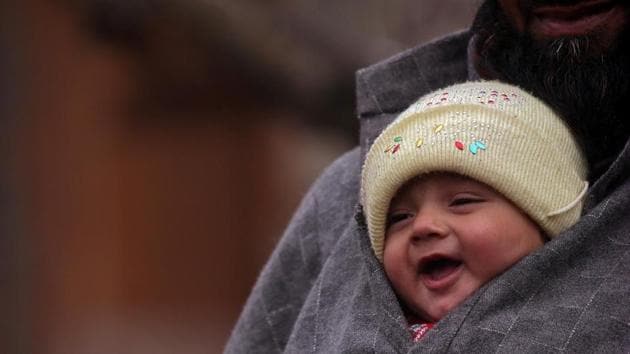
Twenty-two states have attained birth registration levels of more than 75% in the first year of birth in 2015-16, as compared to eight states in 2005-06.
Globally, children under five years, whose births were officially recorded, went up from 63% to 75% over the past decade, but 166 million children are unregistered, shows an analysis of data from 174 countries published in the report called Birth Registration for Every Child by 2030: Are we on track?
Half of the 166 million unregistered children live in just five countries: India (14%), Nigeria (11%), Ethiopia (10%), Pakistan (9%) and the Democratic Republic of the Congo (7%), said the Unicef report, which released on its 70th anniversary in India.
“Equity gaps between the rich and poor have started to close in parts of South Asia. In India, for example, birth registration levels have risen for both the richest and poorest segments of the population, and the gap has narrowed,” said the report.
Despite showing improvements and achieving the fastest rate of progress over a 10-year period with annual growth rate of 10%, Bihar, Arunachal Pradesh, Jharkhand and Uttar Pradesh continue to have the lowest levels of birth registrations in the country. “In India, birth registration is not a proof of citizenship. The big push in birth registrations is due to improved health outcomes such as the almost doubling in the rates of institutional births in the past decade, continuous monitoring and training of local registrars,” said Dr Yasmin Ali Haque, Unicef Representative in India. Goal 16 of the United Nations Sustainable Development Goals (SDGs) aims to provide legal identity for all, including birth registration, by 2030.
{{/usCountry}}Despite showing improvements and achieving the fastest rate of progress over a 10-year period with annual growth rate of 10%, Bihar, Arunachal Pradesh, Jharkhand and Uttar Pradesh continue to have the lowest levels of birth registrations in the country. “In India, birth registration is not a proof of citizenship. The big push in birth registrations is due to improved health outcomes such as the almost doubling in the rates of institutional births in the past decade, continuous monitoring and training of local registrars,” said Dr Yasmin Ali Haque, Unicef Representative in India. Goal 16 of the United Nations Sustainable Development Goals (SDGs) aims to provide legal identity for all, including birth registration, by 2030.
{{/usCountry}}“A birth certificate is the first step to establishing legal identity that shows the child exists. While India has made great gains, birth registration rates remain low among children who are homeless, migrant and runaways. It is the first proof of identity across all social service systems, including health, education and justice,” said Anindit Roy Chowdhury, director, programmes at Save the Children, a non-profit that works to provide government identity to marginalised children in India.