The Government of India has passed an ordinance to set up a new Commission for Air Quality Management in National Capital Region and Adjoining Areas (CAQM). This will replace with immediate effect the Environment Pollution (Prevention and Control) Authority, or Epca, as well as other committees that have been created over the years to address the crisis.
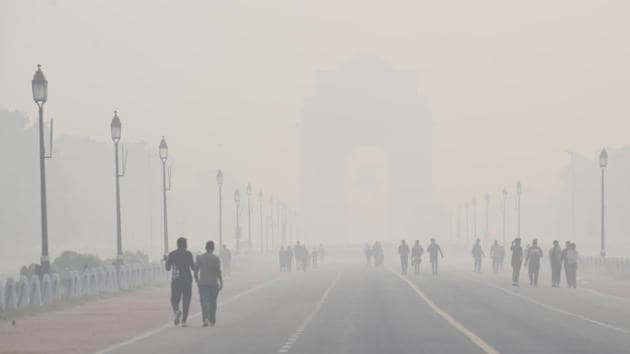
What should we make of this? Is this the answer to the pleas of National Capital Region (NCR) citizens and an end to the winter airpocalypse?
CAQM’s creation is not a trivial change, and almost certainly represents a step-up from Epca. A new commission, with full-time members and dedicated staff, is likely to help address the problem of intermittent focus on air quality, provide a “consolidated and conjoint” approach, and possibly help improve capacity to address the problem. CAQM will have substantial powers and can override other agencies such as the Central Pollution Control Board, but notably also state government departments, if there is a conflict. This potentially makes it easier to harness the powers of government, to solve inter-agency coordination problems and set uniform standards and enforcement protocols. Significantly, CAQM will also have a convening role, backed by authority of a law. However, it is not clear how much further effective bureaucratic coordination alone gets us. There are several other impediments to achieving clean air, and the ordinance does little to overcome them.
Perhaps the biggest limitation of CAQM is that it may replicate existing roadblocks in a new forum. Action is often stuck because those who lose from air pollution control measures are able to block change directly or through their representatives. These include industries facing more expensive fuel, farmers being asked to change cropping practices, and car owners getting restricted parking spaces. CAQM retains the stalemate of interests across sectors (like power, road transport, environment), and in the absence of clearly articulated overarching goals, introduces nothing to change this. To do so would have required CAQM to be held to benchmarks of progress in air quality. CAQM may be able to use its convening authority to bring together warring factions and hammer out a compromise on hot-button issues such as crop burning, power plant emissions, and so on. But to do so, CAQM has to see itself in that convening and deliberative role, rather than as primarily a rule setting and enforcing body. While it is not excluded, the ordinance gives few indications of the former.
{{/usCountry}}Perhaps the biggest limitation of CAQM is that it may replicate existing roadblocks in a new forum. Action is often stuck because those who lose from air pollution control measures are able to block change directly or through their representatives. These include industries facing more expensive fuel, farmers being asked to change cropping practices, and car owners getting restricted parking spaces. CAQM retains the stalemate of interests across sectors (like power, road transport, environment), and in the absence of clearly articulated overarching goals, introduces nothing to change this. To do so would have required CAQM to be held to benchmarks of progress in air quality. CAQM may be able to use its convening authority to bring together warring factions and hammer out a compromise on hot-button issues such as crop burning, power plant emissions, and so on. But to do so, CAQM has to see itself in that convening and deliberative role, rather than as primarily a rule setting and enforcing body. While it is not excluded, the ordinance gives few indications of the former.
{{/usCountry}}The ordinance also misses some key opportunities. This was the chance for the government to institutionalise an airshed-level approach to air quality, an idea that is now widely accepted. It could have provided a framework for an airshed-level approach in different parts of the country, and then perhaps have issued an NCR-specific set of rules. But an NCR-specific law signals — yet again — that the rest of the country which experiences similarly severe pollution levels is not as important as the Capital region. In addition, by continuing to rely on criminal prosecution as the primary tool of enforcement, the ordinance misses the opportunity to legally back a wider range of regulatory tools, including administrative fines that allow escalation of enforcement measures proportionate to the nature and severity of offence. The ordinance also risks underplaying the importance of evidence-based policymaking, which receives no emphasis in the ordinance.
There are areas where CAQM could further confound agreement and action. Its composition is heavily dominated by central government representatives as is the selection committee. There is little indication of intent to create processes that allow for stakeholder perspectives, including from states and civil society. Indeed, passing the ordinance with no public input does not inspire confidence that CAQM will open its doors to a more fruitful conversation and action across all interests. Similarly, CAQM’s ability to override state agencies may arouse the opposition of state governments. It is hard to imagine, for example, that simply because a central commission insists on limiting stubble burning that Punjab will ignore the voices of its farmers.
Much depends on how this commission will get constituted, and the rules that are issued to enable its functioning. The risk is that CAQM has been conceived as a bureaucratic hammer of enforcement, to drive the nail of air pollution regulation. But the problem is more complicated than one of enforcement alone. To address these complexities at minimum, the commission needs to convene competing interests effectively and help them develop creative solutions, hold itself accountable to ambitious but achievable targets, and seed the idea of airshed management across India.
(Navroz K Dubash is Professor, Centre for Policy Research. Santosh Harish and Shibani Ghosh are Fellows, Centre for Policy Research)