India could be taking a relook at the use of the anti-malarial drug hydroxychloroquine (HCQ) for treatment of Covid-19 after the World Health Organisation (WHO) on Saturday announced that it had discontinued HCQ clinical trials because it did not reduce mortality in hospitalized patients, based on the results of interim trials.
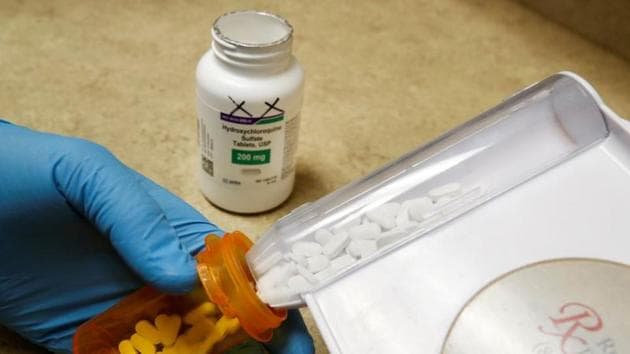
India uses HCQ as a prominent drug not just for the treatment of Covid-19 patients, but also as a prophylaxis (for prevention) medicine for use among fron tline workers involved in managing Covid-19 patients or close contacts of a laboratory positive case.
“Covid-19 is a new disease and it is an extremely dynamic situation that we are dealing with, and newer data is constantly being generated. What we knew of the virus’ behaviour say a couple of months ago has undergone a sea change now, and same is applicable for the drugs and other treatment modalities being given to the patients,” said one of the members of the National Task Force constituted by the Indian Council of Medical Research (ICMR), to tackle the pandemic. The person requested anonymity
The evidence generated from across the globe is being constantly scrutinized by experts here and guidelines and protocols are being revised accordingly. The same is true for HCQ or any other drug given to Covid-19 patients. The experts will be reviewing the guidelines and protocols and if they feel a need for a revision, they will change them, the member added.
{{/usCountry}}The evidence generated from across the globe is being constantly scrutinized by experts here and guidelines and protocols are being revised accordingly. The same is true for HCQ or any other drug given to Covid-19 patients. The experts will be reviewing the guidelines and protocols and if they feel a need for a revision, they will change them, the member added.
{{/usCountry}}The recommended dosage for HCQ is 400mg twice a day for one day, followed by 200mg twice a day for four days; and for treatment it was being given along with antibiotic azithromycin, as part of the Union health ministry protocol on Covid-19 management. In its review of the protocol, the health ministry had dropped the antibiotic from the regimen.
“When you start a drug for a condition based on some evidence then there is a need for even stronger evidence to withdraw that drug. Science works on evidence,” Dr RR Gangakhedkar, ICMR’s former epidemiology head said about the HCQ controversy earlier.
A section of doctors has been saying that more evidence was required to keep the drug a part of the treatment protocol for Covid-19 management.
“I would say I have not been as confident about this medicine now as I was earlier,” says Dr Yatin Mehta, chairman of the critical care department at Medanta Hospital.
Based on its Solidarity Trial’s International Steering Committee recommendations, WHO also discontinued the trial’s Lopinavir and Ritonavir arms for the same reason. Both these drugs are antivirals meant for HIV/AIDS treatment, and had shown promise initially in treating Covid-19.
India dropped these medicines from its list of drugs used to treat Covid-positive cases in April.
“These were initially being given under the emergency use authorization but later ICMR had withdrawn these drugs from the regimen as the results weren’t really great,” said an official of the Union health ministry, requesting anonymity.
ICMR has also collaborated with WHO in the public health emergency Solidarity Trial – an international randomised trial of additional treatments for Covid-19 in hospitalised patients, and will be stopping these arms of the trial.
“It is a WHO trial and the rules are governed by them. Since they have suspended these arms of the trial, it will obviously be suspended at trial sites in India also,” said an ICMR official, requesting anonymity.