A Regional Climate Centre for the Third Pole or the Hindukush Himalayan region will be established to conduct cutting-edge climate research, assessments and applications to forecast impacts of climate change on the Himalayas.
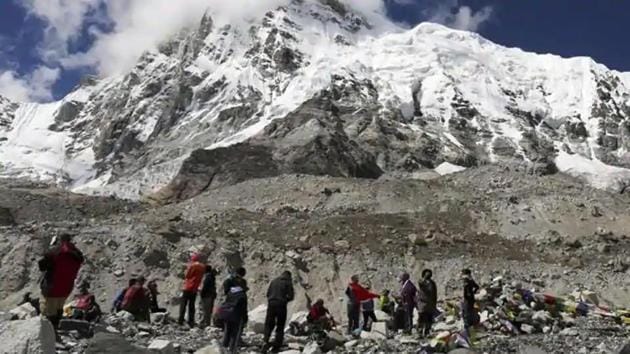
A similar Regional Climate Centre is based in China. But the Centre in India, which is likely to be located in Delhi, will advise Pakistan, Afghanistan, Nepal, Bhutan, Bangladesh and Myanmar too. “We are in initial stages of work with the World Meteorological Organisation and cannot provide an exact timeline for by when this Centre will come up. But it will soon be set up because the impacts of climate change will be pronounced on the entire on the Himalayan region,” said M Mohapatra, director general of the India Meteorological Department at TROPMET 2020, a symposium on meteorology organised by the Indian Meteorological Society.
IMD is likely to have 10 weather radars for the Himalayan region in India by early next year and also an airborne lidar observation to measure glacier volume periodically. It will also expand the weather observation network in coming months. On Monday, scientists from IMD and the Indian Institute of Tropical Meteorology cautioned that the impact of climate change on the Himalayas will increase in the form of cloudbursts, extremely heavy rain, landslides, glacial lake outburst flood (GLOFs) etc.
“It is highly recognised by scientific community the world over that mountains play a dominant role in ecosystem and socioeconomic activity specially in the climate change scenario… considering the size and role of Himalayas in our hydrology, meteorology, ecology and socioeconomic issues, India has decided to facilitate research in the third pole region. A lot of initiatives have already been taken up by MoES for augmentation of observational network with deployment of weather radars and numerical weather modelling systems,” Mohapatra said, adding that climate change-led disasters are becoming more pronounced in the non-Himalayan mountain ranges.
{{/usCountry}}“It is highly recognised by scientific community the world over that mountains play a dominant role in ecosystem and socioeconomic activity specially in the climate change scenario… considering the size and role of Himalayas in our hydrology, meteorology, ecology and socioeconomic issues, India has decided to facilitate research in the third pole region. A lot of initiatives have already been taken up by MoES for augmentation of observational network with deployment of weather radars and numerical weather modelling systems,” Mohapatra said, adding that climate change-led disasters are becoming more pronounced in the non-Himalayan mountain ranges.
{{/usCountry}}“Disasters play a dominant role in deciding which socioeconomic activities can be conducted in the region. Now we also have various disasters in Western and Eastern Ghats. In recent years we have seen due to heavy monsoonal rainfall how disastrous landslides, which were generally realised in the Himalayas or the north-eastern states, have been realised in Karnataka and Kerala. Similar landslides have also been realised when a super cyclone crossed Odisha in 2018 and the Eastern Ghats were impacted by landslides. There have been specific changes in the mountain ecology due to climate change. Being a data sparse region the observational network in the mountains is limited compared to other parts of the country so we have the scope to improve,” he added.
The Hindu Kush Himalayas (HKH) experienced a temperature rise of about 1.3 degrees Celsius during 1951–2014 compared to India’s average temperature which has risen by around 0.7 degree C during 1901–2018, according to the “Assessment of Climate Change over the Indian Region,” a report published by the ministry of earth sciences earlier this year.
Several areas of HKH have experienced a declining trend in snowfall and also retreat of glaciers in recent decades. In contrast, the high-elevation Karakoram Himalayas have experienced higher winter snowfall that has shielded the region from glacier shrinkage. By the end of the twenty-first century, the annual mean surface temperature over HKH is projected to increase by about 5.2 degrees C under a low action scenario, the report has projected.
“Mountains are home to a quarter of world population. Rising temperatures are causing changes to the region, loss of critical mountain ecosystems is increasing the risk of downstream disasters. Weather dynamics due to tropical and extratropical systems sometimes leads to heavy rains over the Himalayas like the Kedarnath and Srinagar floods in the past. The Himalayan region is warming faster than the world average, melting of glaciers is a major concern, a changing climate could mean more devastating impacts on the very fragile biodiversity of the Himalayas. It could also impact availability of water, food, agriculture and health in the region,” said M Rajeevan, secretary, ministry of earth sciences. The global mean temperature for January to October 2020 was around 1.2 degrees C above pre-industrial levels, according to an assessment by WMO recently.