E-Paper



Uttarakhand disaster: Chamoli rescue ops briefly halted as water level rises
The operations resumed around 3pm, some 30 minutes later, but officials admitted that there was not much progress in clearing muck from a tunnel in the Tapovan project, where “25-35 workers” were feared trapped after Sunday’s deadly floods.

 Prefer HTon Google


Rescue and search operations were briefly halted at NTPC’s Tapovan hydel project on Thursday afternoon after police in Uttarakhand issued an alert over rising water levels in the Alaknanda river and its tributary Dhauliganga, officials said.
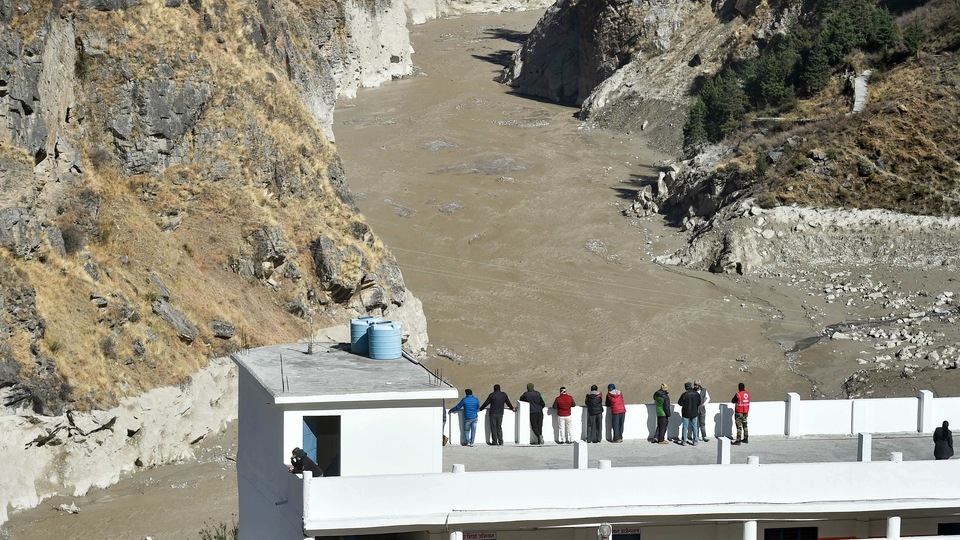
The operations resumed around 3pm, some 30 minutes later, but officials admitted that there was not much progress in clearing muck from a tunnel in the Tapovan project, where “25-35 workers” were feared trapped after Sunday’s deadly floods.
“The water level in Dhauliganga increased by about one to one-and-a-half feet. The rescue operation was halted for over half an hour. It was resumed soon after the water revel receded,” Uttarakhand director general of police (DGP) Ashok Kumar said.
Rescuers have retrieved 35 bodies since tragedy struck Chamoli district on Sunday morning, when a glacier breach sent a torrent of water and sludge hurtling down a valley into the Rishiganga river (it becomes Alaknanda in Chamoli city). At least 169 people have been missing since the subsequent flooding that hit villages on the way, damaged two power plants (the Tapovan project and the Rishiganga hydel project), and prompted a section of experts to link the event to climate change.
On Thursday morning, rescue agencies used underwater sonar system to locate what they feared could be bodies in the muddy waters downstream, especially in Srinagar dam, which is around 60km from the Rishiganga dam site, officials said. Rescuers believe several bodies have been washed away downstream and could have reached as far as the Srinagar dam.
Rescuers also drilled a hole vertically on the floor of a tunnel in the Tapovan dam project, about 6km downstream from the Rishiganga plant, to send a camera down in order to know the status of another underground tunnel, which is nearly 11 metres below, officials said. Authorities fear “25-35 workers” are trapped there.
“We have been trying to put a camera into that tunnel through a hole since Thursday morning. But it is taking time,” a senior official involved in the rescue operation, who did not want to be named, said.
DGP Kumar said officials were able to clear muck till 100 metres inside the main tunnel, which is about 1.7 kilometres long. “…beyond that, the heavy muck covers the area again as a soon as we remove some from it,” he said.
State Disaster Response Force (SDRF) commandant Navneet Bhullar said heavy boulders and muck brought by the torrent were making the rescue work difficult. “We are using many tactics, such as drones for laser scanning of the tunnel to know the amount of muck inside and trace the location of the workers. We are also taking the help of the dog squad even as the digging work progresses,” he said.
“SDRF has two drones, which are being used for geo-mapping of the Tapovan dam tunnel. NDRF (National Disaster Response Force) has also brought some high-endurance drones, which are also being used. We are using all possible means: drones, dog squad, binoculars in the search operation,” he said.
About a 100 SDRF personnel, 178 NDRF personnel, 425 Indo-Tibetan Border Police (ITBP), a team of the Seema Suraksha Bal, 124 army personnel, 16 firemen, 20 revenue officials, and six medical teams are carrying out the rescue and relief operations in the affected areas of Chamoli.
SDRF spokesperson Praveen Alok said one more body was recovered downstream (at Galnav near Karanprayag) on Thursday, taking the death toll in the tragedy to 35. “Ten bodies have been identified so far, while efforts are on to identify the rest of the 25 bodies,” he said.