Massive road development projects in the Tibet Autonomous Region have resulted in rivers changing course and expanding China’s boundary into the northern territories of Nepal, according to a document from Nepal’s agriculture department.
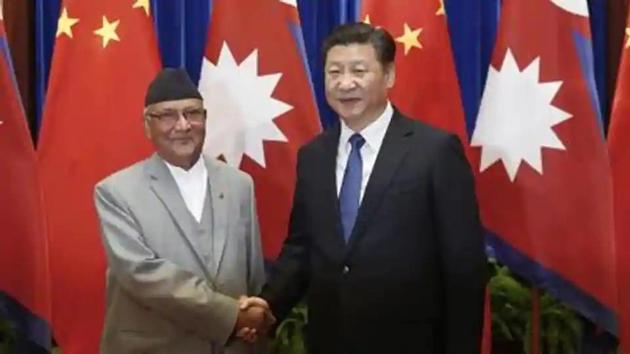
The document, accessed by Hindustan Times, said patches of Nepalese territory in several districts had been encroached on by China, and it cautioned Beijing could take over more territory in the north if the rivers continue to change course. The loss of Nepalese territory due to rivers changing course could run into “hundreds of hectares”, it said.
“There is a high possibility that over the period of time, China may develop its Border Observation Post of Armed Police in those territories,” the document from the agriculture ministry’s survey department said.
Nepal, which shares a boundary with China in the north, has 43 hills and mountains, from east to west, that act as the natural boundary between the two countries. The two sides have six check posts, essentially for trade.
The survey department assessed that the changing course of 11 rivers had already cost Nepal 36 hectares, or 0.36 sq km, across the four districts of Humla, Rasuwa, Sindhupal chowk and Sankhuwasabha.
{{/usCountry}}The survey department assessed that the changing course of 11 rivers had already cost Nepal 36 hectares, or 0.36 sq km, across the four districts of Humla, Rasuwa, Sindhupal chowk and Sankhuwasabha.
{{/usCountry}}The encroachment of 36 hectares by China was first reported to the KP Sharma Oli government last year.
There were street protests after the loss of Nepalese territory to China emerged in the local media but the government, accused by Oli’s detractors of attempting to cosy up to China’s communist party, played down the encroachment by the Chinese and channelled the public outrage against India over new maps issued by New Delhi last November after the erstwhile state of Jammu and Kashmir was split into two union territories.
Oli went on to ramp up differences with India over Kalapani, Limpiyadhura and Lipulekh, spread over 330 sq km, in May after Chinese intervention helped him survive a rebellion within his party the previous month. That intervention, however, meant he had to scrap two ordinances promulgated just five days earlier.
Oli seized the opportunity after defence minister Rajnath Singh opened an 80-km road that ends at Lipulekh pass on the border with Tibet.
Analysts in New Delhi and Kathmandu believe Oli’s hard push for Nepal’s new political map was an effort to whip up ultra-nationalistic sentiments targeting India to consolidate his position in the government and the party. This is why, a diplomat in New Delhi said, didn’t inform Parliament before it voted on the map earlier this month that he had ignored an offer of dialogue between the foreign secretaries of the two countries.
Instead, he gave parliamentarians the impression his government was forced to push the envelope since New Delhi had declined his offer for dialogue.
New Delhi hardened its position after the map was cleared by Nepal’s Parliament this month, asserting it was for him to create a conducive atmosphere in case he is interested in bilateral dialogue on the boundary issue.
Nepalese officials, speaking on condition of anonymity, questioned the veracity of the survey showing loss of land to the Chinese side and said such matters are handled by the survey department under the ministry of land reform and management.
“Nepal and China have an agreed boundary and established protocols. The border has been completely mapped and there are pillars and established mechanisms for dealing with any issue that may arise,” said one of the people cited above.
“There are also periodic inspections between the two sides and any issues that could crop up on the ground are dealt with by the two sides,” the person added.
The officials acknowledged that Nepal and India are yet to reach a similar stage in their handling of the border, which is yet to be completely mapped.
The Indian side said earlier this month that almost 98% of the 1,750-km land and riverine border between India and Nepal has been delineated and differences remain only in Kalapani sector in Uttarakhand and Susta sector in Bihar.
...