
 E-Paper



China’s actions eroded trust, says army chief
Indian Army chief Gen. Dwivedi calls LAC situation stable yet sensitive, emphasizing trust issues with China amid ongoing military standoff and recruitment reforms.

 Prefer HTon Google


NEW DELHI: Indian Army chief General Upendra Dwivedi on Tuesday described the situation along the contested Line of Actual Control (LAC) in eastern Ladakh as “stable but sensitive,” pointed out that trust between the Indian Army and the Chinese People’s Liberation Army (PLA) was “the biggest casualty” of the dragging military standoff with China in the sensitive theatre, and linked the Agnipath scheme for recruiting soldiers to the demands posed by situations such as this.
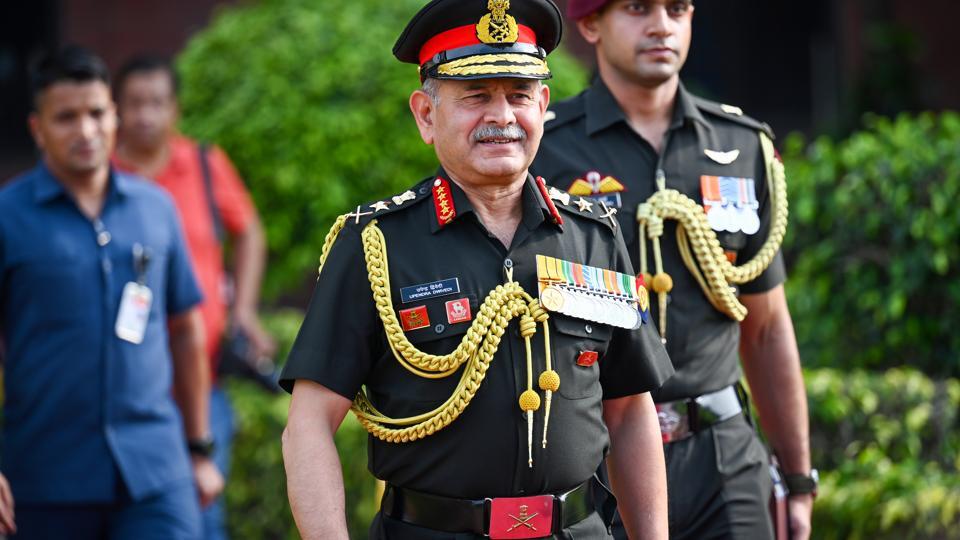
“China has been intriguing our minds for quite some time. With China, you must compete, cooperate, coexist, confront and contest,” the army chief said, presenting an approach to dealing with the country’s neighbour to the north.
“What is the situation today? It is stable but not normal, and it is sensitive... In the complete gamut... trust has become the biggest casualty,” he added at the Chanakya Defence Dialogue 2024, organised by the Indian Army in collaboration with the think tank Centre for Land Warfare Studies.
Positive signalling is coming from the diplomatic side, but execution on the ground rests with military commanders on both sides, he said.
“What we must understand is that the diplomatic side gives you options and possibilities. But when it comes to execution on the ground, it is dependent on the military commanders on both sides to take those decisions.”
His remarks came a month after India and China agreed to intensify contacts through diplomatic and military channels to narrow down differences and find early resolution of outstanding issues along LAC. The Working Mechanism for Consultation and Coordination (WMCC) on India-China border affairs met in Beijing on August 29 for the 17th time since the start of the face-off on in May 2020.
The army chief has accurately described the situation along LAC, said former Northern Army commander Lieutenant General DS Hooda (retd).
“With the breaking down of confidence building measures that ensured peace, there is a great deal of mutual suspicion and distrust. So, while the overall situation may appear stable at the moment, local sensitivities could spark off some incident. How military commanders on the ground respond is not something that can be predicted,” Hooda said.
The military standoff between India and China in eastern Ladakh is now in its fifth year, with no indication of an immediate resolution of the outstanding problems along LAC even as India is hoping that ongoing negotiations with the neighbour will help restore the status quo ante of April 2020.
“What are we wanting? We want the situation that was there pre-April 2020 to be restored, whether it is the ground occupation situation, buffer zones or patrolling. Till the time that situation is not restored, as far as we are concerned, we are fully operationally ready for any contingency,” the army chief said.
The two armies have thus far held 21 rounds of corps commander-level talks to cool tensions along LAC.
“And we have come a long way,” the army chief said, adding that the low hanging fruit has been picked (referring to the disengagement that has taken place thus far).
“Now when it comes to situations where both sides have a different perception...It means both sides must have a win-win situation in any negotiation. Some kind of indication has been given by the diplomatic sides. Now the military sides will sit together (the upcoming 22nd round of military talks) and see how this can be translated on the ground. Everything is on the (negotiating) table along the northern front, including Depsang and Demchok,” Dwivedi said.
The talks have thus far resulted in four rounds of disengagement from Galwan Valley, Pangong Tso, Gogra (PP-17A) and Hot Springs (PP-15), but problems at Depsang and Demchok are still unresolved. But both armies still have tens of thousands of troops each and advanced weaponry deployed in the Ladakh theatre.
YOUTHFUL PROFILE A MUST ALONG CHINA BORDER Dwivedi backed the Agnipath scheme, saying a youthful profile of the army was a must for the northern front with China where India has rebalanced its forces, even as he highlighted the need to increase the upper age limit for the short-term recruitment model.
“Youthful profile is required for our northern front.”
The ground feedback on the performance of Agniveers recruited under the scheme is excellent, he said.
The recruitment model, a political hot button, was introduced two years ago with the stated objective of keeping the armed forces young and battle-ready. Agnipath was a major departure from the military’s decades-old recruitment system that was scrapped when the National Democratic Alliance (NDA) government announced the new scheme in June 2022.
Only young men and women aged between 17 and a half and 21 are eligible under the scheme that seeks to recruit soldiers for only four years, with a provision to retain 25% of them in regular service for another 15 years.
“One thing on which we all agree is that when we want Industrial Training Institute-qualified personnel, we need to increase the age. As far as other issues are concerned, internal discussions keep taking place,” he said.
On September 5, HT reported that the government has no plans to restructure the controversial Agnipath model that cuts tenure of personnel below officer rank and offers them fewer service benefits as making any changes to the scheme will go against the grain of what it seeks to achieve and endanger India’s security interests.
“When women came into the army (in early 1990s), we didn’t know how to handle it. It was difficult, we had some plans, but what came on the platter was entirely different. Then we evolved over time. The courts also came in and helped us converge on the correct path. Similarly, as far as Agnipath is concerned...by December 2024, we will have 100,000 Agniveers.”
The Agniveers are enthused, ready to learn and they have the urge to showcase what they have learnt, he said. “There was some fear they will compete with one another. Even I had that kind of fear. I recently visited my unit in Nyoma and I realised they are very happy and there is a great deal of cooperation among them and they are not competing with one another.”
The scheme, which the Opposition Congress has repeatedly called for scrapping, has come under fire from aspirants across the country, especially the northern states, and is believed to have cost the Bharatiya Janata Party (BJP) a chunk of votes across the region in the summer’s national elections.
Soldiers recruited under the legacy system serve for about 20 years before they retire in their late 30s with pension and other benefits including health care and canteen facilities, which Agniveers released from service after four years are not entitled to.
In July, Prime Minister Narendra Modi brushed aside criticism of the Agnipath model, saying it will boost combat effectiveness and increase the strength of the country.
CONSENSUS ON THEATERISATIONThe military is ready to present its theaterisation model to the decision-makers, the army chief said.
“Today we have a great consensus among the three chiefs and the Chief of Defence Staff and we have been able to devise a complete structure...We are ready to present it to our decision makers...this is how we want to go about it. It requires jointness and integration.”
Theaterisation is a long-awaited reform for the best use of the military’s resources to fight future wars. The model being pursued involves raising the China-centric northern theatre command in Lucknow, the Pakistan-centric western theatre command in Jaipur, and the maritime theatre command in Thiruvananthapuram.
“Initially, some hiccups were there, and the pace was slow. But now the pace will be very fast...A theatre commander can be from any of the three services,” he said.
The armed forces identified 200 fields for jointness and 30% of that has already been achieved and the rest is a work in progress, he said.
Jointness came into sharp focus at the Joint Commanders’ Conference on September 5 in Lucknow where defence minister Rajnath Singh made a firm push for cultivating a joint vision, preparing for future wars, and delivering a synergised, swift and proportionate response to provocations.
In September, Headquarters Integrated Defence Staff (HQ IDS), a single-point organisation for jointness under the defence ministry, conducted a crash course for senior military officers with a focus on boosting jointness and integration among the armed forces, an essential prerequisite to the creation of theatre commands.


