On June 15 evening when the Indian Army troops clashed with People’s Liberation Army (PLA) at Galwan, the temperature of the river was close to zero (and below it in some places) and a large number of troops on both sides fatally succumbed to hypoxia (low oxygen levels because of the altitude) and hypothermia (excessive cold), people familiar with the matter said.
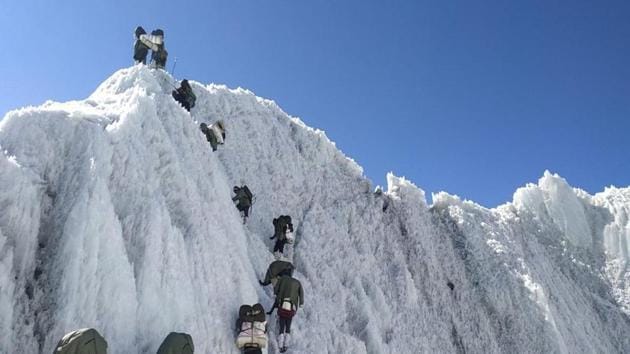
According to Indian military commanders, this information is relevant because starting September, the weather will start taking a hand in Eastern Ladakh, where Indian and Chinese troops are still locked in a stand-off as an uneasy truce between the two countries plays out.
According to accounts given by the survivors of the clash, a large number of Chinese PLA troops came in an armoured personnel carrier and soon started dropping down due to lack of oxygen at 16000 feet when the fisticuffs began between the two armies. If lack of oxygen did not get them, then the frozen Galwan river did the job.
While the Chinese PLA has not revealed the number of troops from III mechanized infantry of Xinjiang Military District that lost their lives in the clash, these are more, and not less than that suffered by the Indian side which loses 20 soldiers, the military commanders added, asking not to be named. Throughout the intervening night of June 15 and 16, two Chinese PLA helicopters carted the dead and injured to nearby hospitals or to hyperbaric chambers in depth areas.
Although both sides decided to disengage after the Special Representative level dialogue on July 5, the exercise is long drawn out with winter ready to move into the theatre next month and firmly set in September in all the friction points. “ It is not the temperature that will kill but the wind which increases the chill factor. Add to this the rarefied atmosphere at Galwan, Gogra-Hot Springs and the weather takes a turn for the worse,” said a senior military commander.
{{/usCountry}}Although both sides decided to disengage after the Special Representative level dialogue on July 5, the exercise is long drawn out with winter ready to move into the theatre next month and firmly set in September in all the friction points. “ It is not the temperature that will kill but the wind which increases the chill factor. Add to this the rarefied atmosphere at Galwan, Gogra-Hot Springs and the weather takes a turn for the worse,” said a senior military commander.
{{/usCountry}}The military commanders said adverse weather conditions, including up to seven feet of snow, could put the Chinese at a disadvantage because its army in Akasi Chin is largely made of conscripts, who were drafted for a three month annual summer exercise in Tibet and Xinjiang in return for the state taking care of their future education. The PLA conscripts are used to moving on armoured carriers in contrast to their Indian counterparts who not only patrol on foot but live in the worst of weather conditions whether in Siachen or in Sikkim or in Thag La ridge in Tawang, the commanders added.
The Indian Army has been fighting since 1984 in Siachen, Kashmir and North-east mountain theatre, the commanders pointed out. Even today, the Indian Army mans Indira Col west, the farthest point on Siachen Glacier, Sikkim finger area, Doklam, and posts in the mountain ridges in Arunachal Pradesh.
The Indian Army has specialized in high altitude warfare and has the capacity to take on the enemy from the front as it proved during the 1999 Kargil war, where it fought from heights of Muskoh to Chorbat La in the Gilgit Baltistan area, the commanders said .
As both India and China are fully deployed in Aksai Chin area and de-escalation is still some time away, the PLA will soon have to take a call on whether to end its aggression and restore status quo ante or be prepared to spend nights on Tibetan plateau where temperatures of 25 degrees below zero is normal, analysts said. Winter does not take toll on the troops alone but also on equipment with artillery barrels and engines freezing.
The other issue that the PLA will also have to keep in mind is that the Indian Army is deployed all along the 3488 km long Line of Actual Control between the two countries, while the PLA is only deployed in selected places, the analysts added. This includes Sikkim, where the Indian Army surrounds the Chumbi Valley from three sides