
 E-Paper





Follow the latest breaking news, major developments and agenda-setting stories from India and around the world with the newsdesk at Hindustan Times. Operating round the clock, the desk brings together experienced editors, reporters and correspondents to deliver fast, accurate and contextual reporting across subjects that influence public policy, governance, business, society and international affairs. The HT News Desk covers politics, elections, government policies, the economy, business and markets, science and technology, the environment, law and order, infrastructure, education, climate issues and geopolitics, while closely tracking developments across states, institutions and global capitals. The team also leads coverage of major breaking news events, policy announcements, court proceedings, natural disasters, public emergencies and significant international developments. Reports published by the newsdesk are based on information gathered from reporters on the ground, official statements, government agencies, court records, regulatory filings, recognised institutions and other authoritative sources. Stories undergo editorial scrutiny and verification processes to ensure accuracy, fairness and relevance, and are updated as events evolve and additional information becomes available. Whether covering a key political decision in New Delhi, an economic policy shift affecting millions, a landmark court ruling or a major global event, the HT News Desk aims to provide readers with reliable, fact-based journalism that delivers not only the latest developments but also the context and analysis needed to understand their wider implications.
 Trending News
Covid-19 outbreak: It took the world 13 days to get its second million
While the first million infections took 93 days, the second took place in 13 days, driven largely by the United States and Europe. In all, about 130,802 people have succumbed to the infection, according to data tracked by worldometers.info.


The number of Covid-19 infections topped two million on Wednesday, crossing a psychological threshold that serves as a reminder of how it has torn through continents, devastating economies and upending the way people lived and earned their livelihood for what may be months, if not years, to come.
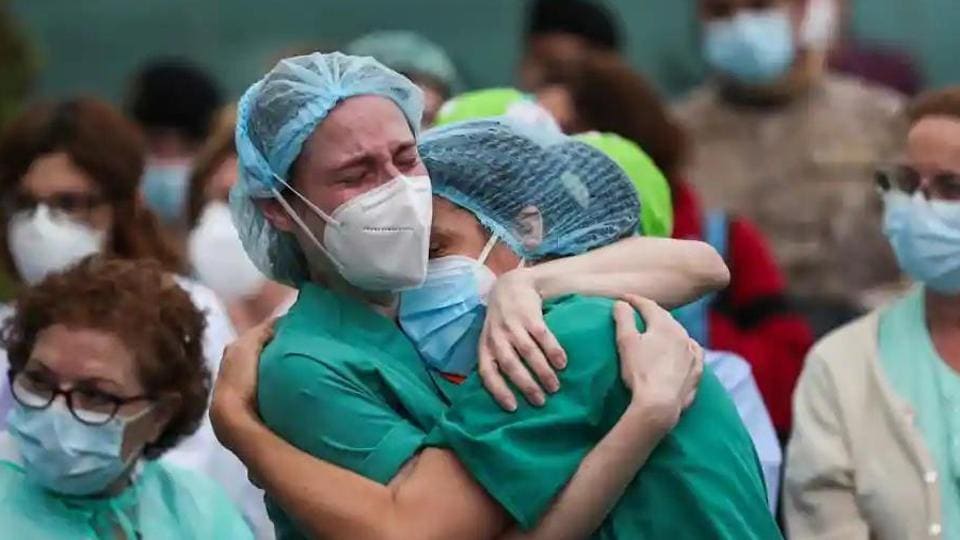
While the first million infections took 93 days, the second took place in 13 days, driven largely by the United States and Europe. In all, about 130,802 people have succumbed to the infection, according to data tracked by worldometers.info.
According to the website, United States and countries in Europe account for 78% of infections and 86% of the fatalities. United States is now the biggest hot spot, adding 2,228 fatalities in 24 hours to take its total death toll to over 26,000. Of these, at least 10,000 are in New York.

The other regions where the brunt of this disease has been felt most heavily are Italy, France, Spain and the United Kingdom, with Spain accounting for the highest number of deaths per capital (390 per million people).
However, holding out some hope, a lack of fresh hot spots globally has now fuelled discussions about how some places might begin to reopen.
Scientists and health experts are now looking at low- and middle-income countries such as India, where the disease has the potential to exact more severe costs due to inferior health care facilities.


