
 E-Paper



Created micro-climate of biodiversity that is secure from climate change: Manoj Kumar
Manoj Kumar talks about how the world could address both poverty and hunger through his Araku Coffee project in the Eastern Ghats of Andhra Pradesh, where nearly 100,000 farmers have developed mini forests along with their coffee plantations.

 Prefer HTon Google


Several recent research studies and assessments by the United Nations have underlined that runaway climate change is increasing hunger and inequality. A UN special rapporteur has warned of “climate apartheid” due to widespread displacement and hunger. In an interview to Hindustan Times, Manoj Kumar, a corporate banker-turned-social entrepreneur, talks about how the world could address both poverty and hunger through his Araku Coffee project in the Eastern Ghats of Andhra Pradesh, where nearly 100,000 farmers have developed mini forests along with their coffee plantations that are regenerating lost biodiversity and developing as successful businesses.
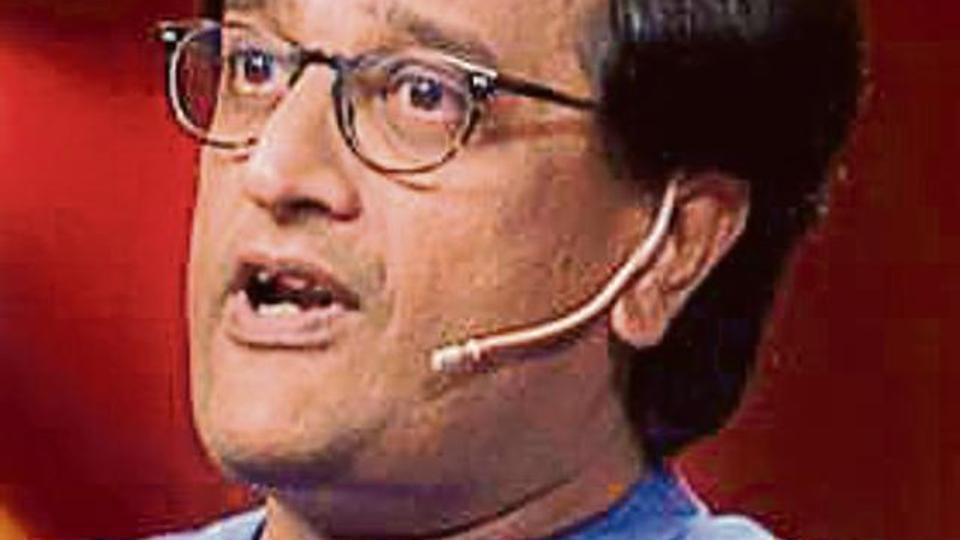
Twenty years ago, Araku was a region plagued with illiteracy and poverty. The maternal mortality rate in the region was worse than Sub-Saharan Africa. Since the region was a hotbed of Naxalism, no developmental work could be undertaken. Well aware of all the challenges, Naandi Foundation (Manoj Kumar is director of the foundation) took Araku up as a legacy project, and began to work on education and healthcare in the region. Once that was considerably improved, they shifted their efforts towards creating livelihood opportunities and restoring the denuded forest cover in the area. This is how coffee growing began in the region.
We addressed the two biggest problems that agriculture in India faces today -- growing a monoculture crop and using chemical-based fertilizers instead of biological ones to enhance produce. For the former, we have ensured that each farmer who grows coffee also has a small functional forest where he grows shade trees of pepper, mango, etc. Trees of 19 different varieties apart from coffee are planted, which provide much-needed shade to the coffee plants and also boost profits for the farmers. Thus, we have created a micro-climate of biodiversity that is secure from the risks of climate change.
The social model comprises two aspects: Knowledge sharing and distribution of wealth. We follow an open-source model and believe in democratising the knowledge available to us through international experts and so we transfer this knowledge to our team, which in turn shares it with the farmers. We have made sure that the farmers are able to get an assured sum of money every month. Instead of March, when the harvest ends, we pay the farmers throughout the year, after every two months, so that they can use the cash flows to plan better and spend better. This implicit trust forms the backbone of our relationship with the farmers and also our social model.
Apart from giving them the means for sustainable livelihood, the other reason for growing coffee in Araku was that the tribals came to us with what they considered to be their biggest problem — recreating the forest. Forests from which they had lived off had denuded over the past five to six decades. They did not really know what climate change meant, but could see its adverse impact long before we did. Today, over 34,000 acres of forest land has been restored, and 20 million trees of 19 different varieties have been planted in the region.
The transformation of 100,000 tribal farmers is because of the agricultural model we implemented in Araku. We were able to develop a template in which small plots of land, through composting, were able to yield high-quality produce. Biodiversity thrived as forests returned, tribal farmers were converted into entrepreneurs, and 100,000 local tribal lives came out of poverty. More than 90% of the farmers who have been working with Araku Coffee for over five years are now out of poverty. Currently, the top 40% of farmers who have spent 8-9 years growing coffee and shade trees with pepper have profits ranging between ~30,000-3.5 lakh annually.


