
The Supreme Court on Monday directed appellate tribunals hearing challenges arising from the special intensive revision (SIR) of electoral rolls in West Bengal to prioritise appeals filed by voters deleted from the electoral rolls, while deferring, for the time being, appeals seeking the exclusion of voters whose names were included.
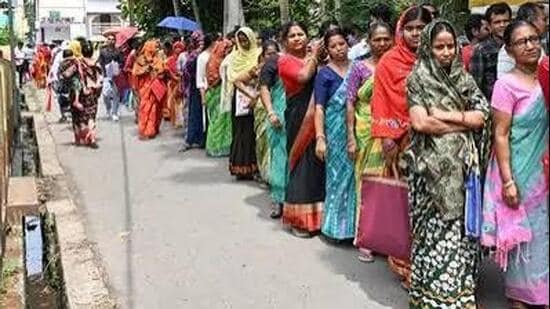
A bench, comprising Chief Justice of India (CJI) Surya Kant and justices Joymalya Bagchi and V Mohana, directed the tribunals to segregate the appeals into two categories, observing that challenges by deleted voters carried greater urgency as their right to vote was directly at stake.
“The first group will consist of appeals preferred by voters who have been excluded and whose names have been deleted from the electoral rolls. The second group will consist of appeals by persons aggrieved by the inclusion of certain voters in the electoral rolls. The second set of appeals does not involve any urgency, and those appeals may, for the time being, be deferred,” ordered the court.
The bench further directed that appeals filed by deleted voters from constituencies falling within the Kolkata Municipal Corporation (KMC) limits be given priority, in view of the upcoming municipal elections.
The directions assume significance given the mounting backlog before the 19 appellate tribunals constituted to adjudicate disputes arising from the SIR exercise. Of the 38.31 lakh appeals filed so far, 22.21 lakh are by voters seeking restoration of their deleted names, while 16.10 lakh challenge the inclusion of certain voters in the electoral rolls.
{{/usCountry}}The directions assume significance given the mounting backlog before the 19 appellate tribunals constituted to adjudicate disputes arising from the SIR exercise. Of the 38.31 lakh appeals filed so far, 22.21 lakh are by voters seeking restoration of their deleted names, while 16.10 lakh challenge the inclusion of certain voters in the electoral rolls.
{{/usCountry}}Advocate Prashant Bhushan, appearing for petitioners, pointed out that although nearly 38 lakh appeals were filed, only a little over one lakh were decided so far. He told the bench that 93% of the appeals decided had gone in favour of deleted voters. He also highlighted that more than two lakh voters from the Kolkata municipal area had been excluded and their appeals remained pending.
The court directed the Election Commission of India (ECI), in consultation with the chief justice of the Calcutta high court, to increase the strength of the appellate tribunals to ensure expeditious disposal of the cases. It also asked the poll panel to identify alternative premises at different locations in Kolkata to facilitate the functioning of the tribunals.
The bench issued the directions after hearing submissions concerning the 16.10 lakh appeals filed by officials from the office of the West Bengal chief electoral officer (CEO) challenging the inclusion of names in the electoral rolls.
Senior advocate Gopal Sankaranarayanan questioned the legal basis for these appeals, arguing that the CEO had no authority to institute challenges in the name of ECI against decisions taken by electoral registration officers. He submitted that under Rule 23 of the relevant electoral rules, appeals against decisions of electoral registration officers under Rules 20, 21 and 22A could be filed before an officer designated by ECI, making the filing of appeals by the poll panel’s own authorities legally questionable.
The issue had also figured in an affidavit filed by ECI before the Supreme Court in October. The poll panel maintained that the appeals had been filed by officers of the West Bengal CEO’s office in their statutory capacity under the Representation of the People Act, 1950, and that the matters had not been brought before the commission.
The October affidavit, however, did not identify any individual who authorised the filing of the 16.10 lakh appeals, an issue that was flagged in a separate petition questioning the manner in which decisions concerning the SIR exercise were taken.