The number of daily infections of Covid-19 reported in Delhi on Sunday dropped below the 10,000-mark for the first time in 19 days, and the daily test positivity rate fell to 13.3% as evidence continued to mount that the city’s latest Covid-19 outbreak is now contracting just as fast as it expanded.
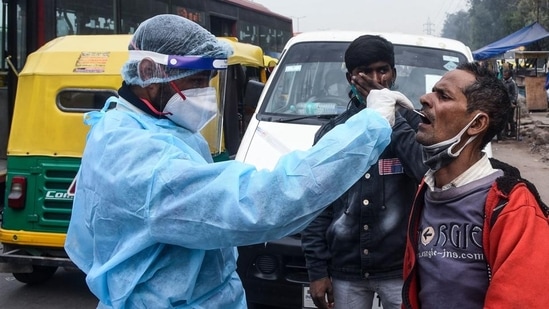
Only 9,197 infections were detected among the 69,022 samples tested for Covid-19 across the city -- the lowest single-day increase in Covid-19 cases in the national capital since January 4, and the lowest daily positivity rate since January 5, according to data from the Delhi government’s health bulletins.
For context as to how fast the Covid-19 numbers in the city are currently dropping, both these statistics were nearly three times higher just 10 days ago – on January 13, there were a record 28,867 new cases in Delhi, while the daily positivity rate was 30.6% on January 14.
After Sunday’s update, the seven-day average of daily cases in the city has now dropped to 11,677 – a fall of around 50% from the peak level of 23,529 average cases recorded for the week ended January 15.
In all, 2,424 beds earmarked for Covid-19 patients are currently occupied across the city. This number hit a peak of 2,784 on January 17, and has been consistently dropping since. The beds occupied on Sunday represented 15% of the capacity available in the city at present.
Even at its peak, the number of new cases in the current wave posed no threat to the city’s health care infrastructure – at least 80% of the Covid-19 earmarked hospital beds were vacant throughout, with more surge capacity being available if needed.
Experts say that the city appears to have tided over the worst of this wave in terms of cases and hospitalisations, and that they expect numbers to continue to improve from here on.
{{/usCountry}}Experts say that the city appears to have tided over the worst of this wave in terms of cases and hospitalisations, and that they expect numbers to continue to improve from here on.
{{/usCountry}}“We have averted the worst of this wave but we are still cautious and are keeping a close watch on the numbers,” Delhi health minister Satyendar Jain had said on Saturday.
Suresh Kumar, medical director of Lok Nayak Hospital, Delhi’s largest Covid hospital, said the trend of dropping hospitalisations has only strengthened in the past few days.
“While around 35-40 new admissions were reported every day till a couple of days ago, now only 25-30 new Covid-19 admissions take place daily,” Kumar said, adding that only around 15% of the 750 Covid beds in the hospital are occupied. “According to the hospitalization and discharge trend of the last few days, we expect that hospitalisations will further drop in the next week,” he said.
Rapid rise in cases, low hospitalisation, followed by a quick drop in infection rate are all trends that have been consistent with Omicron-driven outbreaks not only the world over, but also in India’s early outbreak centres such as Mumbai and Kolkata.
Expert said the current trends reinforce the argument that the Covid wave has stabilised in the city, and argued that some restrictions on movement can now be rolled back – a request that was also made by the Delhi government on Friday to the Delhi Disaster Management Authority (DDMA).
The government on Friday asked DDMA, which is led by lieutenant governor Anil Baijal and is the authority on Covid-related rules – to withdraw the weekend curfew, lift the odd-even restriction on standalone shops, and allow private offices to call back 50% of their staff. DDMA, however, accepted only the last suggestion.
Dr Jugal Kishore, head of the department of community medicine at Safdarjung hospital, said: “Positivity rate is continuously going down in Delhi which is similar to Mumbai, Kolkata where R0 is already less than 1, means transmission is almost halted. However, reports from other countries are showing the emergence of mutant variant of Omicron known as stealth variant. We need not to worry about more mutants as this process will continue. Life should come to normal and all commercial activities should be restored as soon as possible including school and colleges. General respiratory etiquette, hygiene, nutrition, healthy lifestyle are the real need of the population which should be ensured by the government.”
The Delhi government in a statement on Sunday said that it has adopted a hands-on approach for battling the pandemic, and expressed confidence that the situation would improve further.
“No matter what the situation was, there was a plan to tackle it and curb the spread. CM Arvind Kejriwal himself has been monitoring every step of the government and remained firm about protecting every citizen in whatever way possible. We hope that the situation remains under control and continues to improve in the coming days,” the government said.