
 E-Paper



DGCA lays down norms to strengthen flight safety
The aviation regulator has also asked the airlines to take immediate and strict action in case an issue is pointed out to them.


The Directorate General of Civil Aviation (DGCA) has laid down roles and responsibilities for airlines as part of its surveillance programme to strengthen flight safety, and warned of strict actions in case of non-compliance, people familiar with the development said.
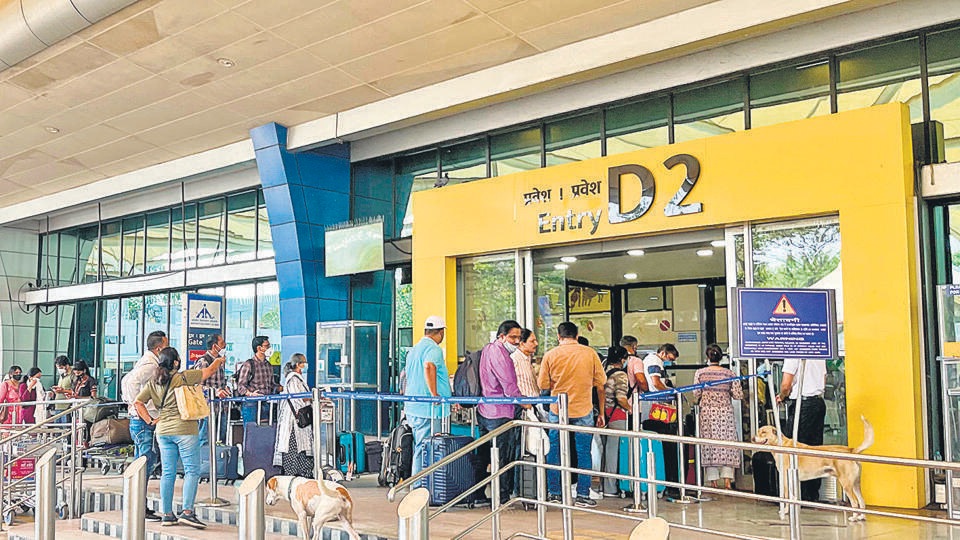
The aviation regulator has also asked the airlines to take immediate and strict action in case an issue is pointed out to them.
“Flight safety is a serious business and it requires a systematic approach towards safety management. It has to be collaborative and correctional,” said Arun Kumar, director general, DGCA. “The organised response lays down roles and responsibilities of all concerned, which, if not discharged appropriately entails enforcement actions.”
The direction comes as the DGCA has made a detailed surveillance programme focusing on passengers’ safety. Organisations such as scheduled airlines, non-scheduled operators, aircraft maintenance firms, design and manufacturing organisations, flying training institutes, and maintenance training institutes have been included in the programme.
“A robust safety management system is a sine qua non (essential condition) for every entity working in aviation. It identifies key safety priorities, indicators and risks and their resolution through appropriate mitigation measures,” Kumar said.
Explaining the procedure, the aviation regulator said any significant non-compliance of safety standards — which lowers the safety standard and affects seriously the flight safety — identified during surveillance should be addressed immediately and intimated to the DGCA. Once intimated, the DGCA office will then verify compliance action to ensure that the hazard to safety has been resolved.
However, in some cases, such resolutions may take time. “In such cases, DGCA office may allow the resolution of the level 1 finding for a period not exceeding seven days provided that the immediate risk to safety has been adequately mitigated,” a DGCA circular, dated April 15, read.
DGCA said that findings related to non-compliance that could lower the safety standard and possibly hazard the flight safety must be resolved within a short time not exceeding 30 days subsequent to a review of the submitted targeted corrective action plan.
“The observations shall be intimated to the approved organisations in the form of Deficiency Reporting Forms (DRF), which has been standardised,” the circular stated.
Kumar said, “Continuous monitoring of risk mitigation measures to ensure that they remain relevant is incumbent on all concerned.”
The DGCA has asked all organisations to take prompt action of resolving the non-conformities brought out during the surveillance inspection, spot checks or safety audits conducted by them. It also said that the organisation will define a corrective action plan and demonstrate corrective action to the satisfaction of the DGCA within a period depending upon the level of the finding.
“Where no reasonable and justified reasons are assigned for non- implementation of the corrective action plan within the time frame... necessary enforcement action will be initiated against the organisation or the person responsible for non-compliance as the case may be,” the circular added.


