E-Paper



Dhar’s Bhojshala site is a Saraswati temple, rules Madhya Pradesh high court
The high court did not pass any orders on the demand that the goddess’s idol be brought back from a London museum

 Prefer HTon Google


The disputed Bhojshala Temple-Kamal Maula Mosque complex in Dhar district is a temple dedicated to Goddess Saraswati, the Indore bench of the Madhya Pradesh high court held on Friday and ordered the government to provide a separate plot of land to Muslims to construct a mosque.
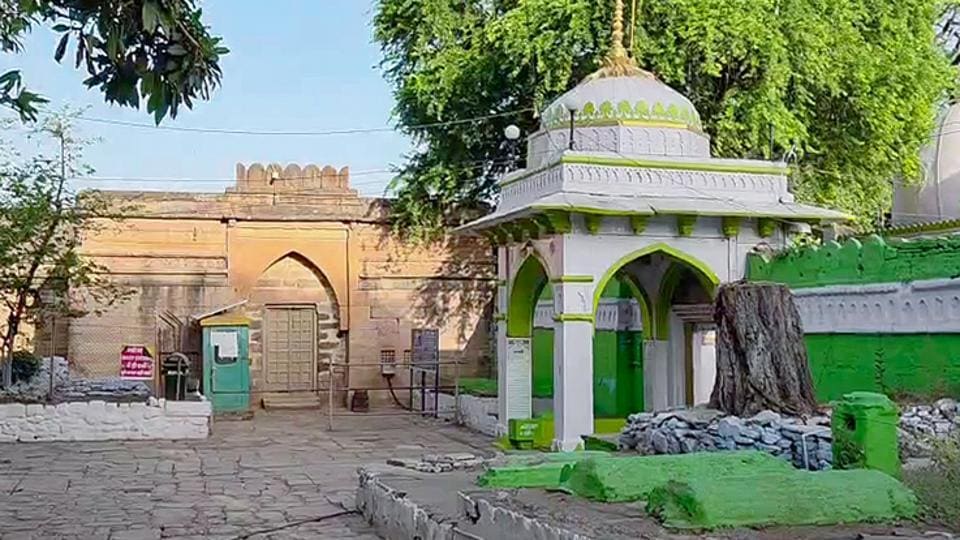
“The religious character of disputed area of the Bhojshala Complex and Kamal Maula Mosque is held to be a Bhojshala with a temple of goddess Vagdevi (Saraswati),” a bench of justices Vijay Kumar Shukla and Alok Awasthi said in a 242-page judgment.
The bench also held that the disputed area had been a protected monument under the Ancient Monuments and Archaeological Sites and Remains Act, 1958, since March 18, 1904, and struck down the portion of an April 7, 2003, order that barred Hindus from offering prayers at the complex but allowed Muslims to pray.
“The earlier structure was a center of learning and religious activity associated with Saraswati worship (Sharda Sadan). Subsequently, the structure was modified, damaged, and reused, leading to its conversion into a mosque. A significant inscription (15th century, Khilji period) refers to destruction of idols, conversion of temple into mosque,” the bench said.

In arriving at the decision, the bench said it had considered the archaeological, historical facts, ASI notifications and survey report on the anvil of the statutory provisions of the ASI Act as well as on the basis of the principles laid down in the Ayodhya case.
“We record finding that historical literature placed established that the character of the disputed area was Bhojshala as a Centre of Sanskrit learning associated with Raja Bhoj of Parmar dynasty and the literature and architectural reference including those connected with the period of Raja Bhoj indicate the existence of temple dedicated to the goddess Saraswati at Dhar,” the bench said.
The court did not pass any orders on the demand that the goddess’s idol be brought back from a London museum, and re-establish the same within the Bhojshala complex except to ask the central government to consider the representation in this regard.
A group, which called itself Hindu Front for Justice approached the high court in 2022 seeking a scientific survey to determine the religious character of Bhojshala. The high court ordered the survey on March 11, 2024, which was conducted between March 22 and June 30 at the one-acre site.
ASI submitted a 2,200-page report prepared after the scientific survey of the 11th-century site. The report concluded that the monument was built from the remains of earlier temples, and that the existing mosque structure was erected centuries later, as evidenced by inscriptions, sculptural fragments, and architectural remains.
The bench, which had been holding daily hearings since April 6, heard arguments for 36 days before reserving the verdict earlier this week.