Even as unarmed and armed drones figured in a big way in the DGPs conference in Lucknow for manning international borders this weekend, the Indian military is in the process of getting upgraded surveillance drones and examining the options of procuring armed drones from Israel.
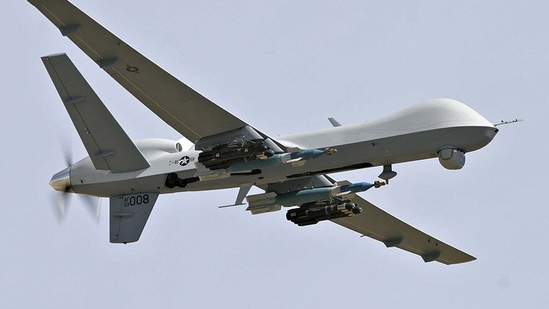
While the Indian Navy, the designated service for armed drones, is soon approaching the Defence Acquisition Council (DAC) for acquiring 30 MQ-9B Predator drones from US, it is also examining the armed Heron TP drone from Israel for additional purchases.
According to officials in knowledge of developments, a separate session on drone technology was held during the DGPs conference, with Prime Minister Narendra Modi part of the discussions. It was emphasised that India should be using drone technology for surveillance and response on the borders till such time the border infrastructure is upgraded to meet the future challenges posed by neighbours.
{{/usCountry}}According to officials in knowledge of developments, a separate session on drone technology was held during the DGPs conference, with Prime Minister Narendra Modi part of the discussions. It was emphasised that India should be using drone technology for surveillance and response on the borders till such time the border infrastructure is upgraded to meet the future challenges posed by neighbours.
{{/usCountry}}Already, India is getting its surveillance Herons upgraded from Israel with advanced communication and data links, it is also examining the Heron TP, which virtually carries the same weapon payload as the Predator albeit has a larger radar cross-sector as compared to the US craft. The earlier plan of acquiring Heron TP on lease from Israel has apparently been shelved and there is a strong possibility of the craft being acquired from Israel on government-to-government basis.
While indigenous design and development of surveillance and armed drones is work in progress, the regional security environment has changed with China stationing Wing Loong II armed drone at Ngari Gar Gunsa air base across the Demchok LAC in Ladakh. To complicate matter, China is also supplying the same drones to Pakistan with the possibility of technology transfer or joint development.
If the issue with China is surveillance of the Line of Actual Control (LAC), the issue gets escalated on the western borders with Pakistan using drones for supplying weapons to terrorists with the aim of fomenting trouble in the Indian hinterland. Since 2019, the Pakistani deep state has chosen the low-cost option of not only supplying assault rifles and grenades to the terrorists in Kashmir and Punjab, they have also gone to the extent of targeting Jammu airbase with explosives this June. That the threat on western border is real becomes evident as the grenade used in the attack on Indian army establishment in Pathankot was part of the Pakistani drone consignment.
At the DGPs conference, there were discussions and presentations on threat posed by radicalization and terrorism as well as the military challenge from China. The prognosis was that as India should use technologies like drones to manage the LAC as it cannot match border infrastructure put up by the Chinese PLA overnight with each military post connected by road and optical fiber for better response and decision making on the spot.