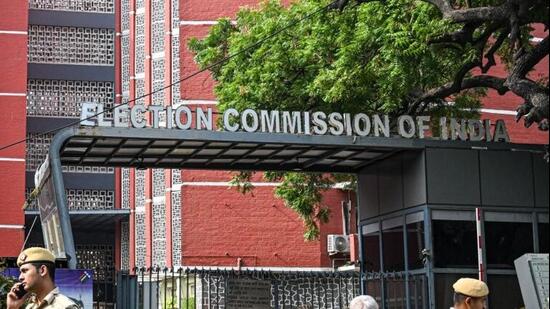
The Election Commission of India (ECI) has extended political neutrality restrictions to retired officials and others re-employed, engaged, or attached to state governments during the Model Code of Conduct (MCC) period in Goa, Manipur, Punjab, Uttar Pradesh and Uttarakhand, where assembly elections are due in 2027.
In a November 9 letter to the chief secretaries and chief electoral officers of the five states, the ECI noted that there are “no specific guidelines or Rules” on the political neutrality and conduct of such individuals during the MCC period. It directed that the restrictions and prohibitions on government servants “shall similarly apply” to them.
“The Commission hereby directs that restrictions and prohibitions applicable to government servants shall similarly apply to individuals including retired government officials/ officers/ employees attached or engaged or employed or re-employed in various capacities by State/ UT Governments, for whom there are no specific guidelines or rules relating to their political neutrality and conduct during MCC period,” the letter said.
The letter barred these officials from summoning any election-related officer of a constituency or district where polls have been announced, whether for official discussions, meetings or video conferences. It warned that any act of omission or commission contrary to the directions “shall be viewed seriously”.
An ECI official said that the decision was taken after internal deliberations. “We noticed that several of these officials keep working with state governments even after retirement. Every election, we used to receive complaints regarding their conduct. Hence, this time we decided to extend the curbs to them,” the official said.
{{/usCountry}}An ECI official said that the decision was taken after internal deliberations. “We noticed that several of these officials keep working with state governments even after retirement. Every election, we used to receive complaints regarding their conduct. Hence, this time we decided to extend the curbs to them,” the official said.
{{/usCountry}}The letter references ECI instructions from 1984 and 1991 that government employees must not campaign or lend their names, official position or authority to help one party or candidate over another. It added that the MCC covers organisations, corporations and commissions funded wholly or partly by the government, and that conduct rules bar government servants from political activity.
The ECI has restricted re-employed officials earlier as well. Its fresh letter broadens the scope of those restrictions. The ECI’s 2022 pre-poll instructions to the same five states said that officials on extension of service or re-employed in various capacities, other than those in the Chief Electoral Officer’s office, would not be associated with any election-related work. A similar clarification was issued in the January 2019 transfer guidelines.
The ban on summoning poll officials was framed around ministers. The ECI’s FAQ says no Union or state minister can summon an election-related officer for official discussions.
Political parties have questioned the neutrality of retired officials engaged in election-related work. A complaint was lodged against Rajesh Kumar Khullar, a former bureaucrat and the chief minister’s chief principal secretary ahead of the 2024 Lok Sabha polls in Haryana, alleging “blatant violation” of ECI guidelines on re-employed officials. The state government defended his continuation as procedurally compliant.
Ahead of the 2026 polls in Assam, opposition parties questioned the legality of re-engaging a retired officer in a senior post with full administrative and financial powers, calling the appointment “political” and “invalid”. An activist wrote to the ECI arguing the re-engagement order was linked to the previous Cabinet and should not continue once the MCC came into force. Officials argued that governance cannot be paralysed during elections.
An October 27 order asked the five poll-bound states to move election-linked officers. Those posted in home districts, or who have served three years or more in a district, were to be transferred, with March 31 as the cut-off for Goa, Manipur, Punjab and Uttarakhand and May 31 for Uttar Pradesh.