Elderly, those with chronic diseases to get vaccine first: Harsh Vardhan
Addressing the FICCI FLO webinar on ‘The Shifting Healthcare Paradigm During and Post-Covid’, the Union minister said that according to government estimates, around 400 to 500 million doses of the vaccine will be available in the country by July-August next year.
Union health minister Harsh Vardhan on Thursday said that the national vaccine committee on Covid-19 has included the people aged between 50 and 65 years of age, and those less than 50 years of age with chronic diseases, in the list of people to be administered the vaccine on priority basis.
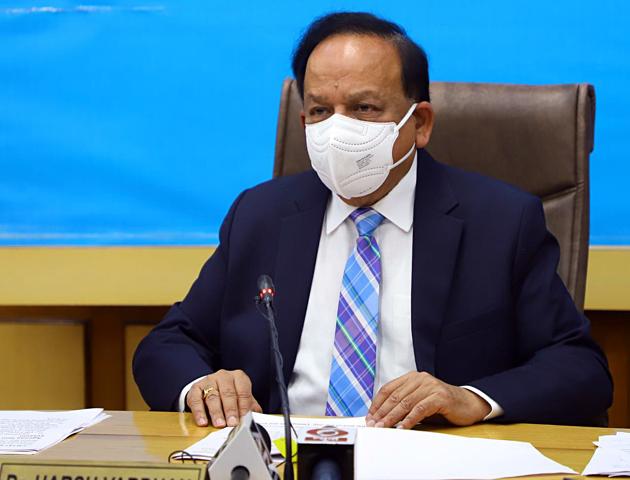
A vaccine will be available in a couple of months, union health minister Harsh Vardhan said. (ANI)
{{^htLoading}} {{/htLoading}}
A vaccine will be available in a couple of months, the minister said.
{{^usCountry}}{{/usCountry}}
Addressing the FICCI FLO webinar on ‘The Shifting Healthcare Paradigm During and Post-Covid’, the Union minister said that according to government estimates, around 400 to 500 million doses of the vaccine will be available in the country by July-August next year.
“Almost 25-30 crore people will be given vaccine in the initial phase. This vaccine will have to be administered at least twice within the gap of two-three weeks to each person. Naturally we will have to prioritize. Corona warriors will be our natural priority, then 65 plus elderly population and 50-65 years and 50 years and less people with diseases,” Harsh Vardhan said.
Detailing the vaccination plan, the minister said, “Based on the vaccine research outcome within India, where some are in phase 3 trial stage, we have made tentative guidelines that can vaccinate about 250-300 million people in the initial phase. The vaccine will have to be administered at least twice within a gap of two-three weeks to each person. Naturally we will have to prioritize.”
Rhythma Kaul is the national health editor of the Hindustan Times. She has been reporting on public health, medicine, and medical research, with a particular focus on how government decisions and health system reforms shape people’s lives. Rhythma has over 25 years of journalistic experience. She joined Hindustan Times in 2008, and has since covered everything from pandemics and infectious diseases to cutting‑edge medical research and climate‑related health challenges. Her stories routinely track the work of the Ministry of Health and Family Welfare, department of pharmaceuticals, and key national health programmes, making complex medical science and policy accessible to a wide audience. One of her prominent news breaks has been the 2012 Baby Falak case: A two-year-old brutally battered baby girl was admitted to AIIMS-Delhi with severe head injuries, multiple fractures, human bite marks, and burns. The police investigation revealed this to be a case of multi-state human-trafficking racket. She was profiled by The Wall Street Journal for breaking this story. Rhythma holds a Master’s degree from Jawaharlal Nehru University, Delhi. Prior to Hindustan Times, she worked with the India Today Group. Rhythma can be contacted at rhythma.kaul@hindustantimes.com. Her X handle is @RamblingBrook.
Get Latest News, breaking headlines, and top India News, and today real-time updates from across the nation. Stay informed on politics, government policies, crime, Today Weather, and major developments on Hindustan Times
Get Latest News, breaking headlines, and top India News, and today real-time updates from across the nation. Stay informed on politics, government policies, crime, Today Weather, and major developments on Hindustan Times