It signals more than just the end of a Raj-era practice.
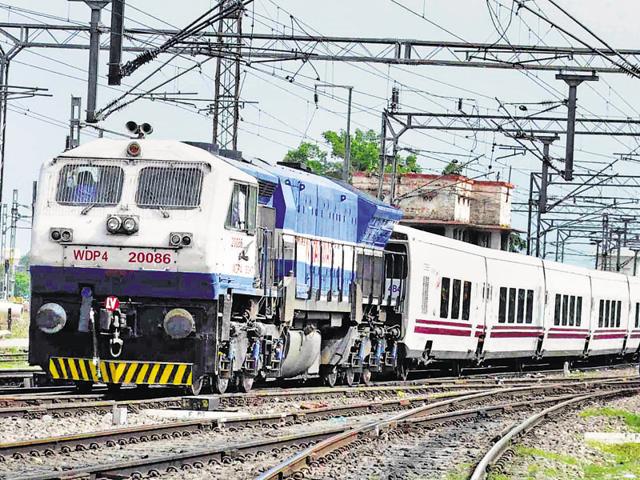
The NDA government’s decision to abandon a separate rail budget has brought to grinding halt a 92-year-old journey that enabled the country’s largest transporter to enjoy a separate presentation of its finances along with intended expenditures.
On Wednesday, when the cabinet approved merging the Railway and general budgets starting next fiscal, history also chugged back up till 1924-25. That was the financial year when the rulers of undivided India initiated an exercise in according priority and vitality to rail development in the country. Half a century after Independence, by the turn of the 21st century, rail budgets had themselves turned into a strategy handy for regional satraps to further their political agendas in a coalition era.
Read | Rail budget must be done away with? Prabhu agrees
Read | Budget overhaul: All you need to know
The worth of pending railway projects is still high at a whopping Rs 5 lakh-crore. Only that railways ministers in the recent past have announced projects for political considerations, point out experts. As an official put it, “These projects have been bleeding the organisation.”
{{/usCountry}}The worth of pending railway projects is still high at a whopping Rs 5 lakh-crore. Only that railways ministers in the recent past have announced projects for political considerations, point out experts. As an official put it, “These projects have been bleeding the organisation.”
{{/usCountry}}In a quarter century of multi-party coalition rule at the Centre, the rail portfolio had mostly come in the quota of a key partner. Powerful regional leaders had fought keenly — often bitterly — to get the prized portfolio. The trend broke in 2014, when the Narendra Modi-led BJP clocked electoral victory on its own.
Till then, Railway used to be a particularly prized portfolio. Bihar strongmen Ram Vilas Paswan and Lalu Prasad had both made their preference known for the Rail portfolio at the start of UPA-I in 2004. When Bengal’s Trinamool Congress extended support to the Manmohan Singh government in UPA-II, the party’s leader Mamata Banerjee made it clear she would settle for nothing less than railways.
Often, railways ministers in the past have been like the opening batsmen of one-dayers: Having been the first to make policy announcements relating to an important government department at the start of parliament’s budget session. They mostly ended up stealing the thunder of the finance minister’s budget speech that would come two days later.
Mostly, regional leaders used Parliament as a platform to strengthen or resurrect their political careers. For instance, in 2005, ahead of the Bihar assembly elections, Prasad — as railway minister — attempted an image makeover by projecting himself as a management guru of sorts by claiming to have brought about a turnaround in rail finances. It’s another matter the strategy did not yield rich political dividends in his native state.
Banerjee, who succeeded Prasad as the railways minister, was more successful that way. Throughout the 11 months she was in office, the Trinamool leader was gallivanting across her West Bengal, inaugurating one rail project here, another there. Observers agree that her “rail bonanza” for West Bengal did contribute substantially towards her party’s victory in the 2010 state elections.
With some notable exceptions like Madhavrao Scindia, the railway ministers of the past have often succumbed to the temptation of populism. If Prasad launched the air-conditioned Garib Rath to target his constituents, Banerjee started the non-stop Duronto trains. Both Prasad and Banerjee refrained from raising passenger fares, with Banerjee going a step ahead in prevailing upon the then prime minister to drop her nominee Dinesh Trivedi from his charge as the Railways Minister after he had announced a fare hike without her consent.
Populism has come at a cost. Losses from the passenger segment are today estimated at Rs 32,000 crore. The Railways have little funds for infrastructure expansion. “The decision to merge the Railways budget with the general budget will bring an end to the “patronage raj” culture of the railways,” according to KL Thapar of the Asian Institute of Transport Development. “It will enable the organization to function in an efficient and professional manner.”
Also read | Changes in budget are a move towards transparency