E-Paper



Exclusive | India’s smartphone sales grow 5% in first festive wave: TechInsights
This growth, TechInsights Mobile End Markets report, attributes to attractive offers from smartphone vendors, combined with credit card offers and no-cost EMIs

 Prefer HTon Google


With India’s retail sector entering its peak festive period, the smartphone market has emerged as a focal point of industry attention. The festive season sales typically provide a boost in sales, a period typically between late September and through till November, encompassing major festivals including Navratri, Dussehra, and Diwali. Phone brands as well as retailers are lining up offers and discounts, but key to any momentum would be the themes that dominate buying decisions, as well as broad market trends.
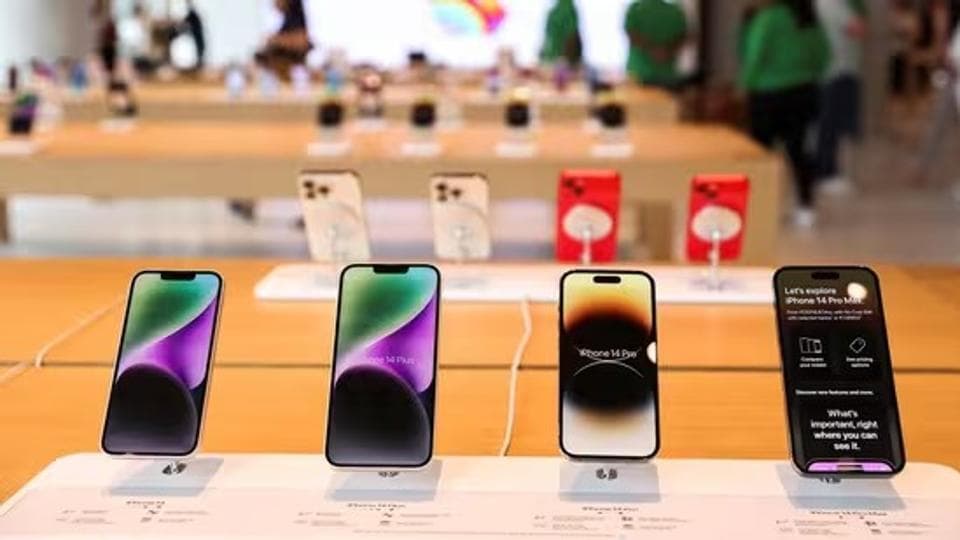
In an report shared exclusively with HT by research firm TechInsights, ahead of its broader release, they note that the first wave of India’s festive season from September 22 to October 2, 2025, saw a 5% year-on-year increase in smartphone sales in terms of units, compared to the first wave of the festive season in 2024. This growth, the TechInsights Mobile End Markets report, attributes to an availability of seemingly attractive offers from smartphone vendors combined with various card offers and no-cost EMIs that serve to either reduce the cart amount payable, or spread out the purchase repayment over a number of months.
In 2024, this first wave was an 11 day period as is this year, but between September 26 and October 6, then. They say Samsung led the sales, followed by Apple and Vivo, while OPPO (plus OnePlus) and Lenovo-Motorola round out the top five positions in terms of sales.
“In the overall (online plus offline) market, Samsung led with an 18% market share, according to our estimates,” says Abhilash Kumar, Senior Industry Analyst at TechInsights. “Since the main online events on Flipkart and Amazon were sponsored by Samsung, this helped it stay the top vendor in the online (with 19% market share) as well as overall,” he points out.
Apple is in a close second place, with a 16% market share alongside an annual growth trajectory of 6%. Apple sold almost one million units of the iPhone 16 in that period, followed by the iPhone 15. “Driven by deals on Pro models, both the iPhone 16 Pro and 16 Pro Max sold well. About 83% of the iPhones sold in the first wave were through the online channel,” notes Kumar.
“Apple’s iPhone sale is driven by aggressive discounts on previous gen iPhone 16 (25% off from the current listed price on Apple India Online Store), iPhone 15 as well as first time attractive offers on n-1 gen Pro models. The net effective price was as a result of synergies between brand (Apple), pure player platform (Amazon, Flipkart, etc) and financial institution (banks and credit card institutions),” Kumar further explains the contours of Apple’s growth in share.
Vivo, which includes iQOO branded phones, also has a 16% market share, mostly driven by Vivo’s T-series phone sales online, and the Y-series as well as V-series phones doing well in offline stores.
The TechInsights Mobile End Markets addresses the online versus offline retail dynamics as well, indicating that while online sales dominated this first wave in terms of volume share, the offline retail stores did outperformed online in terms of growth rate, on a low base, where it grew 18% year-on-year, compared to 1% for online in the same metric.
GST, and hope for broader momentum
As the festive season approached, smartphone brands as well as retailers rushed to line-up offers and discounts, to cash in on the momentum from the Goods and Services Tax (GST) rate changes in other electronics categories — it is expected that the rate reductions, which may lead to price corrections in other specs, will allow consumers to have more income for discretionary spends. Smartphones continue to attract 18% GST, but there has been simplification in other spend categories.
A few broader themes too have emerged in India’s smartphone space, something that is also driving the renewed phone space. An overarching one is the premiumisation trend, with consumers often willing to spend more on devices than they had originally planned in search for better experience and value, driven by the convenience of EMIs and cashback offers.
Samsung, for instance, has made a case for Samsung Finance+ service through the past year, across product categories. Most phone makers, including Samsung, have tie-ups with leading banks, to offer discounts and cash backs for purchases made on their credit cards and EMIs. Samsung has partnerships with HDFC Bank and Axis Bank, while Apple has instant cashback schemes on cards issued by American Express, Axis Bank and ICICI Bank.
It is a similar theme for retailers as well, something HT had noted with the iPhone 17 series and iPhone Air pre-orders.
Researchers including CyberMedia Research have noted that India’s premium smartphone category is on track for strong growth in this festive season, estimating an 18% increase in premium smartphone unit sales and a 24% rise in market value annually. “Within the premium segment, super-premium smartphones ( ₹50,000–1,00,000) are expected to grow 15% YoY, while the uber-premium segment ( ₹1,00,000) could see a remarkable 167% surge, fuelled by strong demand for the latest flagship models,” they noted recently.
Apple, Samsung and OnePlus are expected to continue dominating India’s premium smartphone landscape.