E-Paper



India launches grasslands, open natural ecosystems guide at Mongolia UN event
The guide lists important species dependent on India’s grasslands for survival, including the great Indian bustard and the lesser florican

 Prefer HTon Google


The first-ever ‘Guide to Grasslands and Other Open Natural Ecosystems (ONEs) of India’ was launched at the 17th Session of the Conference of the Parties (COP17) to the United Nations Convention to Combat Desertification (UNCCD) in Mongolia’s Ulaanbaatar on Monday.
From the grasslands in central Nicobar and the red sands of Tamil Nadu (Theri Kaadu) to the Aravalli scrublands of Rajasthan, the ravine lands of the Yamuna-Chambal zone and the rocky plateaus of the northern Western Ghats, the guide lists grasslands and open natural ecosystems that sustain wildlife in biodiversity hotspots.
The Union environment ministry said the guide highlights the rich diversity, ecological significance and socio-economic importance of India’s grasslands, savannas, deserts and other open natural ecosystems.
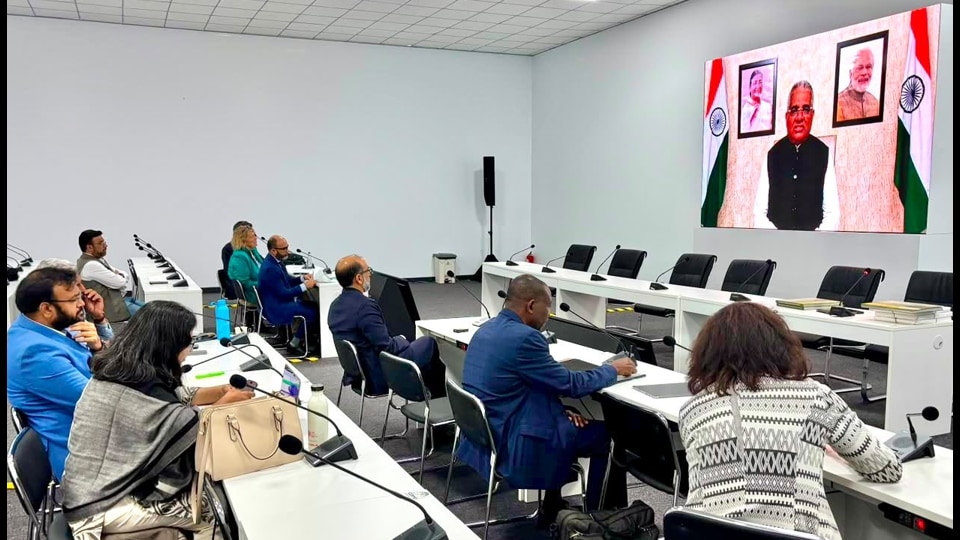
In a video message ahead of the guide’s launch, Union environment minister Bhupender Yadav said grasslands, scrublands and ravines had long been judged by the absence of trees, despite these ecosystems sheltering species found nowhere else on earth and sustaining pastoral communities. “Modern science reinforces the understanding of local communities that healthy grasslands are indispensable for biodiversity, livelihoods and climate resilience,” he said.
The guide lists important species dependent on India’s grasslands for survival, including the great Indian bustard, the lesser florican, the Bengal florican, the Indian wolf, the blackbuck, and the sociable lapwing. “Their conservation is contingent on the recognition and active management of the open habitats they require,” the guide states. It refers to the shola-grassland mosaic of the southern Western Ghats uplands, among the most ecologically distinctive landscapes in India.
Other key areas highlighted include the interior dry plains of Tirunelveli and Thoothukudi, the rain-shadow grasslands of Western Tamil Nadu or Kangayam belt, and the extraordinary red dune landscapes of the theri kaadu, each with its own ecology and suite of specialist species. The guide covers the central Nicobar grasslands, one of the least-documented open ecosystem types in the country. It calls the Thar Desert an important open habitat for both flora and fauna.
The guide was released on the day meetings of the Environment Working Group and Contact Group on Climate Change and Sustainable Development were held in Delhi under India’s BRICS chairship. The meetings, themed ‘Building for Resilience, Innovation, Cooperation, and Sustainability ‘, were held ahead of the 12th BRICS environment ministers’ meeting in Delhi on Tuesday.
In his keynote address, environment ministry secretary Tanmay Kumar said BRICS has expanded from an economic dialogue into an increasingly influential platform for defining its approach to critical environmental challenges, including pressing global issues such as pollution, biodiversity loss and global warming.
“Our partnership has broadened in terms of relevance to sustainable development, climate resilience and adaptation, resource efficiency and circular economy, as well as environmental governance,” Kumar said. He added that Prime Minister Narendra Modi’s vision guides BRICS 2026.
Two environment groups have worked on advanced cooperation on promoting sustainable lifestyles, afforestation, forest fire management, disaster resilience, circular economy and adaptation to climate change.
An official said deliberations on Monday will be documented and presented at the ministers’ meeting on Tuesday. “Ministers will decide what gets finalised.”
Representatives of BRICS member countries Brazil, China, Egypt, Ethiopia, Indonesia, Iran, Russia, South Africa and the United Arab Emirates attended the meetings on Monday.