Prime Minister Narendra Modi on Wednesday made a big announcement that India has become the fourth country after the US, Russia and China to acquire the capability of space warfare. Indian scientists successfully conducted Mission Shakti shooting down a live satellite target in the low earth orbit (LEO).
Low earth orbit refers to an altitude up to 2,000 km. A satellite in the LEO can monitor activities on the ground and water surfaces. Such a satellite can be used for espionage and pose serious threat to the country’s security in the instances of war.
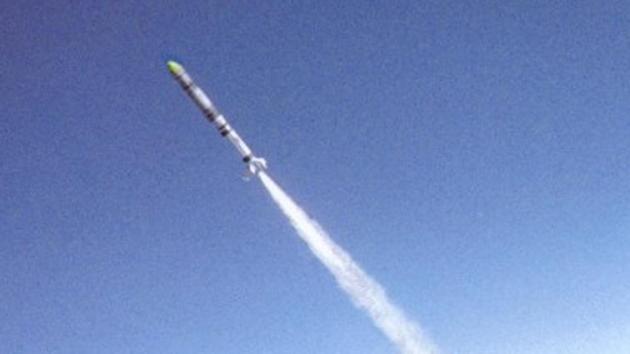
An anti-satellite missile, the one that was fired by the scientists of the Defence Research and Development Organisation (DRDO), can target an LEO satellite. The missile can incapacitate or completely destroy the satellite in the LEO range.
Explaining why Wednesday’s Mission Shakti was so special, PM Modi listed two reasons:
1. India is only the 4th country to acquire such a specialised and modern capability, and
2. Entire effort is indigenous.
Till now, only the US, Russia and China had the capability to hit a live target in space. India had been working on developing A-SAT missile capabilities for nearly a decade. Former DRDO director Dr VK Saraswat had in 2010 said that India possessed “all the building blocks necessary” to integrate an anti-satellite weapon to neutralise hostile satellites in low earth and polar orbits.
Later in an interview to India Today, Saraswat again said, “India has all the building blocks for an anti-satellite system in place. We don’t want to weaponise space but the building blocks should be in place. Because you may come to a time when you may need it.”
{{/usCountry}}Later in an interview to India Today, Saraswat again said, “India has all the building blocks for an anti-satellite system in place. We don’t want to weaponise space but the building blocks should be in place. Because you may come to a time when you may need it.”
{{/usCountry}}“Today, I can say that all the building blocks (for an ASAT weapon) are in place. A little fine tuning may be required but we will do that electronically. We will not do a physical test (actual destruction of a satellite) because of the risk of space debris affecting other satellites,” the former DRDO chief had told India Today in 2012.
On Wednesday, current DRDO chairman G Satheesh Reddy, according to news agency ANI, said, “We have mastered anti-satellite capability and we have today shown that we can hit satellites at long ranges with a few centimetres accuracy.”
The United States was the first nation to build space warfare capability that it developed in late 1950s. The erstwhile USSR followed the US and had acquired this capability by early 1960s. China was the third country to launch A-SAT. China conducted its first A-SAT test in 2007.
No country has used an A-SAT against another nation till date. In all the instances, the nations testing anti-satellite missiles have targeted one of their defunct satellites to showcase their space warfare capabilities.
ANI reported that the target destroyed by India’s A-SAT missile was an out of service Indian satellite. Quoting government sources, the agency said the satellite which was hit today was a micro satellite launched by the ISRO on January 24 this year.