The marathon meeting of corps commanders of the Indian and Chinese armies at Chushul that started on Tuesday and stretched into the early hours of Wednesday reported a forward momentum in disengagement of the Indian Army and People’s Liberation Army (PLA) from all the four stand-off points in East Ladakh.
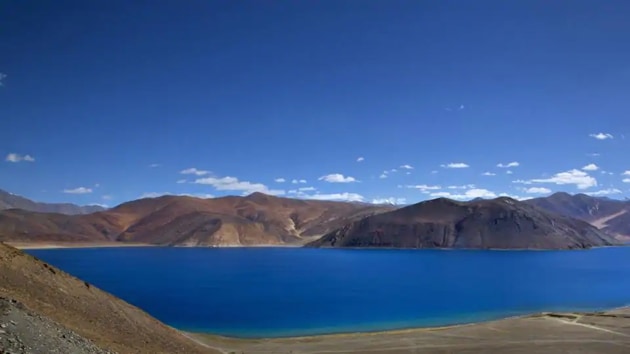
The Indian government’s high-power China Study Group, which has all the principals involved in the boundary dispute in Ladakh, reviewed for at least two hours on Wednesday evening the outcomes of the nearly 15-hour-long meeting between India’s XIV Corps Commander and the Xinjiang Military District Commander .
The meeting was attended by external affairs minister S Jaishankar, National Security Adviser and Special Representative of India-China Boundary Dialogue Ajit Doval, senior most officials of the government, and security agencies chiefs.
Also read: Defence minister, Army chief to visit Ladakh for security review on July 17-18
According to people familiar with the proceedings of the meeting, disengagement efforts have been consolidated at the Galwan sector (Patrolling Point 14), and there has been a thinning out of troops at Patrolling Point 15 (Gogra) and Fingers 4 and 5 of the Pangong Tso.
The meeting of the corps commanders also discussed and defined specific time lines for total disengagement at PP15 and Pangong Tso. According to Indian officials, there are a smattering of troops of both sides on the ridge of Finger 4 as a precaution, with the Chinese PLA now moving to Finger 6 with a limited presence in Finger 5.
{{/usCountry}}The meeting of the corps commanders also discussed and defined specific time lines for total disengagement at PP15 and Pangong Tso. According to Indian officials, there are a smattering of troops of both sides on the ridge of Finger 4 as a precaution, with the Chinese PLA now moving to Finger 6 with a limited presence in Finger 5.
{{/usCountry}}The officials added that based on the outcome of the meeting of the commanders, it looks like things have cooled down between the two armies , and that the Chinese PLA is showing signs that it is working towards returning to the April 20 status quo. HT also learns that the Chinese PLA has withdrawn beyond its side of the Line of Actual Control (LAC) at Patrolling Point 17 (Hot Springs) with all its tents, vehicles and material.
Also read: How PM Modi called China’s bluff in Ladakh
Even at Gogra, PLA has a very thin presence of around 30 PLA troopers in forward locations, and timelines have been set for a total withdrawal by this weekend. However, the Modi government is monitoring the 1,597km LAC in Ladakh and the 1,127km LAC in Arunachal Pradesh closely and the forces remain on alert. It is only after the disengagement is completed that the two Special Representatives (Doval and Foreign Minister Wang Yi) will discuss steps towards de-escalation.
They will also work towards a permanent mechanism to ensure that what happened in Ladakh isn’t repeated.
While the Chinese withdrawal is being verified on the ground by both physical observation and technical intelligence, Beijing watchers here are questioning the decision of the PLA military commander or Central Military Commission member who advised President Xi Jinping to indulge in the Ladakh adventure.
They point to the presence of the US super carriers openly challenging the PLA Navy in the South China Sea, the ASEAN countries standing up to Beijing, and the economic and political costs.
The US, India and UK have all decided to keep Chinese companies out of their 5G networks, and many countries are seriously reviewing the extent of Chinese penetration into their telecom and media sectors.
Interestingly, China’s Western Theatre Commander Zhao Zongqi, widely believed to behind the Ladakh gambit and who was also the architect of the Doklam stand-off, turns 65 (the official age for retirement in the PLA for theatre commanders) this November.