Air India on Friday said that it has undertaken a series of proactive measures and conducted comprehensive checks of its flights following the Ahmedabad plane crash in which 260 people were killed.
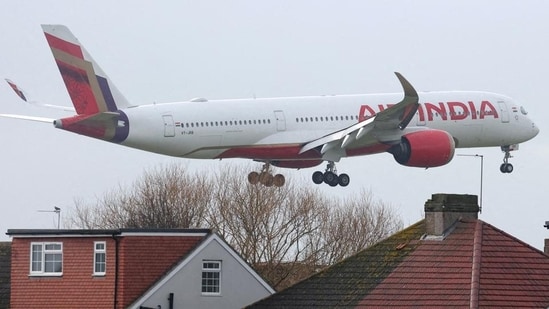
“Following the tragic accident involving AI171 in June, we have undertaken a series of proactive measures and conducted comprehensive checks ensuring that every flight continues to meet the highest global standards of safety and customer service,” the airline said in a release.
Air India's Boeing 787-8 aircraft en route to London Gatwick crashed into a medical hostel complex soon after take-off from Ahmedabad, killing 241 persons out of the 242 onboard on June 12. An additional 19 people lost their lives on the ground in the crash and the post-crash explosion.Also Read | AI-171 victim families hire firm that sued Boeing for 737 lapses
A preliminary report of the investigation into the incident, released by the Aircraft Accident Investigation Bureau (AAIB) after a month, identified fuel being cut off to both engines shortly after takeoff as the cause of the disaster. The fuel control switches of the crashed aircraft were found in the “cutoff” position.
Here are the steps Air India took
- Air India said it has completed detailed inspections of its Boeing 787-8 and 787-9 aircraft as directed by India's aviation regulator, the DGCA (Directorate General of Civil Aviation).
- “No issues were found during these inspections, and the airline continues to work closely with the regulators, maintaining full transparency. Air India also inspected the fuel control switch mechanism of Boeing 737 and 787-8 aircraft, with no findings," it said.Also Read | Departure from set procedures may have caused Air India mishap
- Air India said that as part of its voluntary “Safety Pause” initiated in June, the airline also temporarily reduced its flight schedule to accommodate additional pre-flight checks and mitigate disruptions due to regional airspace closures. The airline added that the extra ground time enabled “accelerated upgrades” to improve aircraft reliability and enhance delay and disruption management.
- In its Friday statement, Air India also said that its safety protocols are multi-layered and rigorous. and that its aircraft undergo thorough checks before every flight by trained engineers and pilots.
- "Maintenance is conducted at certified facilities before and between flights. Air India cabin crew, engineers and pilots receive regular training at the Air India Training Academy, aligned with global best practices, ensuring full alignment with the latest safety procedures,” it said. “Our Integrated Operations Control Centre monitors every flight in real time, monitoring weather, crew, and aircraft performance.”
- Air India also said that it has begun a phased restoration of international operations from August 1, 2025, with full resumption targeted for October 1, 2025.
- “Acknowledging recent operational challenges, Air India is actively working to minimise disruptions and enhance customer experience by strengthening its internal processes,” it said.
A preliminary report of the investigation into the incident, released by the Aircraft Accident Investigation Bureau (AAIB) after a month, identified fuel being cut off to both engines shortly after takeoff as the cause of the disaster. The fuel control switches of the crashed aircraft were found in the “cutoff” position.
Here are the steps Air India took
- Air India said it has completed detailed inspections of its Boeing 787-8 and 787-9 aircraft as directed by India's aviation regulator, the DGCA (Directorate General of Civil Aviation).
- “No issues were found during these inspections, and the airline continues to work closely with the regulators, maintaining full transparency. Air India also inspected the fuel control switch mechanism of Boeing 737 and 787-8 aircraft, with no findings," it said.Also Read | Departure from set procedures may have caused Air India mishap
- Air India said that as part of its voluntary “Safety Pause” initiated in June, the airline also temporarily reduced its flight schedule to accommodate additional pre-flight checks and mitigate disruptions due to regional airspace closures. The airline added that the extra ground time enabled “accelerated upgrades” to improve aircraft reliability and enhance delay and disruption management.
- In its Friday statement, Air India also said that its safety protocols are multi-layered and rigorous. and that its aircraft undergo thorough checks before every flight by trained engineers and pilots.
- "Maintenance is conducted at certified facilities before and between flights. Air India cabin crew, engineers and pilots receive regular training at the Air India Training Academy, aligned with global best practices, ensuring full alignment with the latest safety procedures,” it said. “Our Integrated Operations Control Centre monitors every flight in real time, monitoring weather, crew, and aircraft performance.”
- Air India also said that it has begun a phased restoration of international operations from August 1, 2025, with full resumption targeted for October 1, 2025.
- “Acknowledging recent operational challenges, Air India is actively working to minimise disruptions and enhance customer experience by strengthening its internal processes,” it said.