
 E-Paper



HAL signs MoU with Argentina firm for aerospace collaboration
The MoU was signed at the ongoing Paris Air Show, the world’s largest .

 Prefer HTon Google


State-owned plane maker Hindustan Aeronautics Limited (HAL) has signed a memorandum of understanding with its Argentine counterpart Fabrica Argentina de Aviones (FAdeA) for possible collaboration in the aerospace sector at a time when the Indian firm is in talks with the South American country to export the indigenously-built light combat aircraft (LCA) amid India’s push to gain a toehold in foreign defence markets, officials aware of the matter said on Wednesday.
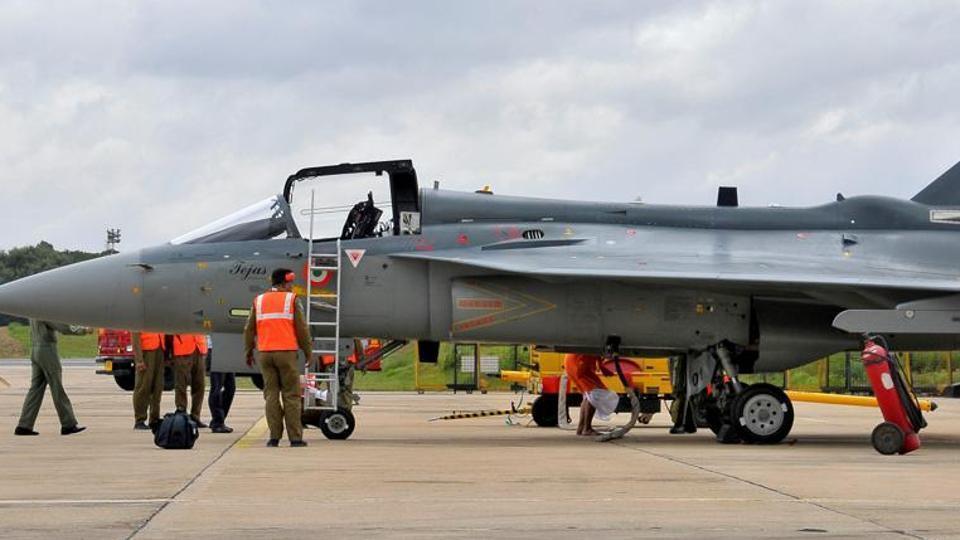
The MoU was signed at the ongoing Paris Air Show, the world’s largest .
“HAL and FAdeA signed an MoU during Paris Air Show, 2023 towards exploring the possibilities of collaboration in the field of MRO (maintenance, repair and overhaul) and to meet any offset requirements in case of probable sale of HAL-made platforms in the Latin American region,” HAL said in a statement.
Rules governing defence acquisition in different countries lay down that in all high-value capital purchases, it is mandatory for foreign vendors to invest a certain percentage of the value of the purchase in that country to boost its indigenous capabilities. India’s offset policy, for instance, seeks to leverage capital acquisitions to develop the domestic defence industry by making it mandatory for foreign military contractors to invest in the country at least 30% of the value of all contracts worth more than ₹300 crore.
ALSO READ | Modi's US trip to herald deeper ties, go beyond individual defence deals: Foreign secretary Vinay Kwatra
Argentina has projected a requirement for 15 new fighter aircraft, and HAL believes that the LCA Mk-1A will meet that country’s needs, the officials said. Teams from the Argentine Air Force have visited HAL and flown the LCA, they said. To be sure, the JF-17 fighter aircraft, jointly developed by China and Pakistan, is also a contender for the Argentine order.
“Argentina is a significant country in South America and holds good export potential for India. We must try and tap that potential. HAL is laying the groundwork for that, and the LCA is a strong contender for a possible fighter jet order from Argentina,” said Air Marshal Anil Chopra (retd), director general, Centre for Air Power Studies.
While the LCA project is on track, several HAL programmes have been hit by delays and compelled the armed forces to look for alternatives. These include the basic trainer aircraft, intermediate jet trainer and the LCA project itself. The Indian Air Force raised its first LCA squadron with two aircraft in July 2016 even though the project was sanctioned in 1983 as a replacement for the Soviet-origin MiG-21 fleet.
IAF has inducted several of 40 earlier variants of the LCA, ordered 83 improved Mk-1A variants in 2021, and is now looking at ordering the newest variant of the aircraft, LCA Mk-2. The first Mk-1A aircraft will be delivered to the IAF in February 2024, with the rest slated to join its combat fleet by 2029.
In April, HAL launched a third LCA production line in Nashik to ramp up the production of the fighter jet from the current 16 to 24 in anticipation of more orders. The other two production lines are in Bengaluru.
ALSO READ: Defence ministry approves to acquire 31 MQ-9B armed drones from US
India has set a defence export target of ₹35,000 crore by 2024-25. In November 2022, Indian defence firm Kalyani Strategic Systems Limited won an export order worth $155.5 million for supplying artillery guns to a friendly foreign country (believed to be Armenia), the first order won by a local company for the 155mm weapon system. That order came on the back of the Philippines ordering BrahMos missiles and Armenia choosing to buy Pinaka multi-barrel rocket launchers from India.
Military exports have risen sharply, and imports have recorded a drop on the back of policy initiatives and reforms during the past nine years, the officials said.
Exports grew 23 times between financial year 2013-14 and 2022-23 (from ₹686 crore to ₹16,000 crore), while the spending on sourcing weapons and systems from foreign countries dropped from 46% of the total expenditure in 2018-19 to 36.7% in December 2022, the government said in May. The defence report card came at a time when the government was showcasing its achievements in different areas on its ninth anniversary.
India on May 19 announced that the value of defence production in the country crossed ₹1 lakh crore for the first time on the back of key reforms to spur growth in the sector. The figure stood at ₹1,06,800 crore in FY 2022-23 compared to ₹95,000 crore in FY 2021-22 and ₹54,951 crore five years ago.
India produces a raft of weapons and systems including the LCA, different types of helicopters, warships, tanks, artillery guns, warships, missiles, rockets and a variety of military vehicles.
India has sharpened its focus on the defence manufacturing sector during the last five years and taken several measures to achieve self-reliance. These include banning the import of a range of weapons, systems and parts, creating a separate budget for buying locally made military hardware, increasing foreign direct investment from 49% to 74% and improving ease of doing business.
India is eyeing a turnover of ₹1,75,000 lakh crore in defence manufacturing by 2024-25.


