Particulate matter emissions from one unit of the Deen Bandhu Chhotu Ram Thermal Power Project in Haryana’s Yamuna Nagar were about 38.8 times the prescribed limit, with the Central Pollution Control Board (CPCB) assessing interim environmental compensation of ₹31.46 crore from February 10 to June 15. The plant belongs to a “highly polluting” category.
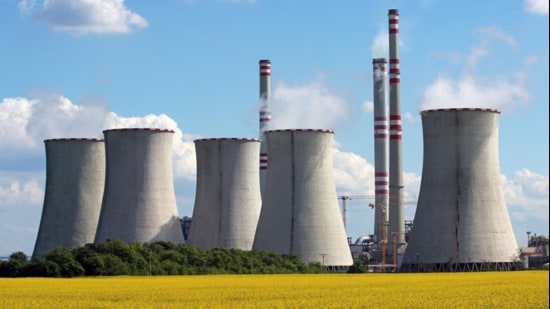
The CPCB confirmed the plant’s stack monitoring in a September 18 reply to Noida-based activist Amit Gupta’s August 20 application under the Right to Information Act. Gupta asked whether the board carried out stack emission studies in 2026 at thermal plants within 300 km of the Delhi-National Capital Region.
On June 23, the CPCB said PM emission concentrations from the plant’s Units 1 and 2 were reported to be exceeding the prescribed limit. It added that the plant was liable for environmental compensation.
Unit 2 recorded 1,939 mg/Nm³ on February 10 against the prescribed standard of 50 mg/Nm³, which is about 38.8 times the limit. Unit 1 recorded 63.9 mg/Nm³ a day later, or 27.8% above the standard.
The plant has two 300 MW units, each commissioned in April and June 2008. A CPCB team inspected the site on July 28, 2025. The stack monitoring followed on February 10 and 11, 2026. Both units were operational during the visits.
The CPCB said the plant falls under Category C of the classification of thermal plants. The time limit for complying with emission standards other than sulphur dioxide, which includes PM, lapsed on December 31, 2024.
{{/usCountry}}The CPCB said the plant falls under Category C of the classification of thermal plants. The time limit for complying with emission standards other than sulphur dioxide, which includes PM, lapsed on December 31, 2024.
{{/usCountry}}Thermal power plants are among 17 categories of highly polluting industries. The environmental compensation is calculated at ₹0.40 per unit of electricity generated during non-compliant operation. According to the National Power Portal, the two units together generated 786.61 million units in that period. That works out to ₹31.46 crore.
Unit 1 accounts for ₹21.64 crore, based on 541.03 million units generated from February 11 to June 15. Unit 2 accounts for ₹9.82 crore, based on 245.58 million units from February 10 to June 15. Unit 1 carries about 69% of the total, even though Unit 2 recorded the higher emission reading.
The CPCB called the figure interim. It said the period of non-compliance “shall vary” and that the compensation will depend on the plant’s compliance. The charge applies until another stack test and a compliance report.
Under Section 5 of the Environment (Protection) Act, 1986, the plant must show cause within 15 days as to why the compensation should not be imposed. It must submit an action-taken-cum-compliance report with documentary evidence, including day-wise generation figures from February 10. Failure will invite “further action as deemed fit” without “further opportunity”.
The inspection found other lapses. The online emission monitoring system, installed for PM, sulphur dioxide and nitrogen oxides, showed “no display of value for PM parameter.” Values for the other two pollutants varied with instantaneous readings.
Dust control measures were reported inadequate at various locations, including the crushing area. The CPCB noted that water sprinklers and anti-smog guns were “inadequate as coal particles were observed around the site.”
Water flow meters were not installed at several points, including the canal intake, cooling tower blowdown and boiler blowdown. The plant generates hazardous waste in several categories but has authorisation only for category 34.2, which the CPCB calls “a non-compliance” under the 2016 rules. Records for three categories are also not maintained.
The plant’s Consolidated Consent and Authorisation, granted by the Haryana State Pollution Control Board and valid until September 30, 2026, does not mention two boilers, three DG sets or the use of LDO.
The RTI reply does not say whether the plant responded to the show-cause notice or whether the compensation has been finally imposed. It also does not say if the plant has since shown compliance.