
 E-Paper



G20 Summit: Fighter jets, missiles in IAF’s security plan
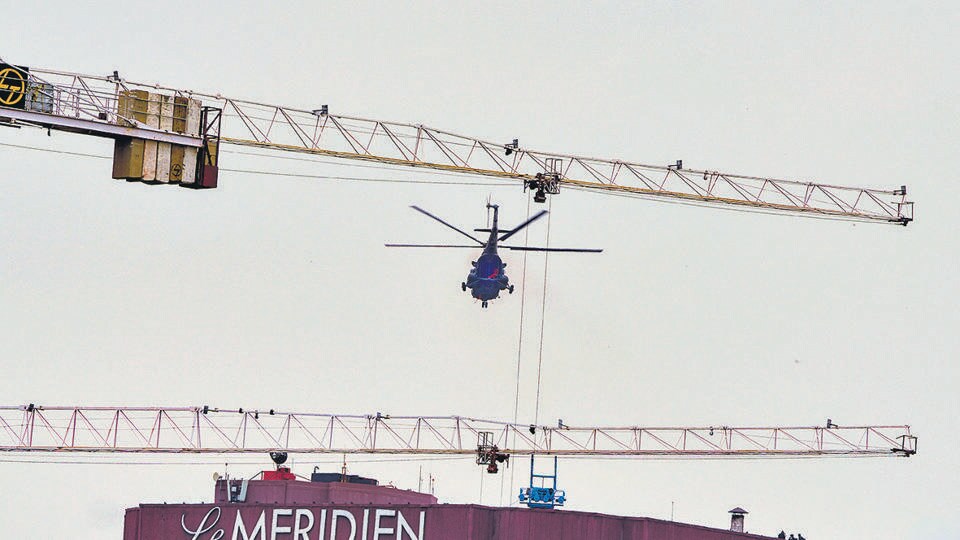
The IAF. has worked out an elaborate plan to guard Delhi’s skies during the G20 Summit on September 9-10.

 Prefer HTon Google


The Indian Air Force (IAF) has worked out an elaborate plan to guard Delhi’s skies during the G20 Summit on September 9-10, with a range of assets deployed to protect the national capital from a wide spectrum of possible threats, officials aware of the matter said on Thursday.
Also Read| G20: On climate, debt and digital, Bank and Fund pledge to work together
From fighter jets to surface-to-air missile systems and airborne surveillance platforms to anti-drone systems, the air force will be on high alert over the weekend to detect, track and neutralise any airborne threat, said one of the officials, asking not to be named.
“IAF’s air defence cover is in place to defend the Capital against a broad range of threats including drones, gliders, smaller aircraft, missiles and even fighter planes,” said a second official, who also asked not to be named. Surface-to-air missile systems have also been deployed in the National Capital Region (NCR), HT has learnt.
Also Read| G20 Summit: 1,400 CCTVs to be monitored from centralised control room
IAF has the capability to detect and track threats at a distance of a few kilometres to hundreds of kilometres and take the action necessary to neutralise them.
IAF’s operations direction centre (ODC), headed by a senior officer, and the joint command and analysis centre (JCAC) operations room at IGI Airport will play a key role in securing the skies during the high-profile event to be attended by a battery of heads of state including US President Joe Biden, French President Emmanuel Macron and UK Prime Minister Rishi Sunak.
“After a threat is picked up, ODC will employ the right platform to tackle it,” said the first official. Some fighter jets at airbases close to Delhi, including those in Punjab and Haryana, will be kept on ‘operational readiness platform’ duties to get them airborne in 5 to 7 minutes to respond to any situation, he explained.
Also Read| NDMC launches dedicated control room numbers to ensure coordination for G20 Summit
IAF’s airborne early warning and control aircraft and the indigenous airborne early warning and control (AEW&C) systems will be deployed during the summit for surveillance, and detection and tracking of possible threats at ranges of up to 400 km, the officials said.
“Whenever high-profile events of the scale of G20 are hosted by the country, air defence measures are implemented as a security incident cannot be allowed to take place. These measures include deployment or air defence systems, airborne and ground-based radar coverage, anti-drone systems and keeping armed fighter jets on hot standby,” said Air Marshal Anil Chopra (retd), director general, Centre for Air Power Studies.
Counter-drone systems have been deployed in Delhi, the officials said. These systems also include those developed by the Defence Research and Development Organisation (DRDO), which have been installed across the diplomatic enclave in the Capital.
These systems come with both “soft kill” and “hard kill” options to tackle aerial threats. The first refers to jamming the hostile drone, while the second involves a laser-based kill system. The drone attack on an IAF base in Jammu two years ago — believed to be the first-ever offensive use of drones to target an Indian military facility — was a watershed in asymmetric warfare and underlined the need for the armed forces to build capabilities to deter, detect and neutralise such threats.
Close coordination with the civilian air traffic authorities is also critical to ensure there is no diversion from planned routes, Chopra added.
The G20 Summit is taking place a time when IAF is conducting a mega training exercise, involving its fighter planes, transport aircraft, helicopters and other assets, in the country’s northern and western sectors to test its combat readiness amid the ongoing military standoff with China in the Ladakh sector, as previously reported by Hindustan Times.
Exercise Trishul began on September 4 and will conclude on September 14. The aircraft taking part in the exercise include the Rafales, Sukhoi-30s, MiG-29s, C-17 heavy-lifters, Il-76 transport planes, C-130J special operations aircraft, AN-32s, Apache attack helicopters and Chinook multi-mission choppers.


