E-Paper



ICMR invites firms to make Nipah detection units
The Nipah virus infection is a zoonotic disease that spreads between animals and people. Fruit bats are the host for the virus

 Prefer HTon Google


The Indian Council of Medical Research (ICMR) has developed technology for rapid detection of Nipah Virus and invited expression of interest for its commercial production.
The letter of invitation, issued on WHEN, said, “Indian Council of Medical Research ((ICMR), New Delhi invites Expression of Interest (EoI) from the eligible organizations, companies, manufacturers for undertaking ‘Transfer of Technology’ for commercialization of “A colorimetric RT-LAMP assay (isothermal) for rapid detection of Nipah virus” useful in Detection of Nipah.”
The Nipah virus infection is a zoonotic disease that spreads between animals and people. Fruit bats are the host for the virus. The virus can cause mild-to-severe disease, rapidly progressing from respiratory infection symptoms to encephalitis (brain swelling) that leads to coma or death. An estimated 40-75% of people infected with Nipah virus die. Although most cases are transmitted via animals, person-to-person transmission can also occur.
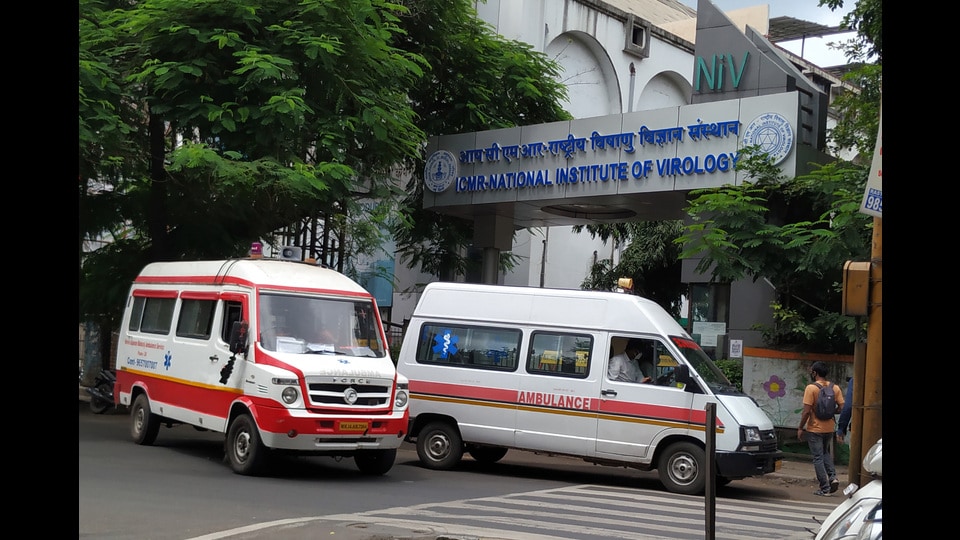
The technology, A colorimetric RT-LAMP assay (isothermal), was developed at ICMR’s National Institute of Virolgy in Pune. The EoI will help in the commercialization and marketing of the test kit.
According to ICMR, it is willing to collaborate with eligible organizations, companies, and manufacturers for undertaking transfer of technology, or further joint development and commercialization.
According to the ICMR invitation, the company will be given rights to undertake further development, manufacture, sale, and commercialization of the technology or product, or undertake further research and development and commercialize the end product.
“An Agreement (in case of joint development or licensing) following EoI is proposed to be executed on a “Exclusive/Non-Exclusive” basis with single/multiple companies to enable wider outreach of the “A colorimetric RT-LAMP assay (isothermal) for rapid detection of Nipah virus” (Technology/Product) for societal benefit and public health use. All the related issues shall be governed by ICMR IP Policy…,” the letter said.
ICMR would provide technical support through its team of experienced scientists in study planning, product development, development of study protocol, results/data analysis, outcome assessment, safety and efficacy assessment, product improvement, etc, the letter said.
The company, on the other hand, will be expected to provide necessary infrastructure, material, and manpower required for product development, validation, and scale-up. Also, it will undertake the scale-up as required, manufacturing, and commercialization of the product, the ICMR letter said.
The manufacturer will also have to pay royalty on net sales to ICMR. “Subsequent to the execution of the Agreement such companies/manufacturers shall be responsible to pay the Royalty at 2% on Net sales, as applicable, according to the ICMR Guidelines for Technology Development Collaboration,” the EoI said.
India records occasional outbreaks of the viral infection in the southern state of Kerala. Last year, a 14-year-old boy from Malappuram district of the state died of Nipah Virus Disease after reportedly consuming wild hog plum from a tree in an area in Pandikkad panchayat. The area is known to host fruit-eating bats that are the primary carriers of the disease.