The Bombay High Court on Monday allowed actor Imran Khan, a US citizen and Overseas Citizen of India (OCI) cardholder, to continue staying in India after he agreed to tender an “unconditional apology” for his alleged participation in a protest against the Special Intensive Revision (SIR) of electoral rolls. The Bombay High Court will hear the actor's plea next on December 7 and has kept the notice in abeyance until then.
During the hearing of his petition challenging the 'Leave India Notice' issued by the Foreigners Regional Registration Office (FRRO), the court observed that OCI cardholders are “at the mercy of the country” and cannot claim the same rights as Indian citizens. The HC also called on the actor to submit an undertaking saying that he would refrain from participating in future protests and agitations.
Why was Imran Khan asked to leave India?
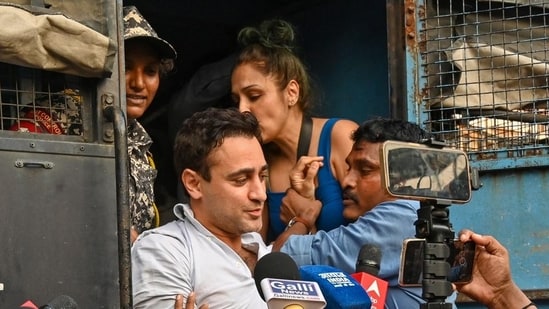
The controversy began on October 10, when Khan was briefly detained by Mumbai Police during a protest near August Kranti Maidan in Mumbai. The demonstration was held against chief election commissioner Gyanesh Kumar and demanded his resignation over alleged irregularities in the Special Intensive Revision (SIR) of electoral rolls.
Khan, who holds US citizenship and an OCI card, was among those detained during the protest. BJP leader Kirit Somaiya subsequently filed a police complaint alleging that the actor had violated immigration rules by participating in a political demonstration as a foreign national.
{{/usCountry}}Khan, who holds US citizenship and an OCI card, was among those detained during the protest. BJP leader Kirit Somaiya subsequently filed a police complaint alleging that the actor had violated immigration rules by participating in a political demonstration as a foreign national.
{{/usCountry}}Following the complaint and an FIR forwarded by the police, the FRRO issued the Leave India Notice on October 14, directing Khan to leave the country by October 28 under the Immigration and Foreigners Act, 2025.
Khan moved the Bombay High Court on October 17, challenging the notice as arbitrary, unconstitutional and disproportionate. He argued that he had not organised or participated in the protest and was merely present near the spot before leaving when asked by the police.
Actor challenges FRRO action
In his petition, Khan argued that the authorities could not order his removal from India merely on the basis of an allegation that he had participated in a protest, HT reported earlier.
He also pointed out that he had lived in India for nearly four decades and that his OCI status gave him a lifelong visa to stay in the country. He alleged that the FRRO had issued the notice without giving him an opportunity to explain his position.
The FRRO had also issued a separate show-cause notice asking why his OCI registration should not be cancelled under Section 7D(e) of the Citizenship Act, 1955. The provision allows the government to cancel OCI registration on specified grounds, including national security, sovereignty and public interest.