
 E-Paper



In India-China border disengagement plan, Galwan model is the template
India-China border row: The disengagement exercise on both banks of Pangong Tso was the outcome of multiple rounds of back-channel negotiations

 Prefer HTon Google


Nine months after being locked in an eyeball-to-eyeball confrontation in the East Ladakh sector, the armoured units of Indian Army and the People’s Liberation Army (PLA) started withdrawing from north and south banks of the frozen Pangong Tso on Wednesday evening, paving a way for peace and tranquillity to be restored all along the Line of Actual Control (LAC) with China.
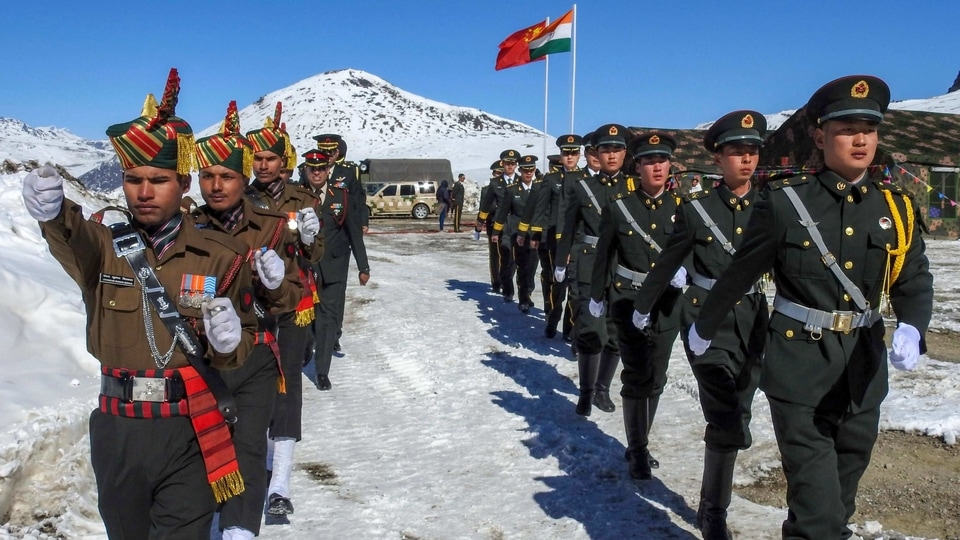
While Defence Minister Rajnath Singh issued a statement on the “phased, coordinated and verifiable” pullback by the two armies in Rajya Sabha today, it was a measure of confidence on part of the Narendra Modi government to ensure that Indian Army stood-up to the PLA through the polar winter in East Ladakh. The disengagement exercise on both banks of Pangong Tso was a result of multiple rounds of back-channel negotiations with external affairs minister S Jaishankar and National Security Advisor Ajit Doval, guided by PM Modi, working behind the scenes. The ground positions were negotiated by the two Corps Commander-rank officers and the framework, through the diplomatic channel.

Top government functionaries said the fundamental principle behind the disengagement was that both armies go back to their permanent bases as existed in April 2020. This means that while PLA will withdraw to the Srijap sector, east of Finger 8 mountainous spur on the north bank, the Indian Army will withdraw to the permanent base on Finger 3 named after Lt Colonel Dhan Singh Thapa, the legendary military commander who was awarded the Param Vir Chakra after the 1962 war.
The same rule has been applied to the southern bank of the lake where both armies are going back to their permanent bases in Chushul (Indian Army) and Moldo (PLA).
“The Galwan model has been replicated on both the banks. After the June 15 Galwan clash, both sides had withdrawn to the permanent bases with no patrolling from side till such time patrolling protocols have been framed. After the withdrawal is completed and confidence-building measures initiated by both armies, the two sides can decide on coordinated, joint or staggered patrolling,” said a senior official in the know of the entire exercise.
A person familiar with the understanding reached between the two sides said once the withdrawal of armour, artillery and troops is completed from Pangong Tso, the two sides will initiate negotiations on disengagement from patrolling point 15 (Gogra) and 17 (Hot Springs) area, north of Pangong Tso.
The disengagement and subsequent de-escalation from Pangong Tso was achieved after quiet backchannel conversations between the two sides after the Xi Jinping regime had tested the Indian Army during the polar winter in East Ladakh with temperatures touching below 40 degrees centigrade. It is a major victory for the Modi government as pushing the PLA back to its base on the Srijap sector from Finger 4 was no mean achievement as the latter wanted a military leg up on Indian Army.
The Indian negotiating position got a great boost after NSA Doval along with Chief of Defence Staff Gen Bipin Rawat and Army Chief Mukund Naravane planned and managed to place the Indian Army troopers on the Rezang La Rechin La alignment on Kailash Ranges on August 29-30, 2020 despite valid fears of an India-China conflict. Just as the Chinese PLA tried to enforce the 1959 LAC line by aggression on Finger 4, the Indian side countered by achieving their military objective of holding up the Kailash Range line as per Indian perception of LAC.
Despite both India and China spending millions in military deployment on East Ladakh, the Modi government managed to restore status quo ante without ceding an inch of land, a point emphasised by defence minister Rajnath Singh in Parliament. Restoration of status quo ante on LAC will not only add to Indian Army and Modi government’s military credibility but also persuade President Xi Jinping to restrain his Western Theatre Commander to undertake any military misadventure in future. After the 2017 Doklam and 2021 Pangong Tso on-going resolution, the new western theatre commander will have to think many times before undertaking unilateral change on the LAC. The Indian Army is watching.


