India accounts for one-fourth of the total groundwater extracted globally, more than that of China and US combined and cities and villages in the northern and central parts of India are among regions facing a water crisis, says an analysis by WaterAid.
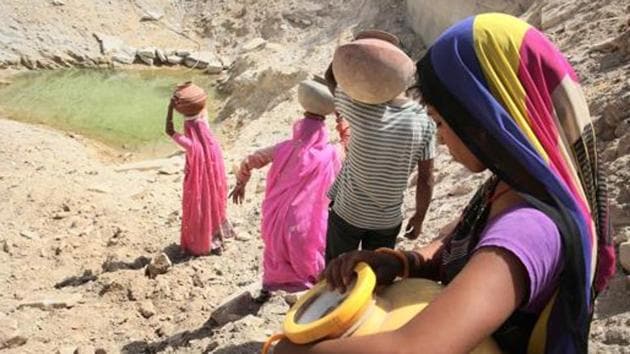
A total of 163 million people in India have no access to clean water close to home, or 15% of all rural residents and seven per cent of all urban residents, says the study,released on the occasion of world environment day today.
Severe groundwater depletion in north and central India, already home to some of the poorest communities, further threatens their access to water, it said.
“The country accounts for one-fourth of the total groundwater extracted globally, more than the water extracted by China and the United States combined. Severe groundwater depletion in the north and central India, already home to some of the poorest communities, further threatens their access to water,” it says.
Because of climate change, India has experienced extreme weather events in the past few years - excessive rainfall, increased incidence of floods and drought.
Every year, lack of access to clean water adversely affects the quality of life, particularly of the poorest, further setting them back, said WaterAid.
{{/usCountry}}Every year, lack of access to clean water adversely affects the quality of life, particularly of the poorest, further setting them back, said WaterAid.
{{/usCountry}}The most marginalised people who have contributed least to climate change are impacted the most, it says.
As per UNICEF-WHO joint monitoring programme, clean water refers to water from an improved source, collected within a 30-minute round trip.
The study said that besides these cities and villages in India, Bangladesh, Myanmar, southern Madagascar and southern Mozambique are facing acute water scarcity threatening the lives and livelihoods of millions.
Based on NASA satellite imagery released earlier this year, the analysis also examined current rates of access to water for rural and urban areas in most-affected regions.
While other areas like northern Australia and California also face serious groundwater depletion, it is the world’s poorest regions and nations which will feel the strongest impact, as their people already have low levels of access to clean water close to home, it says.
Avinash Kumar,director- programmes and policy, WaterAid India, said the government needs to approach the issue holistically by ensuring stringent steps to reduce pollution of water bodies, prevent excessive groundwater exploitation, promote water recharge measures like rainwater harvesting, treat wastewater, promote its use for non-critical service and ensure climate-resilient water sector planning.
Schemes like AMRUT and ‘Har Ghar Jal’ are steps in the right direction to ensure piped water access to every household, but India has a long way to go to ensure that the installed taps do not run dry soon, he said in a release.
“Ahead of the world leaders meet in New York in July to review the UN sustainable development goal on water, India needs to step up its efforts to ensure access to clean water for the poorest and the most marginalised,” he said.