The global economy is heading towards a much rougher period than in recent decades, and India is gearing up for it, Union minister Ashwini Vaishnaw said on Wednesday.
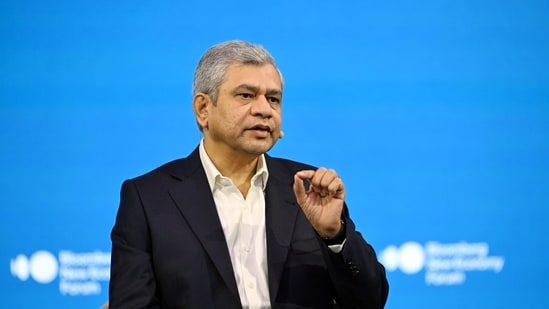
Addressing the Bloomberg New Economy Forum 2026 in the Capital, Vaishnaw said challenges are likely to arise on two fronts: technology and finance. Artificial intelligence (AI) is likely to disrupt jobs and the services sector, and an even bigger shock could follow if the debt of rich countries starts to unravel, he said. “Difficult times ahead,” he added.
Vaishnaw also said geopolitics plays a major role, which means India must keep adjusting its approach. He also said the government is planning in three stages to achieve its short-term (3-5 years), mid-term (5-15 years), and long-term (20-25 years) goals.
Also read | India weathered global storm better than its peers, says IMF
“There are times when friends will become foes,” he said, adding that it is important to spot the things that could make India’s production and economy depend on another country’s policies, and to start working on them early.
Materials are the biggest weak spot
When building the “India stack”, Vaishnaw said, the biggest dependence and concentration risks are in materials. In the first phase of the semiconductor programme, the government had backed one big company and now has 12 projects, five of which are already producing chips. The second phase focuses on materials such as gases, substrates and chemicals.
Vaishnaw’s focus on materials stems from Semicon 2.0, the second phase of the India Semiconductor Mission. On July 15, the Union Cabinet approved the policy with an outlay of ₹1.27 lakh crore, up from ₹76,000 crore allocated under the first phase. The policy widens its support beyond individual fabrication and packaging projects to cover the entire semiconductor value chain.
{{/usCountry}}Vaishnaw’s focus on materials stems from Semicon 2.0, the second phase of the India Semiconductor Mission. On July 15, the Union Cabinet approved the policy with an outlay of ₹1.27 lakh crore, up from ₹76,000 crore allocated under the first phase. The policy widens its support beyond individual fabrication and packaging projects to cover the entire semiconductor value chain.
{{/usCountry}}Also read | India a trusted partner in weaponised world; offers reliability, stability: PM Modi at Bloomberg Forum
“These things take a long time to build. Other countries needed about 20 years. Do we have that luxury of time? No,” Vaishnaw said, adding India must put in extra effort.
India as a trusted partner
Vaishnaw said a lot of the world’s older chip production – from 28nm to 90nm – is becoming concentrated in a few places. He said that when a product comes from a country, buyers look for trust and not just low cost. Cybersecurity matters more than before, he said, adding that India wants to be seen as a trusted partner.
The minister said an ecosystem must be built first. In the mobile phone sector, India progressed from assembly to modules and, last year, to components. It is now self-sufficient in many of them and also exports them, he said. The same approach is being used in semiconductors, railways and defence, he added.
Vaishnaw said technology has always run on global supply chains, and India wants to be deeply involved in them and add value where it does best. He pointed to chip design of the 2nm and 3nm chips of big firms like Nvidia, Qualcomm and AMD that are designed in India. He also said big global companies have worked in India for 40 years without any problems over intellectual property.
Also read | Beyond the fabs: What Semicon 2.0 plans for equipment, chip design, research and skills
India has cut its public debt from 61% of GDP to 55% in the last five years, the Union minister said. The goal, he added, is an economy that is protected from shocks, irrespective of it being financial, economic or technological.
India is close to becoming a $4 trillion economy, he said, and is growing at 6-8% a year with 95% confidence. However, outside factors, more than domestic ones, could knock that growth off course, he cautioned.