New Delhi: India and Pakistan on Wednesday exchanged lists of prisoners in each other’s custody, with New Delhi asking Islamabad to expedite the release of 183 Indian nationals who have completed their prison terms and seeking immediate consular access to 18 more prisoners.
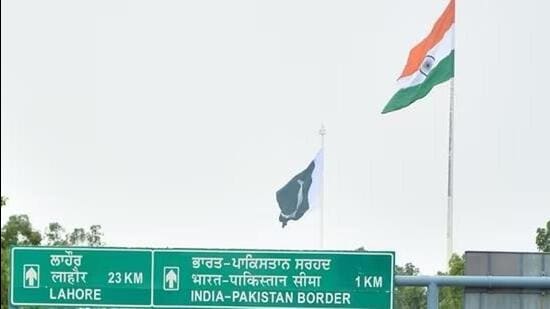
The two sides also exchanged lists of nuclear installations that cannot be attacked in the event of hostilities, maintaining a tradition going back to 1992 despite relations between the two neighbours being at an all-time low.
The external affairs ministry said in a statement that India shared the names of 381 civilian prisoners and 81 fishermen in its custody, who are Pakistani or are believed to be Pakistani.
Pakistan shared the names of 49 civilian prisoners and 217 fishermen in its custody, who are Indian or are believed to be Indian.
The two sides exchange lists of prisoners and fishermen twice a year, on January 1 and July 1, under the provisions of the 2008 Agreement on Consular Access.
Pakistan was asked to “expedite the release and repatriation” of 183 Indian fishermen and civilian prisoners who have completed their sentence, the statement said. In addition, India sought immediate consular access to 18 civilian prisoners and fishermen who are believed to be Indian and have not been provided consular access so far.
In addition, India sought the “early release and repatriation of civilian prisoners, fishermen along with their boats, and missing Indian defence personnel from Pakistan’s custody”, the statement said.
{{/usCountry}}In addition, India sought the “early release and repatriation of civilian prisoners, fishermen along with their boats, and missing Indian defence personnel from Pakistan’s custody”, the statement said.
{{/usCountry}}Pakistan was also “requested to ensure the safety, security and welfare of all Indian and believed to be Indian civilian prisoners and fishermen, pending their release and repatriation”, it said.
The Indian side said it is committed to addressing all humanitarian matters, including those related to prisoners and fishermen in each other’s country. In this context, India urged Pakistan to expedite the nationality verification process for 76 civilian prisoners and fishermen who are believed to be Pakistani, and whose repatriation is “pending for want of nationality confirmation from Pakistan”.
The statement said a total of 2,639 Indian fishermen and 71 civilian prisoners have been repatriated from Pakistan since 2014. This includes 478 fishermen and 13 civilian prisoners who were repatriated since 2023.
The lists of nuclear facilities were simultaneously exchanged through diplomatic channels in New Delhi and Islamabad, in keeping with provisions of the Agreement on the Prohibition of Attack against Nuclear Installations and Facilities, the external affairs ministry said in a separate statement.
Neither country discloses details of the nuclear installations.
The agreement was signed on December 31, 1988, and entered into force on January 27, 1991. It stipulates that India and Pakistan should inform each other about the nuclear installations and facilities to be covered under the pact on the first of January of every calendar year.
This was the 34th consecutive exchange of the lists between the two countries, the first one having taken place in January 1992.
India and Pakistan have not had any sustained talks since New Delhi called off the composite dialogue in the aftermath of the 2008 Mumbai attacks, which were carried out by a 10-member team of the Pakistan-based Lashkar-e-Taiba (LeT). The attacks killed 166 people and injured scores more.
The political leadership on both sides have attempted to resume contacts, though these efforts were derailed by a string of terror attacks blamed on Pakistan-based groups. India and Pakistan came close to hostilities following the 2019 Pulwama suicide attack blamed on the Jaish-e-Mohammed (JeM).
External affairs minister S Jaishankar became the first Indian foreign minister to visit Pakistan in nearly a decade when he travelled to Islamabad last October to participate in a meeting of the Shanghai Cooperation Organisation’s second highest decision-making body.