With Indian Army and People’s Liberation Army (PLA) frozen in their positions in East Ladakh sector’s polar winter, national security planners expect China to ramp up military activity at the friction points when the snows melt in late March. There has been no withdrawal of any PLA troops from the contested points and China has used the stand-off to build advanced landing grounds across the Daulet Beg Oldi sector in Tianwendian, humongous shelters to house personnel and a shorter link from Hotan airbase to Karakoram pass. "There could be military pressure north of Depsang bulge," said a senior commander.
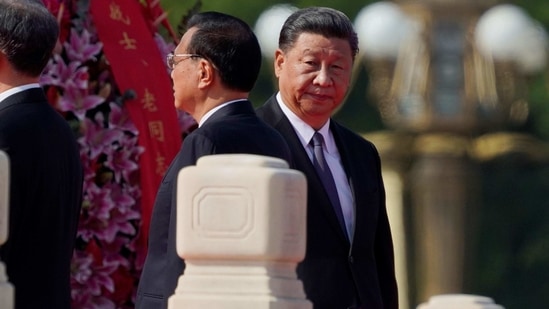
According to people familiar with the matter, the dates of the ninth round of military talks are expected to be decided soon to top the good progress made by both sides in disengagement and de-escalation plan. This view is in sharp contrast to the view within a section of the government, who believe that the PLA is in no mood to move out of the contested points at least till paramount leader Xi Jinping delivers his address to the celebrations to mark 100 years of Chinese Communist Party’s rule. “This is the unfortunate record,” said a senior official.
While the Indian Army is prepared to sit out in East Ladakh for as long as it takes, the Chinese moves may also be influenced by the tone and tenor of the incoming Joe Biden administration towards Beijing. Although many believe that the incoming US administration could strike a balance by its de facto recognition of China as the other superpower, this new G-2 factor will hurt former superpowers like Russia.
India, on its part, believes that it is a multi-polar world and New Delhi is not dependent (much to the chagrin of western strategists) on Washington to deal with China to protect its frontiers. And hence, the strategy of Atmanirbhar Bharat in developing indigenous technologies in areas of drones, fighter aircraft and stand-off weapons with the involvement of the public and private sector. The onus lies on DRDO and HAL to roll-out the Tejas Mark I A on April 1, 2024, along with a prototype of the twin-engine indigenous fighter or AMCA as the government has shot down Mark II project.
{{/usCountry}}India, on its part, believes that it is a multi-polar world and New Delhi is not dependent (much to the chagrin of western strategists) on Washington to deal with China to protect its frontiers. And hence, the strategy of Atmanirbhar Bharat in developing indigenous technologies in areas of drones, fighter aircraft and stand-off weapons with the involvement of the public and private sector. The onus lies on DRDO and HAL to roll-out the Tejas Mark I A on April 1, 2024, along with a prototype of the twin-engine indigenous fighter or AMCA as the government has shot down Mark II project.
{{/usCountry}}According to senior officials familiar with the national security deliberations, India does hope that the incoming Biden administration will stand by its commitments on China, South China Sea, Taiwan or Indo-Pacific at large but New Delhi is not dependent on the US for handling the PLA. The fact is that the US has indeed increased Indian awareness of the Indo-Pacific by providing access to information, the same cannot be said about the Ladakh stand-off. This approach is contrary to China’s perception that sees India through the prism of the US and as an adversary.
With PLA ramping up border infrastructure all along the 3,488 kilometre Line of Actual Control (LAC), India is alive to the distinct possibility that China could open up fronts in Arunachal Pradesh and around the Sikkim-Bhutan-India tri-junction area. However, after the Galwan flare-up on June 15 and significant casualties on the PLA side, China will engage India with stand-off weapons and not repeat the mistake of engaging Indian Army in hand-to-hand combat in a worst-case scenario.
But there is a downside to such an engagement and China is acutely aware of it. Much as China would like to teach a lesson to Indian Army as its state media often warns, Beijing is well aware that the political leadership under Prime Minister Narendra Modi has the capacity to retaliate like it did on 29-30 August 2020 on the south bank of Pangong Tso. For a country that sees itself as a contender to the superpower slot now occupied by the US, any military loss of face to India will take the wind out of that claim.