Union Minister for Petroleum and Natural Gas Dharmendra Pradhan has said India sees the US sanctions on Iran as a ‘challenge’ given its close ties with both countries, but will take a ‘considered and comprehensive’ view, based on ‘national interest’, and find a way to secure its energy needs: His comments come a week before a US expert-level delegation arrives in India, on July 16 and 17, to discuss sanctions with Petroleum Ministry and Ministry of External Affairs experts and share each other’s perspective on its impact on global oil markets.
India, led by private players, purchased around 10% of its crude oil from Iran in 2016-17, but the figure has risen to 18% this year with 33 million tons of crude being imported.
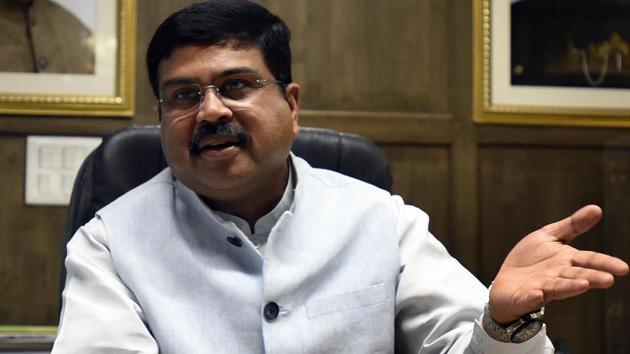
In an interview, Pradhan underlined the importance of ties with both countries. “We have a special strategic relationship with US. We have a historic, cultural and civilisational relationship with Iran. Iran is also a factor in India-Afghanistan relationship because of its geographic proximity. Our economic interests are tied to both. The government will take a comprehensive view.”
When asked how it will deal with the fallout of the sanctions, the minister said, “Let us wait and watch. The government has a considered view. National interest is paramount and we will align our decision on that.”
Pradhan did not offer a specific comment on whether India would reduce its dependence in the backdrop of US indications that sanctions would not apply to such countries. “ We don’t want to give a kneejerk reaction...We will do what is desirable. This is not an issue of quantum – how much to reduce or increase. It is far more comprehensive than that.” He added the government is aware of the timeline - sanctions kick in on November 4 - and is working on a plan. “I will not go beyond this.”
{{/usCountry}}Pradhan did not offer a specific comment on whether India would reduce its dependence in the backdrop of US indications that sanctions would not apply to such countries. “ We don’t want to give a kneejerk reaction...We will do what is desirable. This is not an issue of quantum – how much to reduce or increase. It is far more comprehensive than that.” He added the government is aware of the timeline - sanctions kick in on November 4 - and is working on a plan. “I will not go beyond this.”
{{/usCountry}}The Petroleum Ministry is worried about rising crude oil prices and its impact on the US dollar as well as on the domestic price situation. Official estimates suggest that oil prices shoot up 50 paisa for one dollar corresponding rise in the price of one barrel of crude oil import. The crude oil price per barrel is today is hovering around USD 77 and expected to go up further with all the consumers watching the impact of US sanctions on Iran.
Between 2012 and 2015, when the US — along with Europe — had last imposed sanctions on Iran, India had brought down its crude oil imports from Iran to 6%. India initially used a Turkish bank to pay Iran for the oil it bought but also began using the rupee-rial mechanism. From February 2013, it paid nearly half the oil import bill in rupees while keeping the remainder, pending the opening of payment routes. It began clearing the dues in 2015 when the restrictions were eased. India also supplied goods to Iran in exchange for oil.
Although India is again willing to reduce its oil dependency on Tehran over a period of time after the sanctions kick in on November 4, the Modi government wants to discuss the entire issue with Trump administration representatives. Given the large amount of oil imports from Iran, India would be seeking help from the US for alternative oil supplies with an eye on global prices.