India has set up its first mobile testing laboratory in a bid to meet the growing demand to conduct coronavirus disease (Covid-19) tests.
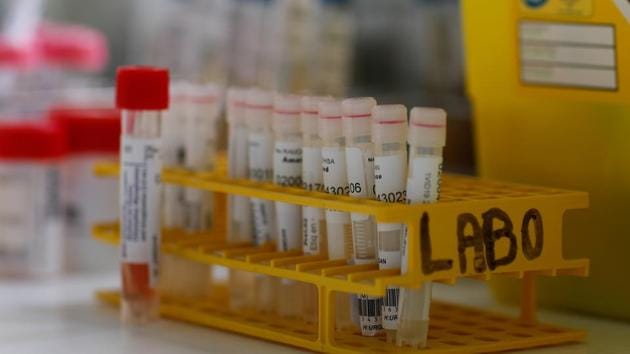
The laboratory can be deployed at remote and inaccessible areas in the country, where there is no such facility, even as the overall Covid-19 testing capacity has reached three lakh swab samples per day.
The mobile laboratory belongs to the biosafety level 2 (BSL-II) category, which was created within eight days by a team from Andhra Pradesh MedTech Zone Limited.
BSLs are ranked from one to four and are categorised on the basis of the organisms that the researchers are dealing with.
BSL-I is considered to be the least hazardous, while BSL-IV poses the maximum safety risk. Each level builds on the previous category, adding more layers of constraints and barriers.
The organisms include viruses, bacteria, fungi, parasites, etc.
SARS-CoV-2, which causes Covid-19, belongs to the BSL-II category.
“India’s first mobile I-lab flagged off from @AP_MedTechZone. Built in eight days flat, it is an on the wheel Bio-Safety Level-2 Lab with on-site Elisa, RtPCR & Bio-chem analysers. It can be readily deployed in the remotest locations. Kudos to the team,” tweeted Alok Kumar, a member of the Niti Aayog.
The Andhra Pradesh MedTech Zone Limited, spread over 270 acres, is a dedicated zone to medical device manufacturing and was inaugurated by the Andhra government two years ago.
{{/usCountry}}The Andhra Pradesh MedTech Zone Limited, spread over 270 acres, is a dedicated zone to medical device manufacturing and was inaugurated by the Andhra government two years ago.
{{/usCountry}}The facility aims to put India on the global map of high-end medical equipment production and make healthcare products affordable and accessible not only in the country, but also the world at large.
It also has set a target for reducing the cost of manufacturing up to 40% and also minimising the import dependency for the country, which is currently pegged at around 75%.
However, over the past few months, the zone is producing several items that are key to the treatment of Covid-19 patients, including test kits and ventilators.
India has been constantly ramping up its Covid-19 testing capacity since the viral outbreak first came to light in end-January after a medical student came back to her native Kerala from Wuhan, the epicentre of the pandemic in central China.
Earlier, a single laboratory under the Indian Council of Medical Research’s (ICMR) National Institute of Virology (NIV) in Pune could conduct about 2,500 tests a day in February.
Now, 907 laboratories – 659 and 248 in the government and private sectors, respectively, – across the country are conducting tests of around three lakh swab samples a day.
“Though the turnaround time for a report varies, usually, we try to give it within 48 hours,” said a senior microbiologist in one of the government-run laboratories conducting Covid-19 tests.
So far, 59,21,069 swab samples have been tested since January 22, including 1,54,935 in the past 24 hours.
The Centre has reviewed the situation in the national capital, which has reported around 10,000 fresh Covid-19 positive cases over the past five days and each of its 11 districts in Delhi has been assigned a set of laboratories to conduct tests.
“The swab samples from each of these 11 districts in Delhi are being sent to these laboratories to ensure timely testing and making the results available without any delay. At present, Delhi has 42 laboratories, which have a combined testing capacity of around 17,000 samples a day,” said a statement by the Union Ministry of Health & Family Welfare (MoHFW).