
India will roll out by next month a revised national strategic plan with an aim to eliminate tuberculosis by 2025, five years ahead of the global goal to stamp out the bacterial disease.
The target seems ambitious considering 2.8 million new TB cases are still getting diagnosed annually and the bacterial infection killing more than 4.8 lakh people each year in the country.
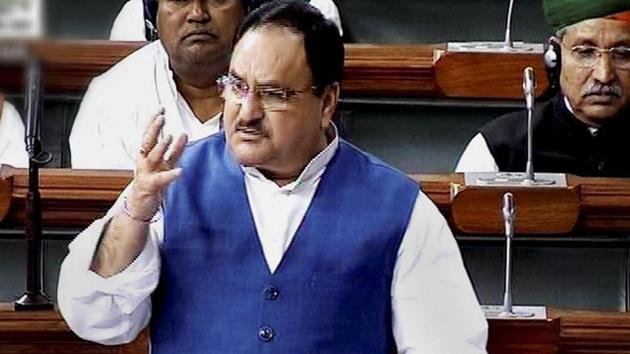
The latest data is part of the annual TB report that union health minister JP Nadda released on the occasion of the World TB Day on Friday.
“We know we are racing against time. The challenge is immense, but we are up for it. The plan is ready to reach the target by 2025,” he said.
The biggest challenge for the country is multi drug-resistant TB that is reported in 75,000 of the cases during treatment. Of these cases, 1.5% is related to more dangerous extensively drug-resistant TB (X-DR TB).
“To end TB, we will have to think out-of-the-box. We have to make effective use of the private sector and co-ordinate better with state governments,” said CK Mishra, health secretary.
{{/usCountry}}“To end TB, we will have to think out-of-the-box. We have to make effective use of the private sector and co-ordinate better with state governments,” said CK Mishra, health secretary.
{{/usCountry}}The role of the private sector is important to track all the cases of TB.
The increase in new infections to 2.8 million from the previous 2.2 million is largely attributed to cases that were notified by the private sector after it was made mandatory for all to notify TB cases in 2012.
Better diagnostic facilities in each district also spiked the detection figure.
“We started a door-to-door TB screening programme in 50 high risk districts and will expand to 130 districts this year,” said Dr Jagdish Prasad, director general of health services.
“Each district has at least one of the more accurate gene testing machines CBNAAT, and 100 high priority districts have been identified for intensified TB control initiatives.”
Government’s main concern and focus will now be to get all cases from the private sector hospitals.
“We have to reach out to the estimated 15 lakh patients who are seeking treatment outside the public sector,” said Mishra.
ABOUT THE AUTHOR
Rhythma Kaul is the national health editor of the Hindustan Times. She has been reporting on public health, medicine, and medical research, with a particular focus on how government decisions and health system reforms shape people’s lives. Rhythma has over 25 years of journalistic experience. She joined Hindustan Times in 2008, and has since covered everything from pandemics and infectious diseases to cutting‑edge medical research and climate‑related health challenges. Her stories routinely track the work of the Ministry of Health and Family Welfare, department of pharmaceuticals, and key national health programmes, making complex medical science and policy accessible to a wide audience. One of her prominent news breaks has been the 2012 Baby Falak case: A two-year-old brutally battered baby girl was admitted to AIIMS-Delhi with severe head injuries, multiple fractures, human bite marks, and burns. The police investigation revealed this to be a case of multi-state human-trafficking racket. She was profiled by The Wall Street Journal for breaking this story. Rhythma holds a Master’s degree from Jawaharlal Nehru University, Delhi. Prior to Hindustan Times, she worked with the India Today Group. Rhythma can be contacted at rhythma.kaul@hindustantimes.com. Her X handle is @RamblingBrook.