Indian researchers have developed a skin gel that inhibits the absorption of the most commonly used pesticides that can cause serious ill effects on health and, in worst cases, result in the death of pesticide handlers such as farmers.
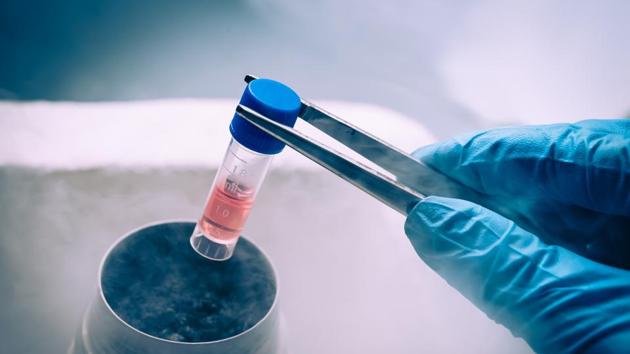
A 13-member team from the Bengaluru-based Institute for Stem Cell Biology and Regenerative Medicine (inStem), under the Department of Biotechnology, have formulated and patented the poly-Oxime gel made of chemically modified chitosan — found in the shells of crustaceans such as lobsters, crabs and shrimps.
Work on developing the gel started in 2015, and assumes significance given that India is among the major countries that uses organophosphate-based pesticides in agriculture. Last year, 63 farmers died due to pesticide poisoning in Maharashtra alone and more than 1,000 were affected.
The gel, when applied on animal models, chemically deactivated or neutralised organophosphate-based pesticides on their skin and reduced the inhibition of acetylcholinesterase (AChE) – the most abundant enzyme in the central and peripheral nervous system and critical for controlling nerve signals in the body.
Organophosphates can result in neurological disorders, neurotoxicity, cognitive dysfunction, reduction in motor coordination, suffocation, paralysis, and in severe cases, death due to cardiovascular collapse and respiratory failure.
{{/usCountry}}Organophosphates can result in neurological disorders, neurotoxicity, cognitive dysfunction, reduction in motor coordination, suffocation, paralysis, and in severe cases, death due to cardiovascular collapse and respiratory failure.
{{/usCountry}}Researchers said suits, gloves, face masks, headgear, and boots, which can offer some protection from the pesticides, are scarcely used by farmers as they are expe-nsive and cause discomfort in tropical weather such as India’s.
“Farm workers spray pesticides in high concentration on open fields with scant or no protection that can expose them to toxic chemicals through the dermal route,” said Praveen Kumar Vemula, senior author and head of the Laboratory of Self-Assembled Biomaterials and Translational Research, inStem.
The paper on the invention - ‘Prevention of pesticide-induced neuronal dysfunction and mortality with nucleophilic poly-Oxime topical gel’ — will be published in Science Advances, an international peer reviewed scientific journal, by the American Association for Advancement in Science, on Thursday.
“It’s an interesting concept and worthy of attention,” said Dr JV Peter, director, Christian Medical College, Vellore. “The results of experiments on animals can be different when applied to humans. Although there have been similar studies in the West, the experiments haven’t worked on humans. Hope this experiments translates positively on humans.”