E-Paper



‘Isolation and fear’: First batch of Indians return from Iran
Most returnees said they had not witnessed violence directly but absorbed secondhand accounts from locals and viral videos that deepened their anxiety.

 Prefer HTon Google


Indians including students, pilgrims and workers returned to Delhi on Saturday from Iran, where a government crackdown on nationwide protests has killed more than 2,500 people in recent weeks.
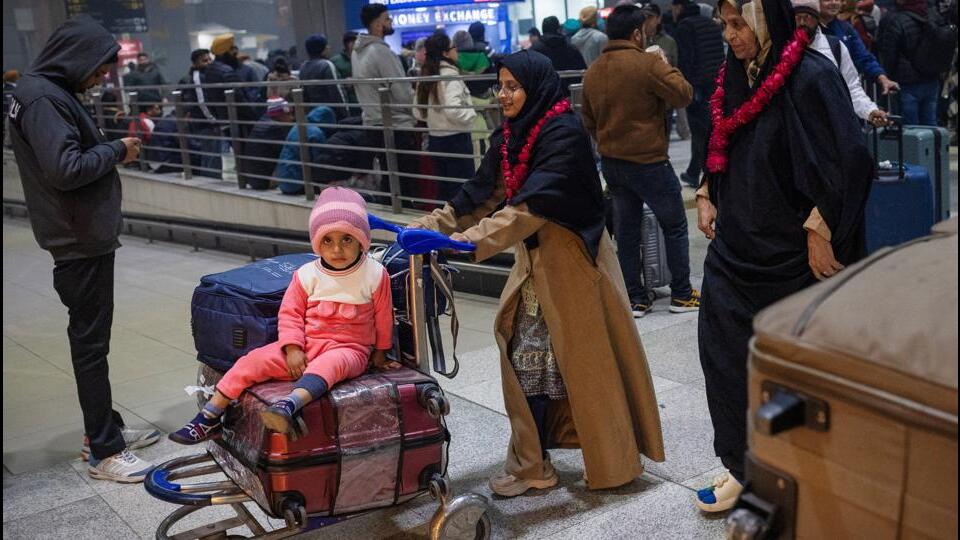
The arrivals marked the first batch of Indians to return since the protests erupted in late December, with families gathering at Indira Gandhi International Airport’s T3 from Friday night to receive relatives who had endured weeks of isolation and mounting fear as the West Asian country cut off from the world.
“The university officials told us that the internet shutdown is a security measure to ensure law and order. Besides this, we were asked to avoid going out of the campus, especially in the evening. But my family started panicking when they saw videos of protests surfacing on the internet, and the subsequent internet shutdown and airspace ban fuelled their fear even more,” said 22-year-old Zuik, a fourth-year MBBS student at Tehran University who returned to Srinagar.
Another student, Shazid, said the lack of communication --- Iran unplugged the internet as well as international phone calls for more than a week --- made the uncertainty worse. “Once we were informed about the travel arrangements, there was a sense of relief. Reaching home and seeing our families waiting for us is something we truly needed,” he told news agency PTI.
Most returnees said they had not witnessed violence directly but absorbed secondhand accounts from locals and viral videos that deepened their anxiety. “Locals told us that protestors are running their cars over police and there’s open firing,” said Mohd Dilshad, 25, a BTech graduate from Hyderabad working for an Indian pharmaceutical company on a machine installation project.
Dilshad said his hotel manager, citing safety concerns, had shifted him and two colleagues to an official guesthouse. As informal curfews took hold, working hours at the installation site in Karaj, 25km from Tehran, were changed to ensure people were indoors before evening when protests typically began. “We had food and everything on time there, but our heart was full of fear,” he said.
Staff strength was also reduced as people from affected areas stopped coming to work, Dilshad said. He and his colleagues had booked return tickets for January 9 and arrived at the airport as scheduled, but flight timings were disrupted due to the internet outage and they had to return to the guesthouse. “There are many Indians working in Iran who are stuck because they have a one or two year contract. We went there for a project which was completed in just a few weeks so we could return,” he said.
Pilgrims recounted similar confusion and chaos. Hasnain, 55, from Mau district in Uttar Pradesh, said citizens were protesting against rising inflation and unemployment. “We got to know that citizens are protesting against the current government in Iran. Few days later, we were told by locals that Iran and the US are likely to have a war and then amidst these talks, the internet was shut down. I along with my wife had gone for pilgrimage, and our three daughters were at home. We completely lost touch with them. With the help of locals, we managed to make some international calls and inform them that we are safe,” he said.
Eight-year-old Mohadeesa Fatima from Magam tehsil in Kashmir had gone to Iran with her family for a pilgrimage. The family had left Kashmir on December 22 and started their pilgrimage from Iraq, visiting holy places including Karbala, Najaf, Mashhad and Qom before reaching Tehran. “As soon as we had arrived, we heard how people from other countries, including mine, are desperate to leave,” she said, accompanied by her parents. The child said she had tried to remember events from her travels to share with friends, but the order of two sleepless nights to catch a flight home was all that she could remember.
External affairs ministry spokesperson Randhir Jaiswal said on Friday that approximately 9,000 Indian nationals are living in Iran, most of them students. In addition, there are sailors, pilgrims and people associated with business residing there, he said.
The protests began in late December in Tehran after Iran’s currency, the rial, plunged to record lows. Demonstrations have since spread across all 31 provinces, evolving from agitation against economic distress into broader demands for political change.
Some estimates put the death toll in five digits, though corroboration has been difficult in a country where communications have been restrictive.