A joint parliamentary committee reviewing a contentious draft legislation to modify India’s biodiversity conservation law has, in its report submitted in Parliament on Tuesday, accepted several amendments proposed by the government that include exempting users of codified traditional knowledge from sharing benefits with local communities and replacing punishments for violations with penalties.
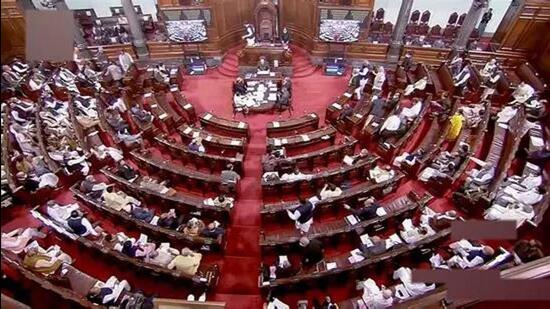
The committee, led by Bharatiya Janata Party member Sanjay Jaiswal placed its report on the Biological Diversity (Amendment) Bill, 2021, in the Lok Sabha. The draft legislation was referred to the 21-member joint parliamentary panel following widespread criticism of several of its provisions after it was introduced by environment minister Bhupender Yadav on December 16, 2021.
The government said the amendments aim to reduce the pressure on wild medicinal plants by encouraging cultivation, and fast-tracking research, patent application and transfer of research result. Critics said the proposed law seeks to facilitate trade and benefit the AYUSH industry and is contrary to the aims of the existing law to conserve biodiversity.
Also read: ‘Monkeypox not a new disease’: Health minister allays concerns in Parliament
The committee has suggested a manifold increase in the collection of access and benefit sharing under the Bill, according to a statement issued by it. ABS refers to the way in which genetic resources may be accessed, and how the benefits that result from their use are to be shared between people using the resources and people who provide them according to the United Nations Convention on Biological Diversity. India is a signatory to the convention.
{{/usCountry}}The committee has suggested a manifold increase in the collection of access and benefit sharing under the Bill, according to a statement issued by it. ABS refers to the way in which genetic resources may be accessed, and how the benefits that result from their use are to be shared between people using the resources and people who provide them according to the United Nations Convention on Biological Diversity. India is a signatory to the convention.
{{/usCountry}}The committee also recommended that biodiversity management committees under the proposed law and indigenous communities should be empowered by clearly defining benefit claimers to be conservers of biological resources.
The Bill was drafted following concerns by traditional Indian medicine practitioners, the seed industry and research organisations over the compliance burden in the Biological Diversity Act, 2002, which was enacted to conserve biological diversity and ensure fair and equitable sharing of benefits arising out of the use of biological resources with indigenous and local communities.
The Bill proposes to exempt registered AYUSH practitioners and people accessing codified traditional knowledge, among others, from giving prior intimation to state biodiversity boards before accessing biological resources for certain purposes.
Clauses in the proposed law that make exemptions for the AYUSH industry have been widely criticised by environmental and legal experts.
“The amendment seems to be done with the sole intention of providing benefit to the AYUSH Industry. The main focus of the bill is to facilitate the trade in biodiversity as opposed to conservation, protection of biodiversity and knowledge of the local communities,” environmental lawyer Ritwick Dutta said when the bill was introduced. “The amendments are completely contrary to the aim and objective of the Biological Diversity Act, 2002.”
The parliamentary panel has recommended that the pressure on wild medicinal plants should be reduced by encouraging cultivation of medicinal plants; Indian system of medicine should be encouraged by clearly defining codified traditional knowledge; promoting indigenous research and Indian companies through facilitating fast-tracking of research, patent application process, transfer of research results while utilising the biological resources available in India without compromising the objectives of internation biodiversity convention.
There is a need to attract more foreign investments in the chain of biological resources, including research, patent and commercial utilisation, without compromising national interest by defining foreign companies as per the Companies Act and by defining a protocol for utilisation of biological resources from India, the panel said.
Also read: Parliament: Debate on price rise in Rajya Sabha today
“Another important recommendation is to develop national strategies for conservation, promotion and sustainable use of biological resources in consultation with the state government. Being a civil offence, the committee has further recommended that in contravention of the Biological Diversity Act, 2002 any offence should attract civil penalties with proportionate fine structure so that the violators do not escape,” it added.
The committee clarified that AYUSH practitioners who have been practising indigenous medicine, including Indian systems of medicine, as a profession for sustenance and livelihood are exempt from prior intimation to state biodiversity boards to access biological resources.
“The recommendations appear to have accepted most of what have proposed as part of this Bill. If yes, it is important for two reasons. First, what we do see now is a new phase of exemption based regulation, which so far had not been the case with the Biological Diversity Act,” said Kanchi Kohli, a legal researcher at the Centre for Policy Research, a think tank. “Second is the alignment of the biodiversity act enabling the sectoral push by the AYUSH ministry and manufacturers both to secure investments and (push) exports.”
“The JPC report will bring a lot of clarity on the matter. So it’s significant. But it’s still a bill so we can’t comment now,” said a senior environment ministry official.