
 E-Paper



Just Like That| Aap Jaisa Koi: Exploring patriarchy, gender bias in modern India
Educated middle-class men should watch Aap Jaisa Koi, a film that unwraps gender roles and patriarchy’s grip in modern society with humour and heart

 Prefer HTon Google


The OTT platform gives viewers an embarrassment of choice. There are so many channels, films, and series—both fiction and non-fiction—all shouting for your attention. The combined viewing spectrum is also a veritable nursery for new talent—those who may have been sidelined by mainstream cinema but now find room to grow and shine on OTT platforms. Recently, while scrolling through the maze on Netflix, I stumbled upon a sweet nugget of a film called Aap Jaisa Koi.
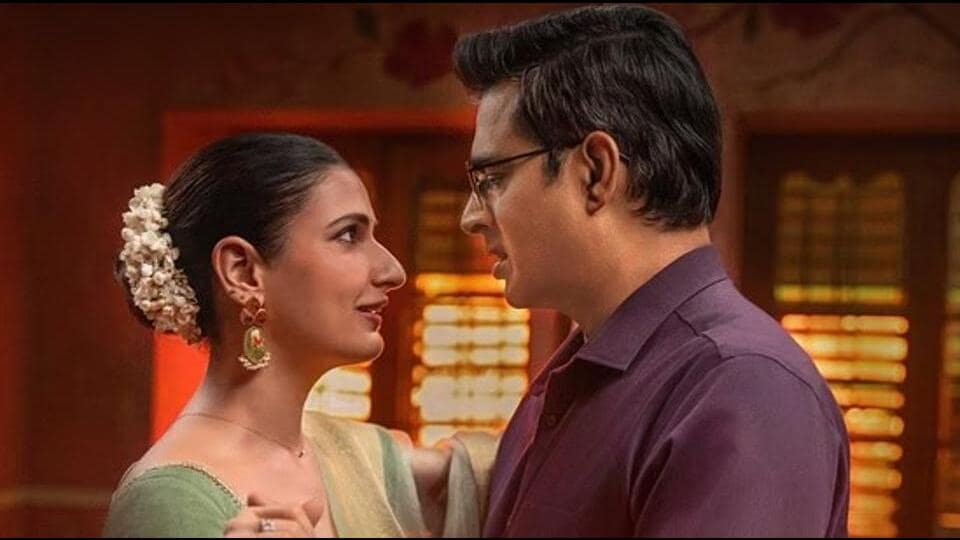
The film, directed by Vivek Soni, stars the disarmingly charming R. Madhavan and the elegant Fatima Sana Shaikh. I am not going to go into the story, except to say that, at a superficial level, it is an engaging romance between two not-so-young protagonists. But at a substantive level, the light-hearted nature in which the film unfolds deals with a far more important subject: patriarchy.
That patriarchy exists in India at many levels is not a matter of debate. It is a fact. There are many clumsy cinematic attempts to expose it—or, advertently or inadvertently, to project it—but this film rubbishes it with understated yet refreshing finesse. In cosmopolitan middle-class homes, the presumption is that men and women are equal. This is—as yet—far from the truth. Old attitudes die hard. Habits, long ingrained, don’t just go away. The male assumption of superiority can be camouflaged but still persists in both direct and subliminal ways.
This is the theme that Aap Jaisa Koi tackles. If a man is not a virgin at the time of his marriage, it is seen as a sign of his virility, or simply something to be expected from a man. If a woman admits before her nuptials that she is not, it causes consternation in a man. If a man admits to having had an affair or affairs before his marriage, that is fine. If a woman does the same, it is considered a taint on her character. In highly educated and affluent circles, perhaps neither virginity nor previous affairs matter. But below this thin upper crust, these issues—whether we like to admit it or not—loom large.
Similarly, if a man admits to watching adult films—a pseudonym for porn—it is OK. But if a woman says she enjoys it too, somehow the purity of her ‘soul’ gets sullied. Equality in sexual pleasure is something men fantasize about, but find difficult to deal with in actual practice. In large parts of small-town India, and certainly in the countryside, the image of the chaste nari (woman) has a strong appeal—for men. Evangelists of all religions expect a woman to be subservient, demure, obedient, and a good cook. If she is none of these, her character is suspect.
It is still the man who thinks he has the right to decide how much sensuality is acceptable. If he is in the mood, she must succumb. If she is, he can say no—or even make her feel wanton, too caught in the ‘demeaning’ snare of the flesh. Either way, he decides how much is acceptable. And he decides, too, what should be the appropriate level of companionship between the two, or how much he needs to invest in keeping that companionship vibrant. Aap Jaisa Koi, in part, is a story precisely about this asymmetry.
Also Read: Emotional cage and relationship roadblocks: Here’s how patriarchy affects men’s well-being
Educated young men will, in public, express their disapproval of the practice of dowry. But in private, they will adopt the expedient excuse that a good son must obey his parents. In fact, many educated young men still hold the view that if their parents have spent so much on their education, there is nothing wrong in asking for ‘compensation’. The line between public morality and private compromise is very blurred.
These days, a working wife is often considered desirable. After all, if she earns, it adds to the household kitty. But if the working wife asks her working husband to share in the household work, it is tantamount to a betrayal of ‘wifely duty’. So, the additional money she brings in is welcome, but the additional work she does at home—on top of working all day—is simply seen as part of her commitment to being a good wife.
Some things are changing. There is a minority among men who respect women for who they are, rather than what they ‘ought’ to be by outdated standards. More women, too, are standing up for their rights. Recipients of good education and beneficiaries of good jobs have financial security, giving them an independence of choice which they refuse to dilute simply because a man says so. There are a few parents out there as well—more liberal and enlightened—backing their daughter if her self-respect and esteem are not ensured.
But, by and large, such people are, alas, still a minority. Neither education nor laws are an antidote to the entrenched tradition of the dominant male. Among the poor, in particular, the practice of dowry—and other forms of female subservience—are of such a magnitude that parents of girls are forced into humiliating debt when faced with the demands of the bridegroom and his family.
This being so, the educated middle-class male would do well to see the mirror by watching Aap Jaisa Koi.


