...
...
Next Story

Justice Chelameswar retires, says no regrets about press conference on CJI

In an interview after retiring, Supreme Court judge Justice Chelameswar seemed to suggest that nothing had changed in the judicial system after he, and three other judges, aired their grievances over the Chief Justice of India in a press conference.

Updated on: Jun 22, 2018, 19:17:30 IST
Hindustan Times, New Delhi | By
Prefer HTon Google
Advertisement

Jasti Chelameswar, who retired as a Supreme Court judge on Friday, has no regrets about holding a press conference – unprecedented for a judge of the top court – along with three of his fellow judges on January 12, airing grievances over the way Chief Justice of India Dipak Misra was allocating cases and administering the court. The judges had tried to “set things right”, he said in an interview, and when nothing worked, decided “to inform the nation”.
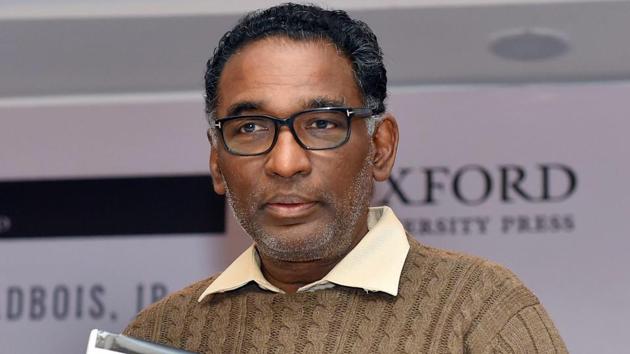
Retired Supreme Court judge Justice Jasti Chelameswar says every office in the land, including the Chief Justice’s, has to be “subject to public scrutiny”. (PTI File Photo)

Chelameswar seemed to suggest that nothing had changed, but admitted that the press conference “created awareness” about the goings-on in the court and how the Supreme Court too needs to be “protected” and its activities be “assessed periodically”.

Chelameswar was the only judge to support the government’s move to replace the collegium system of selected judges to the higher judiciary with a National Judicial Appointments Commission or NJAC (comprising the chief justice, two other judges of the Supreme Court, the law minister, and two eminent individuals). In 2015, the top court struck down the NJAC Act as unconstitutional.

In his interview, he agreed that the current process of appointing judges isn’t “fair, rational and transparent”. Chelameswar’s view on the collegiums is well known. In September, 2016, he wrote to the then Chief Justice of India, TS Thakur, expressing his “dissent at the non-transparent manner” in which it was working, but as he says, “nothing much has changed since then”.

Every office in the land, including the Chief Justice’s, has to be “subject to public scrutiny”, he said. In a democracy, he added, “no public office holder is beyond scrutiny.” And the chief justice, he added, has to work consultatively. Even the Prime Minister works consultatively with the cabinet, Chelameswar said.

The buzz in Delhi’s power circles is that the chief justice may pick anyone other than Ranjan Gogoi, the second senior-most judge in the court currently, as his successor because the latter was one of the four judges who held the press conference on January 12. Commenting on the practice of the Chief Justice recommending who his successor should be, Chelameswar said there is “nothing wrong in it”. But if the Chief Justice is not recommending the “name of the next senior-most judge”, he should “have the freedom to do so, provided he records the reasons” for not doing so, Chelameswar added.

Chelameswar has decided not to take up “any post-retirement job” and plans to spend time in his ancestral village in Krishna district of Andhra Pradesh, and Hyderabad.

 
ABOUT THE AUTHOR
HT News Desk

Follow the latest breaking news, major developments and agenda-setting stories from India and around the world with the newsdesk at Hindustan Times. Operating round the clock, the desk brings together experienced editors, reporters and correspondents to deliver fast, accurate and contextual reporting across subjects that influence public policy, governance, business, society and international affairs. The HT News Desk covers politics, elections, government policies, the economy, business and markets, science and technology, the environment, law and order, infrastructure, education, climate issues and geopolitics, while closely tracking developments across states, institutions and global capitals. The team also leads coverage of major breaking news events, policy announcements, court proceedings, natural disasters, public emergencies and significant international developments. Reports published by the newsdesk are based on information gathered from reporters on the ground, official statements, government agencies, court records, regulatory filings, recognised institutions and other authoritative sources. Stories undergo editorial scrutiny and verification processes to ensure accuracy, fairness and relevance, and are updated as events evolve and additional information becomes available. Whether covering a key political decision in New Delhi, an economic policy shift affecting millions, a landmark court ruling or a major global event, the HT News Desk aims to provide readers with reliable, fact-based journalism that delivers not only the latest developments but also the context and analysis needed to understand their wider implications.

Get Latest News, breaking headlines, and top India News, and today real-time updates from across the nation. Stay informed on politics, government policies, crime, Today Weather, and major developments on Hindustan Times
SHARE THIS ARTICLE ON
Notifications

Get breaking alerts directly from the newsroom

Notifications are on!You'll be notified when news breaks