Supreme Court judge justice BV Nagarathna on Saturday spoke on the significant challenges facing the legal profession, delivering a clarion call for reforms to ensure diversity, uphold individual responsibilities and address misconduct within the Bar.
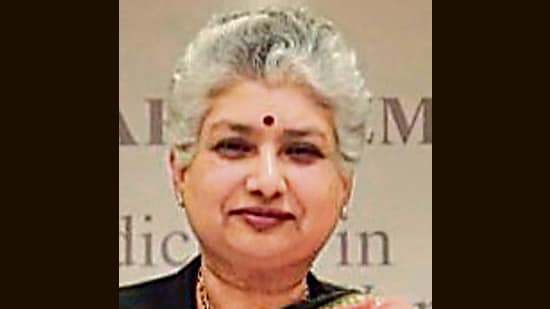
Addressing graduates at the convocation of the National Law University in Delhi, justice Nagarathna described the current state of affairs as “disturbing”, lamenting the gender imbalance in the legal profession and the pervasive culture of irresponsibility, all of which threaten the very foundations of liberty and justice.
She lamented the lack of diversity in the legal profession, particularly in terms of gender.
“Out of 788 judges in high courts in India, only 107 are women — that’s just 13%,” noted justice Nagarathna, pointing out the systemic barriers preventing women from advancing in their careers.
This lack of representation is not limited to judges but pervades the entire legal profession, said the judge adding that women constitute only 15% of enrolled lawyers in India and a significant number of women drop out of the profession during the prime of their careers.
The reasons for this, according to justice Nagarathna, are predominantly related to a lack of work-life balance, which women in the profession are forced to navigate. She cited a report revealing that 60% of women lawyers between the ages of 35 and 55, the peak years of their career, leave practice. Most disturbingly, only 2.04% of State Bar Council representatives are women, and the Bar Council of India has no women representatives at all, she said.
{{/usCountry}}The reasons for this, according to justice Nagarathna, are predominantly related to a lack of work-life balance, which women in the profession are forced to navigate. She cited a report revealing that 60% of women lawyers between the ages of 35 and 55, the peak years of their career, leave practice. Most disturbingly, only 2.04% of State Bar Council representatives are women, and the Bar Council of India has no women representatives at all, she said.
{{/usCountry}}These figures, justice Nagarathna emphasised, are not mere statistics, but reflection a deeper, systemic issue. “They represent missed opportunities, unheard voices, and important perspectives of which our legal system has been deprived.”
The judge called upon the graduates to take responsibility in changing this narrative. “As constructive citizens, it is your responsibility to provide and create spaces for more women, in fact all genders, to actively participate in the profession without fear or hesitation,” she said.
Justice Nagarathna further took a broader look at the concept of liberty, pointing out that liberty cannot exist without a corresponding ethos of individual responsibility. “Liberty cannot persist without a corresponding ethos of individual responsibility. Being a free member of the community carries with it not just a privilege but a responsibility as well,” she reminded the graduates.
This, she explained, is deeply embedded in the ethos of the Indian Constitution, specifically in Part IV-A, which outlines the Fundamental Duties of Indian citizens. Though these duties are not enforceable by law, they are meant to guide conduct in civic and social life. Citizenship, she elaborated, is not merely a set of legal entitlements but is also predicated upon certain virtues — patience, tolerance, respect for the law, and promise-keeping. “These virtues are the lifeblood of a well-functioning democracy,” she asserted, warning that without such virtues, society risks becoming hollow, with citizenship reduced to entitlements devoid of deeper commitment.
Justice Nagarathna also highlighted a lesser-explored but significant declaration of duties in the Preamble of the Constitution. While the Preamble is widely known for guaranteeing liberty of thought, expression, belief, faith and worship, she noted that it also subtly promotes duties when it proclaims that citizens “shall promote fraternity, assuring the dignity of the individual and the unity and integrity of the nation”.
Calling for a recalibration of focus toward civic duties, justice Nagarathna said: “If we all worked for the common good, the concept of citizenship would take on a new look, and selfishness would be removed from all forms of organisations.”
She urged graduates to contribute to the welfare of society not only through their legal practice but by embracing their roles as responsible citizens.
Justice Nagarathna also addressed some pressing concerns within the profession itself — particularly the issue of prolonged pendency and misconduct among some members of the Bar. “Prolonged pendency and misconduct by some members of the Bar has marred the reputation of the legal profession in public eye,” she lamented, expressing hope that the next generation of lawyers would actively work to remedy these issues.
Bar misconduct, including unethical behavior by lawyers, was another point of concern for her. Justice Nagarathna strongly criticised certain disheartening practices, especially on social media, where some lawyers have been found to solicit clients by invoking fear and marketing tactics that scuttle the legal process. She urged the young lawyers to resist such temptations and instead strike a balance between their duty to their clients and their responsibility to the court. “Ensure that your advisories to clients are not laced with a side-step of the law,” implored the judge, emphasising that a lawyer’s practice must be principled and bound by morality.
Concluding her speech, justice Nagarathna stressed the importance of carrying forward the torch of constitutional values and methods. She urged the graduates to take to every corner of the nation the vitality and belief in constitutional methods and values.
The judge noted: “The Constitution is neither the product nor the exclusive domain of Lutyen’s Delhi but breathes in an unheard perspective on every crossroad of this country.”