Actor Kamal Haasan told the Karnataka high court on Tuesday that he will not release his upcoming film Thug Life in Karnataka “for now,” asserting that he had “nothing to apologise for” amid a growing controversy over his remark that the Kannada language was “born out of Tamil.”
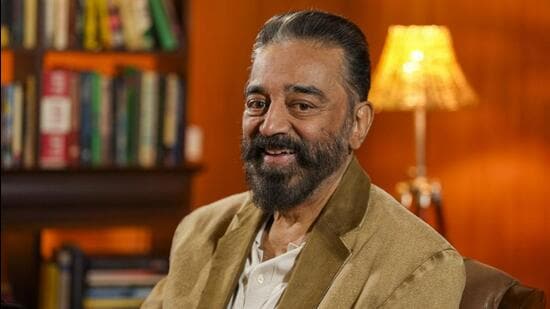
Haasan’s counsel, senior advocate Dhyan Chinappa, informed a bench of Justice M. Nagaprasanna that the actor and his production company, Raajkamal Films International, had decided to withhold the film’s release in the state at least until they engage in a “dialogue” with the Karnataka Film Chamber of Commerce (KFCC), which has demanded an apology and barred the film’s screening in the state.
The decision followed strong observations from the court, which said that Haasan might be a big star but had no right to hurt the sentiments of the people of Karnataka, who deserved an apology. The court also scheduled the next hearing in the matter for June 10.
Chinappa said he had consulted Haasan, who believed that the written statement submitted to the KFCC on Tuesday morning, which conveyed his love and respect for the Kannada language and its people, was a sincere and adequate response to the controversy. He argued that Haasan should not be compelled to apologise in a prescribed format.
“Apology is required only if there is malice, and there is no malice here,” Chinappa submitted. He said Haasan’s comments, made during the audio launch of Thug Life in Chennai on May 24, were not intended to undermine Kannada or its speakers and were expressed in a spirit of goodwill. “He has expressed nothing but affection and admiration for the language and the state,” the counsel added.
{{/usCountry}}“Apology is required only if there is malice, and there is no malice here,” Chinappa submitted. He said Haasan’s comments, made during the audio launch of Thug Life in Chennai on May 24, were not intended to undermine Kannada or its speakers and were expressed in a spirit of goodwill. “He has expressed nothing but affection and admiration for the language and the state,” the counsel added.
{{/usCountry}}The court, however, expressed dissatisfaction with Haasan’s refusal to apologise and questioned the absence of a simple gesture that could have “defused the situation.” Quoting Shakespeare, justice Nagaprasanna remarked, “Discretion is the better part of valour,” and urged Haasan to show humility. “You are not an ordinary man. You are a public figure. You create a circumstance, you cause unrest, and now you want protection from the state machinery. This entire situation could have been solved with a simple apology,” said the judge while hearing the plea for police protection and directions against the KFCC’s decision to block the film’s release.
The court viewed the video of Haasan’s statement and asked why he was resisting an apology when he knew his remarks had “undermined en masse” the sentiments of the people of Karnataka. “You might be Kamal Haasan or anybody, but you cannot hurt the sentiments of the masses,” the court observed. “In a country where language is an emotional issue, a public figure cannot make such sweeping statements. There is unrest and disharmony today because of what you said,” the court added.
Justice Nagaprasanna also criticised the tone of Haasan’s written statement, saying it read like a “declaration of justification” rather than a genuine attempt to heal the situation. “This is not an apology. There is not even a line that says, ‘If I have hurt anyone’s sentiments, I apologise.’ Even C. Rajagopalachari made a similar remark 75 years ago and later apologised,” he said.
Chinappa had argued that blocking the film’s release infringed on the rights of those who wanted to watch it, but the court pushed back, saying fame cannot shield one from responsibility. “You want police protection, but are unwilling to utter one word that could calm the unrest. You are sticking to your stand because of your ego,” Justice Nagaprasanna remarked.
The matter has also taken on political undertones in Karnataka, with several Kannada groups and political commentators suggesting that the backlash is being encouraged by segments of the ruling establishment. Haasan through his counsel, hinted the same and said that the opposition to his film’s release was being done probably because there was “some support from the Karnataka government.”
Chinappa cited a precedent from 2018 involving actor Rajinikanth, who had made remarks about the Cauvery water dispute before the release of his film Kaala. When the court pointed out that Rajinikanth had apologised, Chinappa noted that it came after he had been granted interim protection.
He also made a plea for cultural unity, saying: “All of us have to survive here. Linguistically we may be different, but we are all the same. We are all Indians.”
The court acknowledged the sentiment but underlined the importance of choosing words wisely. “There are many ways to clarify a mistake. But there is only one way to apologise,” the judge said.
Granting the request for adjournment, the court concluded with a reiteration of its earlier advice: “But even now, remember -- discretion is the better part of valour.”
In its formal order, the court noted that Haasan’s statement had “stirred a hornet’s nest” and created “unrest among the people of Karnataka.” It issued notices to the state government and the KFCC and fixed the next hearing for June 10.