
Kerala became the first state to challenge the contentious Citizenship (Amendment) Act or CAA after it moved to the Supreme Court on Tuesday. The plea has been filed as an original suit under Article 131 of the Constitution which empowers Supreme Court to hear disputes between government of India and one or more states.
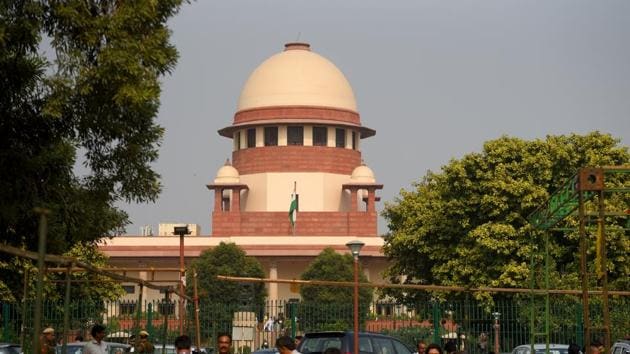
The petition states that the CAA violates right to equality under Article 14 of the Constitution of India, right to life under Article 21 and freedom to practice religion under Article 25.
It argues that CAA is discriminatory because it covers only a class of minorities from a class of countries sharing borders with India and to which and from there have been trans-border migration.
Also Watch l Kerala Assembly passes resolution demanding withdrawal of CAA
“While the Hindus from Pakistan, Afghanistan and Bangladesh are covered by the Impugned Amendment Act, the defendant did not consider the issues of the Hindus, primarily of Tamil descend, in Sri Lanka and Hindu Madhesis in Terai of Nepal, whose ancestors migrated to Sri Lanka and Nepal respectively in the eighteenth Century from the then British India,” Kerala government’s petition says.
It further says that CAA covers certain religious minorities of Pakistan, Bangladesh and Afghanistan and overlook other reportedly persecuted religious minorities and sects such as Ahmaddiyas, Shias and Hazaras.
Kerala argues that if the object of CAA is to protect the minorities who faced religious persecution in Afghanistan, Pakistan and Bangladesh, then, the Ahmaddiyas and Shias from these countries are also entitled to same treatment extended to Hindu, Sikh, Buddhist, Jain, Parsi and Christian communities.
The Kerala assembly had earlier passed a resolution stating that the CAA is against the secularism envisaged by the Constitution of India and urged the central government to repeal the law. The ruling CPI(M)-led LDF and Congress headed UDF Opposition came together to pass the resolution at a special session of the House.
{{/usCountry}}The Kerala assembly had earlier passed a resolution stating that the CAA is against the secularism envisaged by the Constitution of India and urged the central government to repeal the law. The ruling CPI(M)-led LDF and Congress headed UDF Opposition came together to pass the resolution at a special session of the House.
{{/usCountry}}Chief Minister Pinarayi Vijayan, who has been at the forefront of opposing the law, had also written to 11 chief ministers to come together to oppose the CAA.
At least 60 petitions filed by individuals and political parties challenging the validity of CAA are pending before the top court and are likely to be heard on January 22.
There were protests in Kerala last month against the CAA, with several hundred people coming out in Kochi and Kozhikode, demanding the scrapping of the new law.
The protesters said the act is “divisive and discriminatory” in nature and was aimed at “polarising the society”.
The CAA seeks to provide citizenship to illegal migrants from Buddhist, Hindu, Sikhs, Jain, Parsi and Christian faiths, who have come to India from the neighbouring countries of Afghanistan, Pakistan and Bangladesh, on or before December 31, 2014.
ABOUT THE AUTHOR
Follow the latest breaking news, major developments and agenda-setting stories from India and around the world with the newsdesk at Hindustan Times. Operating round the clock, the desk brings together experienced editors, reporters and correspondents to deliver fast, accurate and contextual reporting across subjects that influence public policy, governance, business, society and international affairs. The HT News Desk covers politics, elections, government policies, the economy, business and markets, science and technology, the environment, law and order, infrastructure, education, climate issues and geopolitics, while closely tracking developments across states, institutions and global capitals. The team also leads coverage of major breaking news events, policy announcements, court proceedings, natural disasters, public emergencies and significant international developments. Reports published by the newsdesk are based on information gathered from reporters on the ground, official statements, government agencies, court records, regulatory filings, recognised institutions and other authoritative sources. Stories undergo editorial scrutiny and verification processes to ensure accuracy, fairness and relevance, and are updated as events evolve and additional information becomes available. Whether covering a key political decision in New Delhi, an economic policy shift affecting millions, a landmark court ruling or a major global event, the HT News Desk aims to provide readers with reliable, fact-based journalism that delivers not only the latest developments but also the context and analysis needed to understand their wider implications.